Groom Attire
Black-Tie Optional for the Groom: What He Can Actually Wear
The most misread line on a wedding invitation, decoded: a tuxedo is welcome, a dark formal suit is equally correct — and the groom should sit at the top of the range.
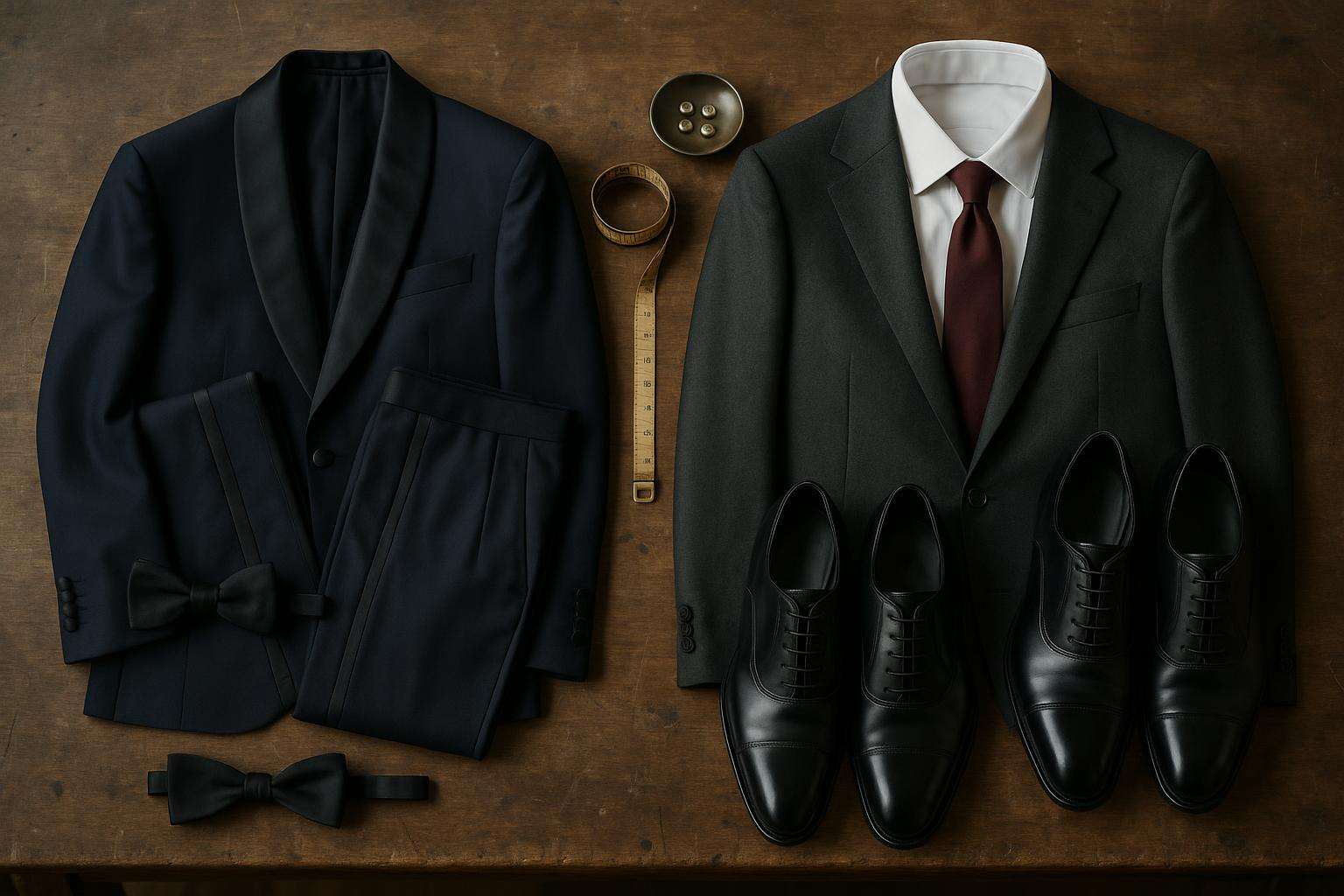
"Black-tie optional" means a tuxedo is welcome and a dark, formal suit — charcoal, true navy, or black — is equally correct. But that choice belongs to your guests. As the groom, you should sit at the very top of the formality range you set, which makes a tuxedo (or your darkest, dressiest suit, sharply tailored) the safe, photogenic landing.
No line on a wedding invitation is misread more often than black-tie optional. To a guest it offers room to breathe. To the man getting married, it can read as a riddle: if a tuxedo is welcome but not required, what does the groom actually wear? The answer is reassuringly simple once you separate two things that are easy to conflate — the dress code that governs the room, and the standard you hold yourself to as the groom.
What does "black-tie optional" actually mean for the groom?
Black-tie optional tells everyone the evening is formal enough for a tuxedo, while making clear that a dark formal suit is also perfectly acceptable. The Knot describes it as a tone rather than a strict rule — guests are encouraged to dress formally but have latitude — whereas plain black tie sets a firm, uniform expectation. That flexibility is precisely why couples choose it for larger or more varied guest lists: the room still looks polished without pressuring every guest to rent formalwear.
Here is the distinction that decides your outfit: the dress code is written for the guests. You are not a guest. You are the reason the dress code exists. The graceful move is to dress at or just above the top of the range you asked others to meet — which means a tuxedo, or, if a suit is more you, the darkest and dressiest one you own, lifted well beyond anything you would wear to the office.
Should the groom wear a tuxedo or a dark suit?
Both are defensible. The tuxedo is the safer landing because you can never be underdressed in one at a black-tie-optional event. The classic rig is unfussy: a black or midnight-blue dinner jacket with satin peak or shawl lapels, matching trousers with a satin side stripe, a crisp white formal shirt, a self-tied black bow tie, and polished black shoes. Midnight blue reads a touch more modern than black and, counterintuitively, photographs richer under warm evening light — which is why so much of SuitSupply's black-tie collection leans that way.
The dark suit works too, provided it is genuinely formal: charcoal, true navy, or black, in a clean solid, tailored close. The cardinal rule is that navy must read as deep — a bright, office-casual blue quietly undermines the whole code. One precise warning from the etiquette desks at Gentleman's Gazette and Generation Tux: the tuxedo shirt — wing collar, pleated or bib front, studs — belongs only with a full tuxedo. Worn under a suit it does not add formality; it simply looks mismatched. With a suit, wear a standard-collar white dress shirt instead.
| Element | The tuxedo | The dark suit |
|---|---|---|
| Jacket | Black or midnight-blue dinner jacket, satin peak or shawl lapel | Charcoal, true navy, or black; clean solid; sharp fit |
| Shirt | White formal shirt (wing or turndown collar) | Crisp white dress shirt, standard collar; French cuffs are a nice touch |
| Neckwear | Self-tied black bow tie | Black silk or dark restrained tie — burgundy, navy, forest, plum |
| Trousers | Matching, with a satin side stripe | Matching suit trousers, no stripe |
| Shoes | Black patent-leather oxfords | Highly polished black leather oxfords |
| Best when | Evening, ballroom or formal venue; you want to stand out | You prefer a suit, or the venue is slightly relaxed |
What dark suit colors and details read as formal enough?
Keep to charcoal, deep navy, or black — the evening palette. Avoid brown, tan, and light grey, which belong to daytime and rustic weddings, and resist bold patterns; a black-tie-optional wedding is not the place to try a windowpane check. Footwear and neckwear do more work than men expect. With a tuxedo, black patent oxfords and a self-tied bow are the standard; with a suit, polished black leather oxfords and a dark, textured tie hold the line. The Black Tux is blunt that loafers, brogues, and anything shiny or novelty pull the look down a notch. And above all, fit is non-negotiable — a sharply tailored suit looks intentional, where anything loose reads as borrowed.
What real tux and suit options should the groom consider, and what do they cost?
For a tuxedo, SuitSupply's Lazio and Havana dinner jackets and three-piece tuxedos come in navy and midnight, cut from pure S110's wool woven by Vitale Barberis Canonico — the world's oldest mill, founded in 1663 — with half-canvas construction and satin side stripes, typically a few hundred dollars. If owning a tuxedo is not worth it to you, The Black Tux lets you rent or buy a midnight-blue tuxedo for the day. For a dark suit, Brooks Brothers' 1818 collection spans the formal range across its Fitzgerald (slim), Regent/Classic, and traditional fits in navy and grey, half-canvas Italian wool (some woven by Loro Piana). Pricing runs from roughly $320 for a Regent solid up to about $1,200 for a made-in-Italy 1818, and the suits ship with unfinished hems so you can have them tailored to you.
How should the groom land relative to his guests and groomsmen?
The wedding party should be the most consistent, most formal group in the room — that consistency reads in the photographs long after the night ends. Set your own look first, then let the groomsmen match it or step down by a controlled half-notch: if you wear a tuxedo, they can wear matching tuxedos, or coordinated dark suits for a slightly softer, more modern feel. What you want to avoid is a scattered party where formality levels clash. The guests will dress to the invitation; your job is to make sure the men standing beside you read as one deliberate group, with you, unmistakably, at the head of it.
Frequently asked
Does the groom have to wear a tuxedo if the dress code is black-tie optional?
No — but he should lean toward one. The whole point of optional is that a dark formal suit is genuinely acceptable, so a groom in an impeccably tailored charcoal, true-navy, or black suit is correctly dressed. That said, the dress code on the invitation governs your guests, not you. As the groom, you want to sit at the very top of the formality range you set, and a tuxedo is the surest way to do that. The Knot notes that many grooms choose a tux even under this code because it helps them stand out and photographs beautifully. If you genuinely prefer a suit, make it your darkest, dressiest one.
What suit colors count as formal enough for black-tie optional?
Stay to charcoal, true navy, or black. These read as evening colors and hold the formality of the room. The one trap is navy: it has to be deep navy. A bright, office-blue suit looks like you came from work and quietly undercuts the dress code, as Gentleman's Gazette warns in its etiquette guide. Avoid brown, tan, and light grey — those belong at daytime or rustic weddings. Keep the cloth a clean solid; a black-tie-optional wedding is not the moment for bold checks or windowpane.
Can the groom pair a tuxedo shirt with a regular dark suit to dress it up?
No, and this is one of the most common missteps. A true tuxedo shirt — with a wing collar, a pleated or bib front, and studs — belongs only with a full tuxedo. Worn under a dark business or formal suit it does not raise the formality; it just looks mismatched, a point both Generation Tux and Gentleman's Gazette make plainly. With a dark suit, wear a crisp white dress shirt with a standard collar (French cuffs are a nice, subtle nod to formality) and a restrained dark tie. Save the wing collar and studs for the day you actually wear the dinner jacket.
What should the groom wear on his feet and tie at a black-tie-optional wedding?
With a tuxedo: a self-tied black bow tie and black patent-leather oxfords are the gold standard — the patent finish is what marks the shoe as formal. With a dark suit: a black silk tie or a subtly textured dark tie in burgundy, deep navy, forest green, or plum, paired with highly polished black leather oxfords. Skip loafers, brogues, monk straps, and anything shiny or novelty in the tie. The Black Tux's guide is firm on this: the footwear has to respect the formality, or it pulls the whole look down a peg.
How should the groom and groomsmen coordinate under black-tie optional?
Consistency within the wedding party matters far more than what any guest chooses. The cleanest approach: the groom sets the tone, and the groomsmen either match it or step down by a controlled half-notch. If the groom wears a tuxedo, groomsmen can wear matching tuxedos, or coordinated dark suits if you want a slightly softer, more modern look — The Knot calls this exactly the kind of flexibility black-tie optional allows. What you want to avoid is a scattered party where formality levels clash. Decide the party's look first, then let the guests dress to the invitation.
Where can the groom actually buy a tuxedo or dark suit, and what will it cost?
For a tuxedo, SuitSupply's black-tie collection offers navy and midnight dinner jackets and three-piece tuxedos in half-canvas Italian wool, typically a few hundred dollars — a buy that earns its keep across future galas. The Black Tux lets you rent or buy a midnight-blue tuxedo if owning one is not worth it to you. For a dark suit, Brooks Brothers' 1818 line spans roughly $320 for a Regent solid up to about $1,200 for a made-in-Italy model, in navy and grey, with hems left unfinished for tailoring. Whatever you choose, budget for alterations — fit is what makes any of it look intentional.