Groomsmen Socks: Coordinated, Fun & Photo-Ready
How to coordinate his groomsmen's socks — matching or themed — pick a pair comfortable enough for a twelve-hour day, and stage the getting-ready photo, with real brands and prices.
Ties, shoes, watches, cufflinks and the details that finish the look.
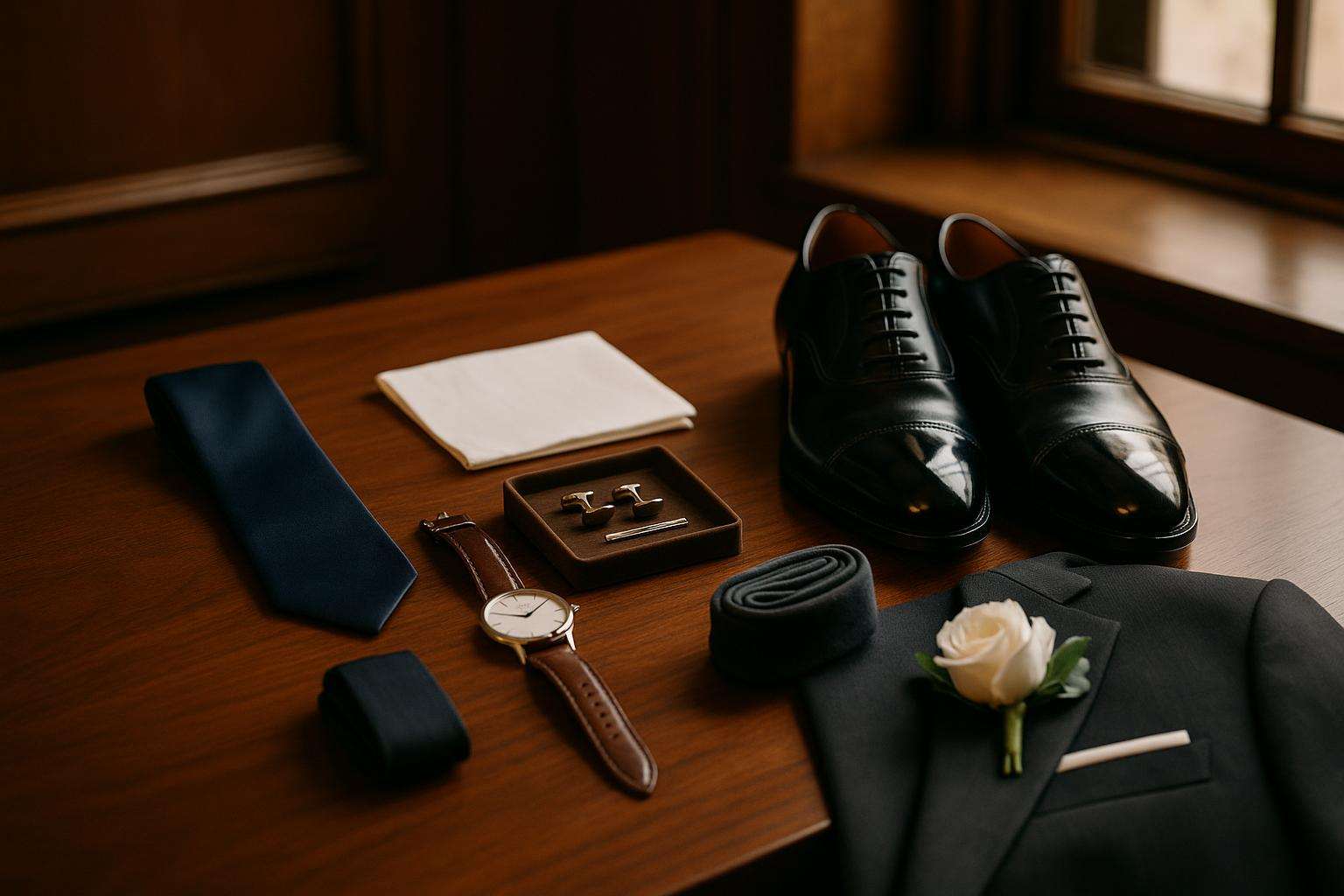
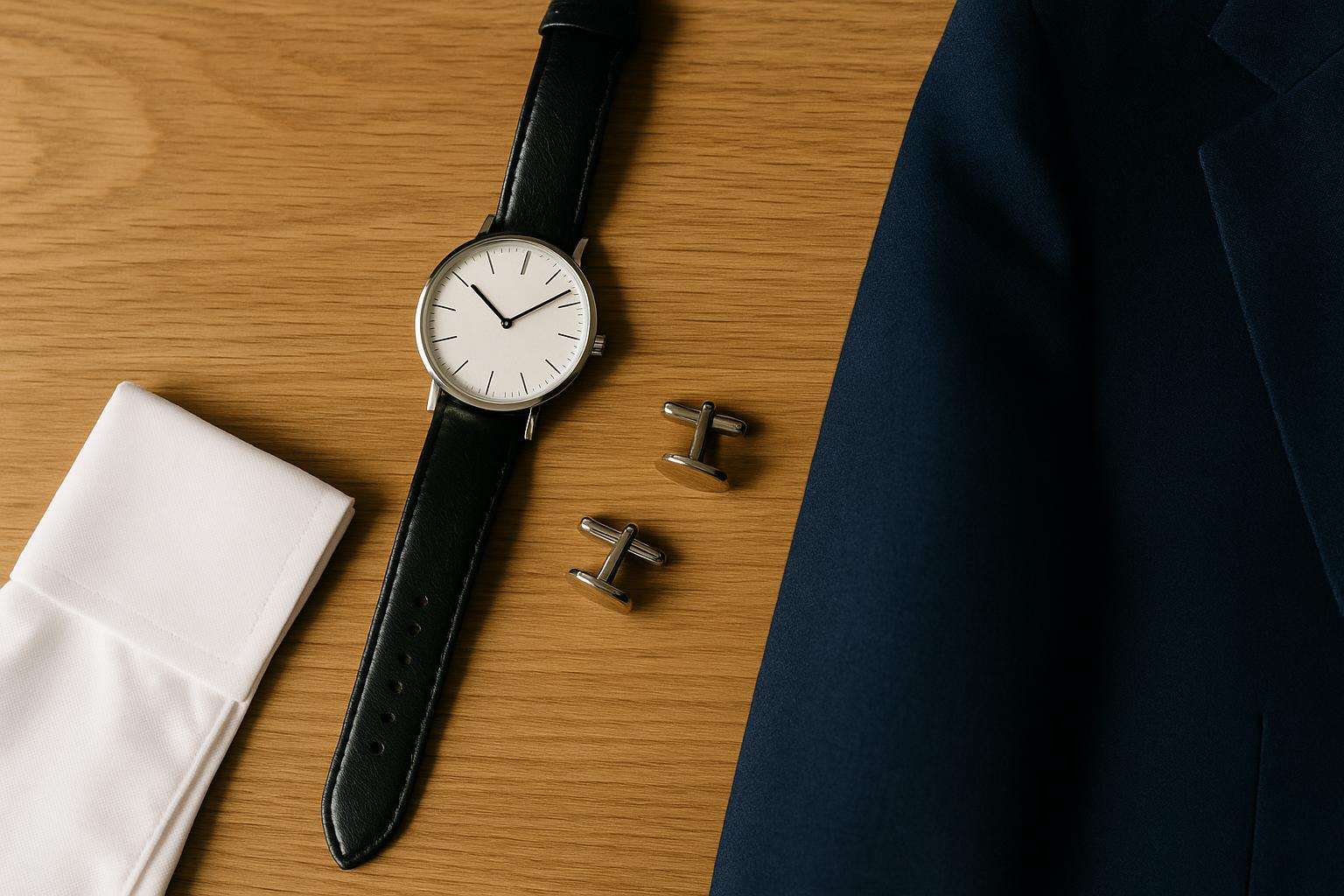
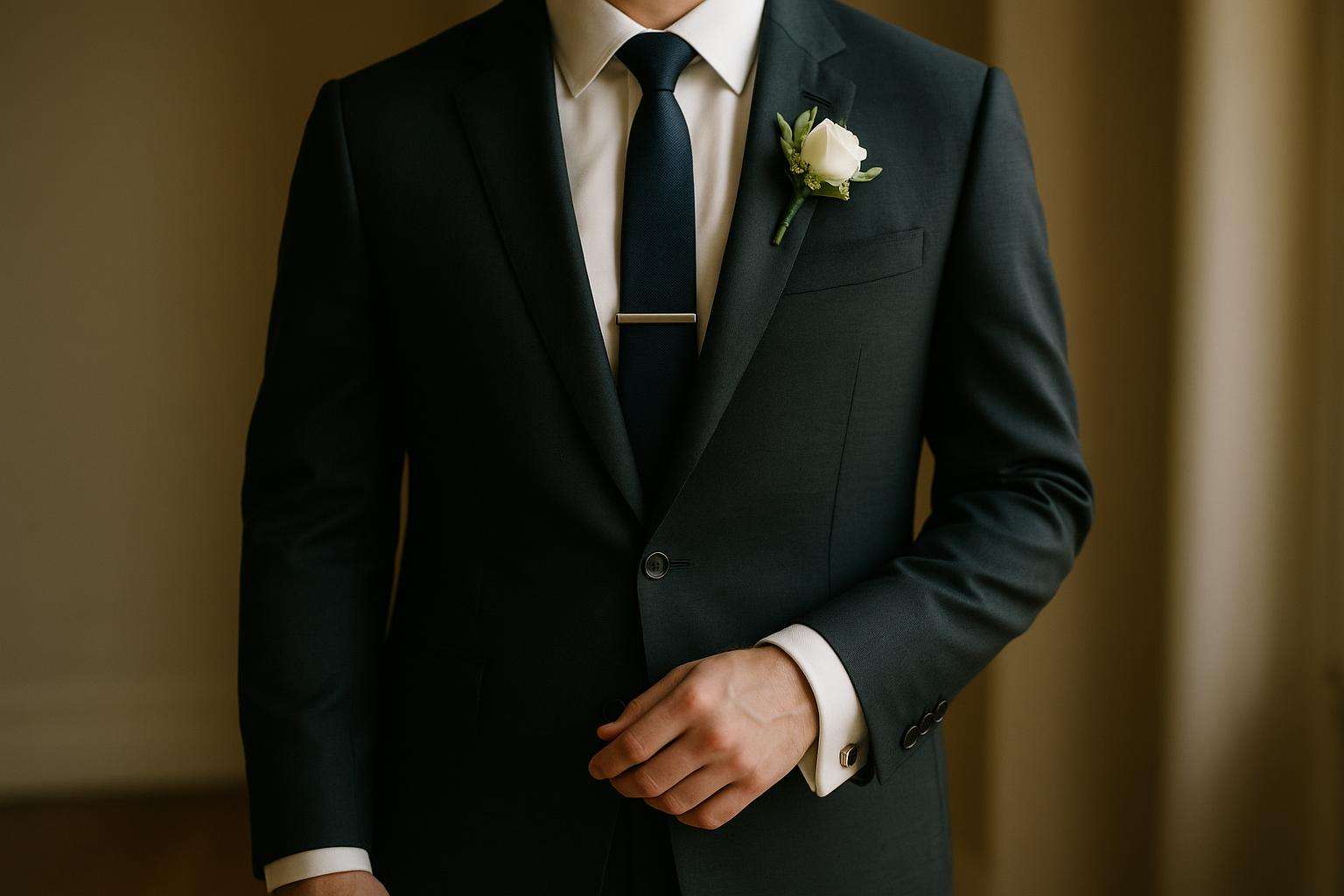
The suit is the sentence; the accessories are the punctuation that finishes it. This is the art of the finishing touch for the groom — necktie or bow tie and when each is correct, how to tie a proper knot, the pocket square that complements rather than matches, cufflinks and tie bars worn the right way, and the boutonniere that sets him apart. We cover shoes (oxford versus derby, black versus brown), the watch on his wrist, the belt-or-suspenders rule and the socks no one sees until they do — teaching the old discipline of keeping leathers and metals consistent, so every piece earns its place.
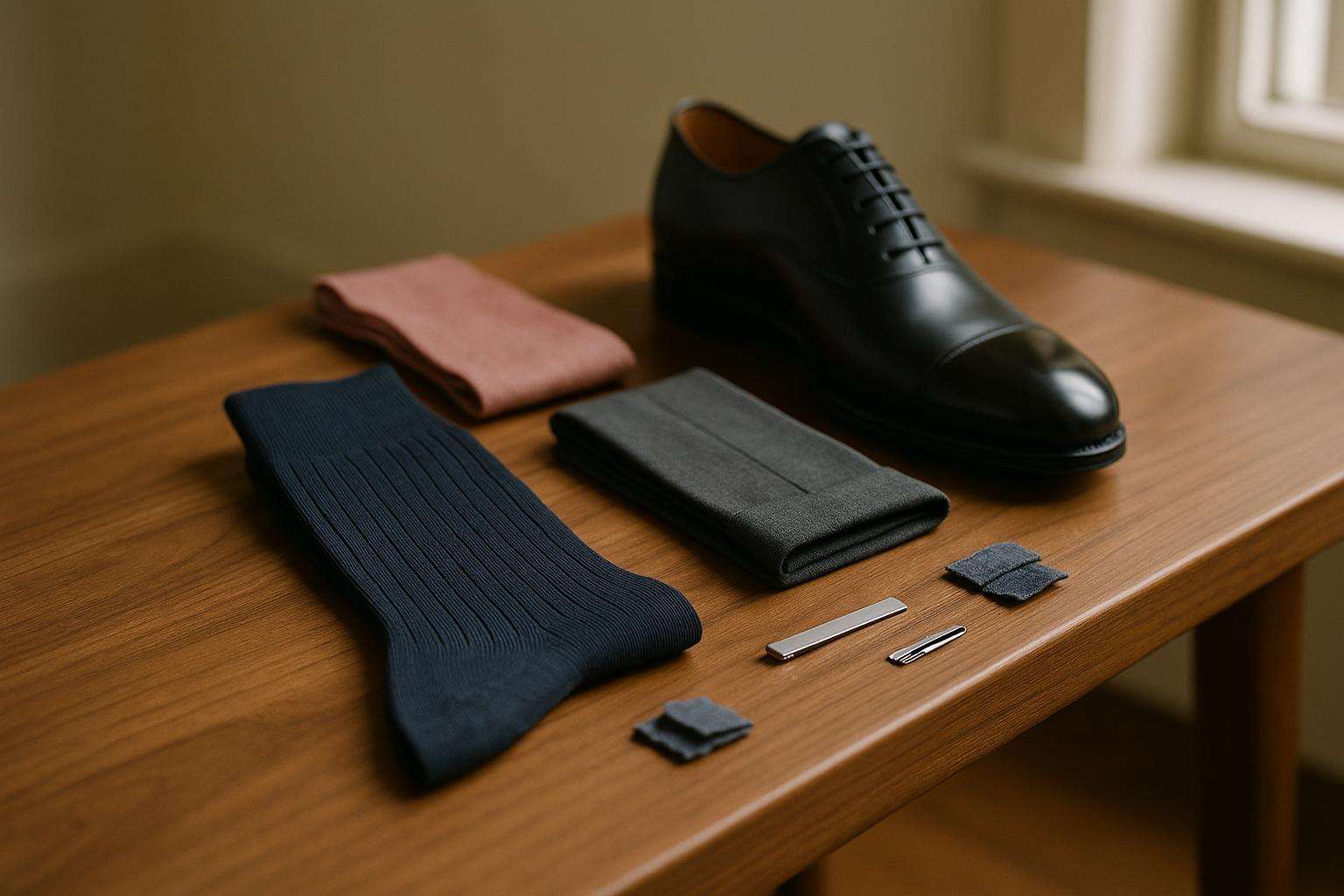
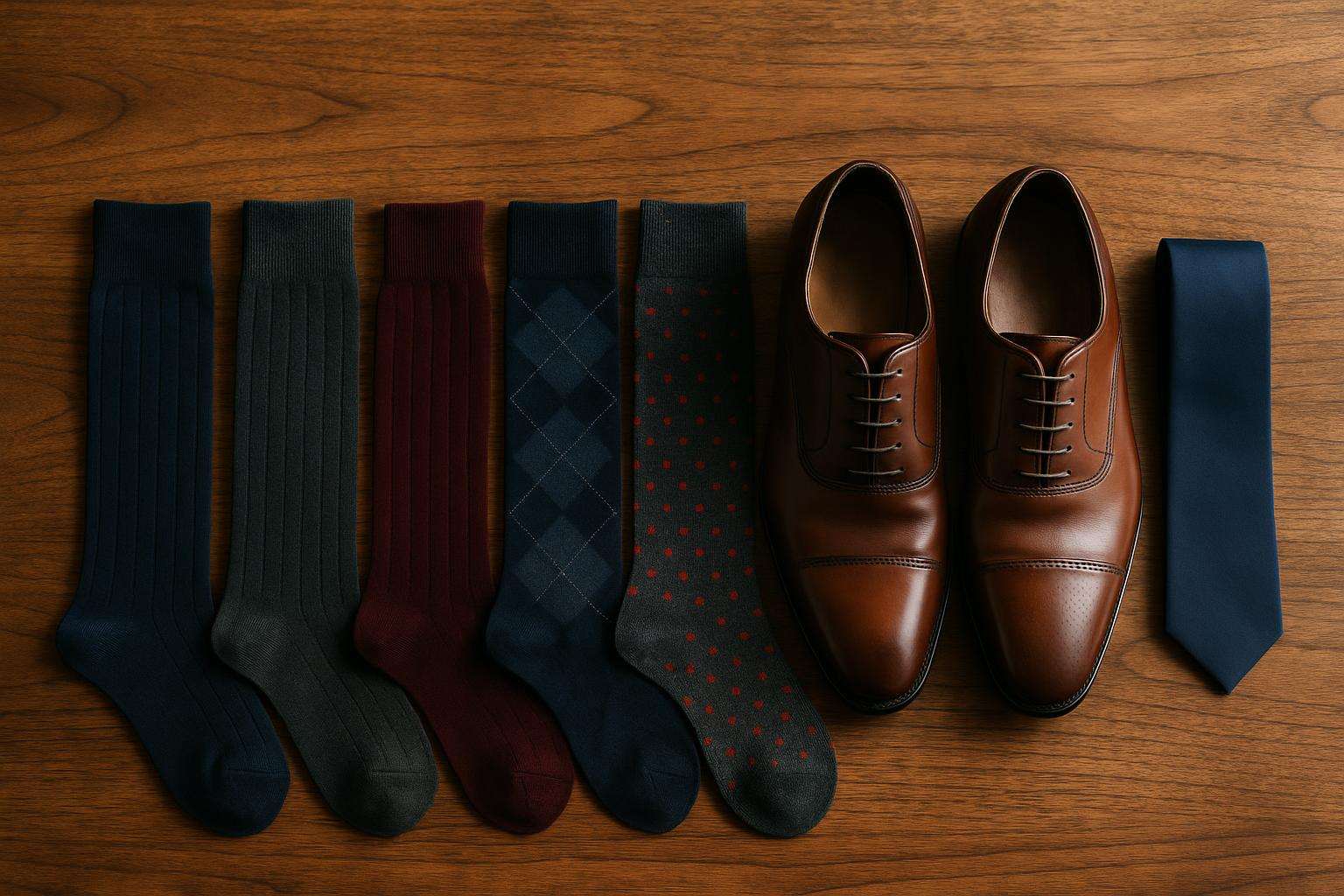
How to coordinate his groomsmen's socks — matching or themed — pick a pair comfortable enough for a twelve-hour day, and stage the getting-ready photo, with real brands and prices.
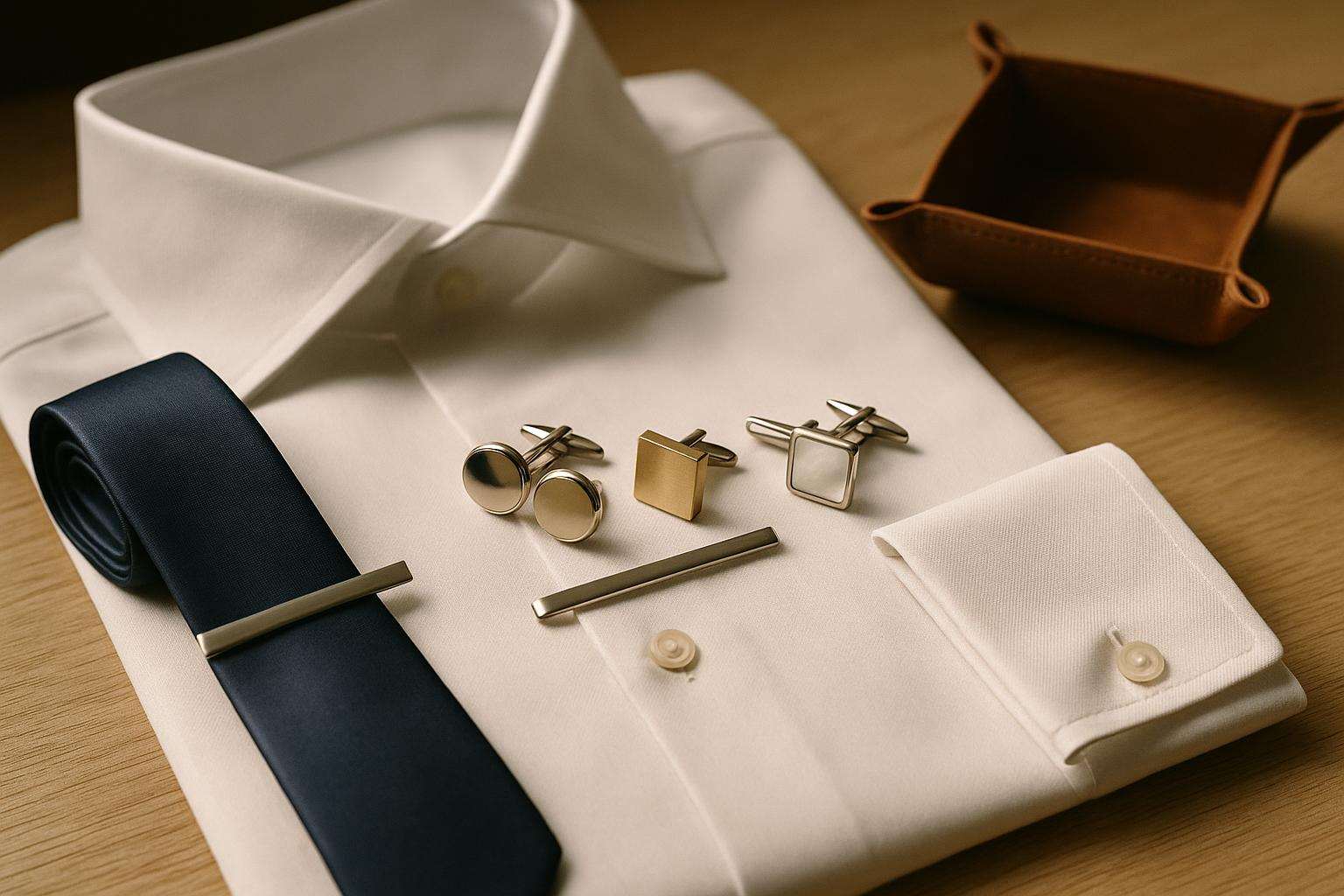
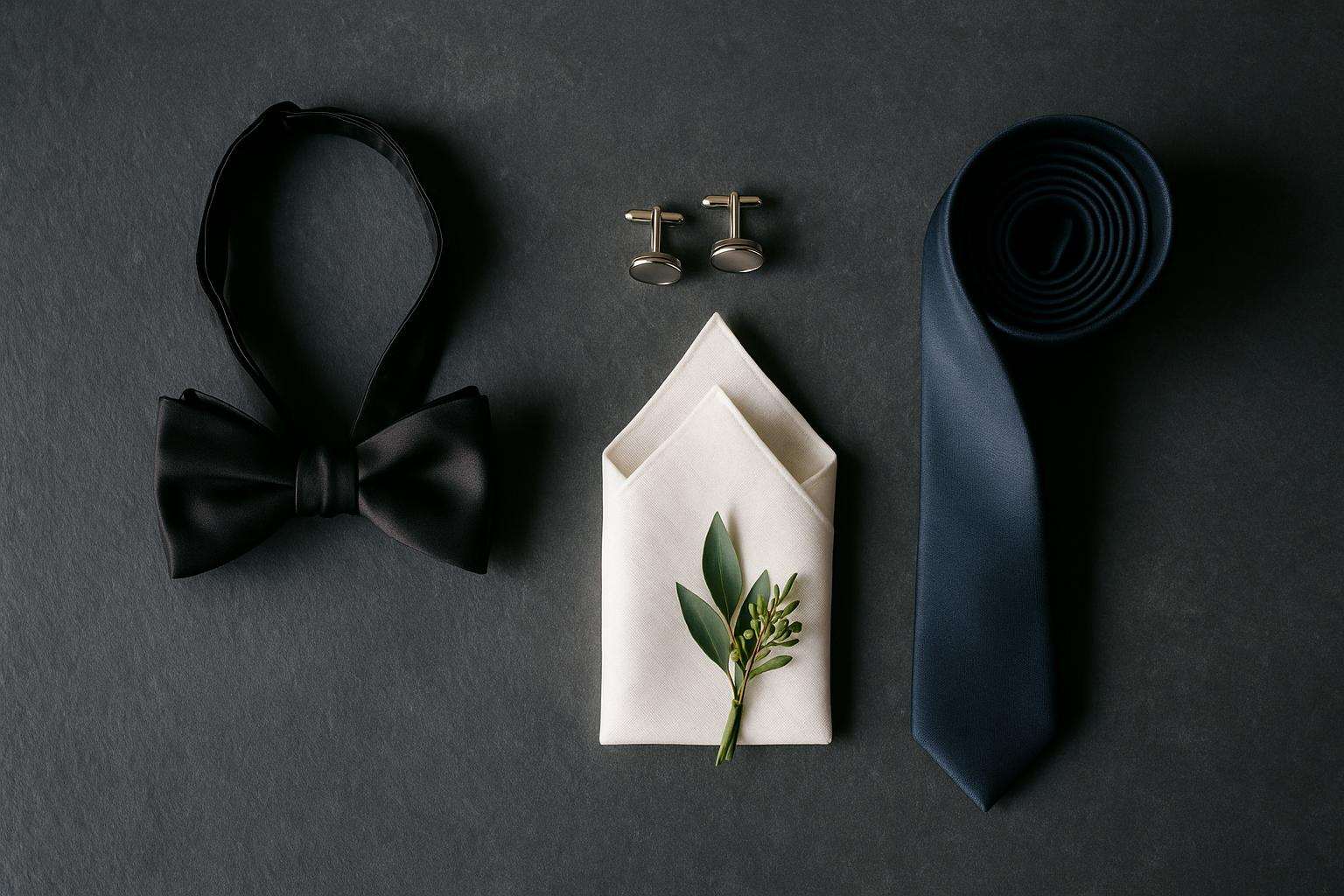
A ranked edit of real cufflinks and tie bars across every budget — from The Tie Bar's engravable basics to Tiffany and Cartier heirlooms — with the keepsake picks worth keeping.
A head-to-toe checklist of every accessory he wears beyond the suit — tie, pocket square, cufflinks, belt, watch, shoes, socks, boutonnière, and band — with real brands, real prices, and the one rule that ties it all together.
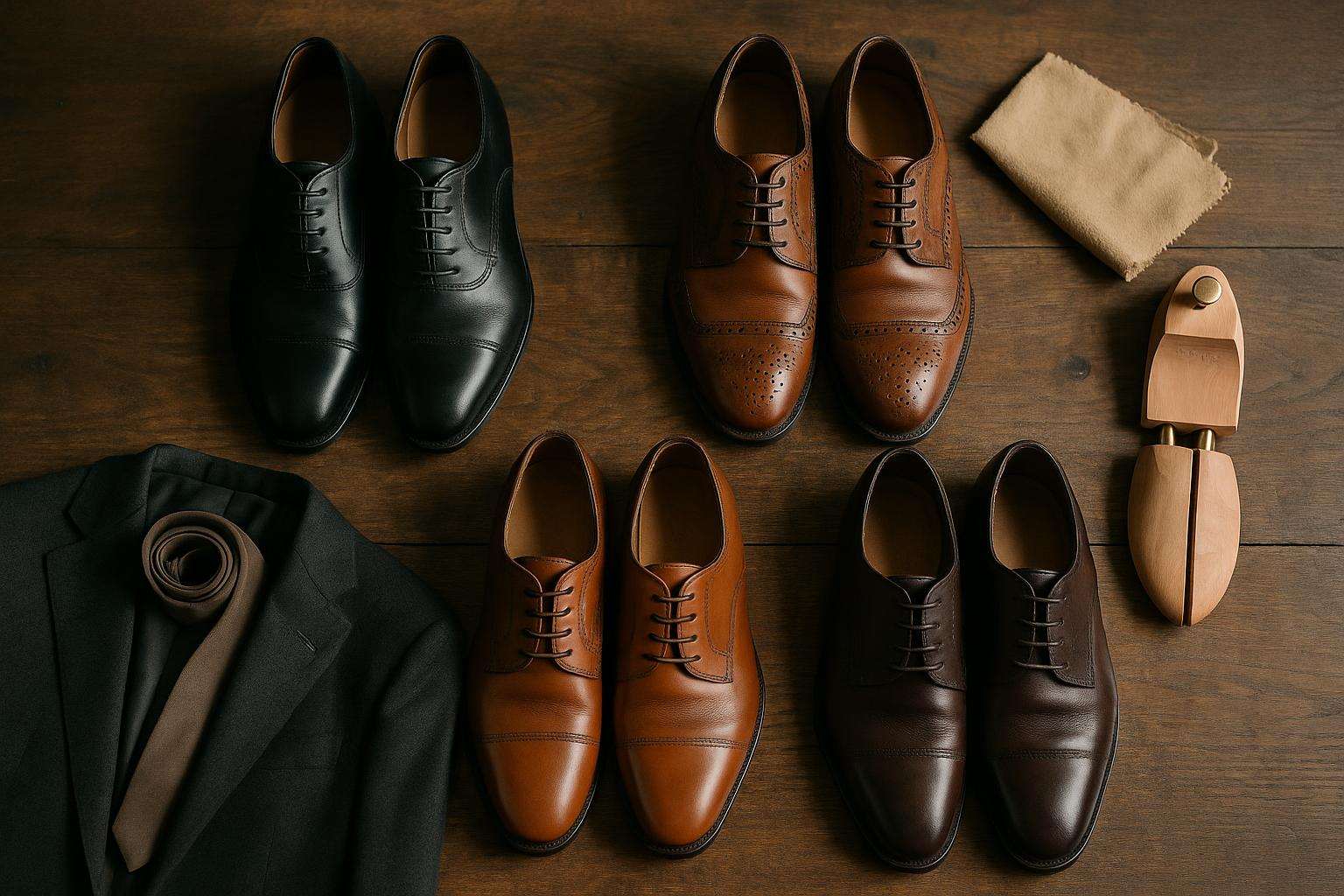
A budget-tiered edit of real shoemakers — Beckett Simonon, Thursday Boot, Meermin, Cole Haan, Magnanni, and Allen Edmonds — for the wedding-day oxford or derby he will wear from ceremony to last dance.
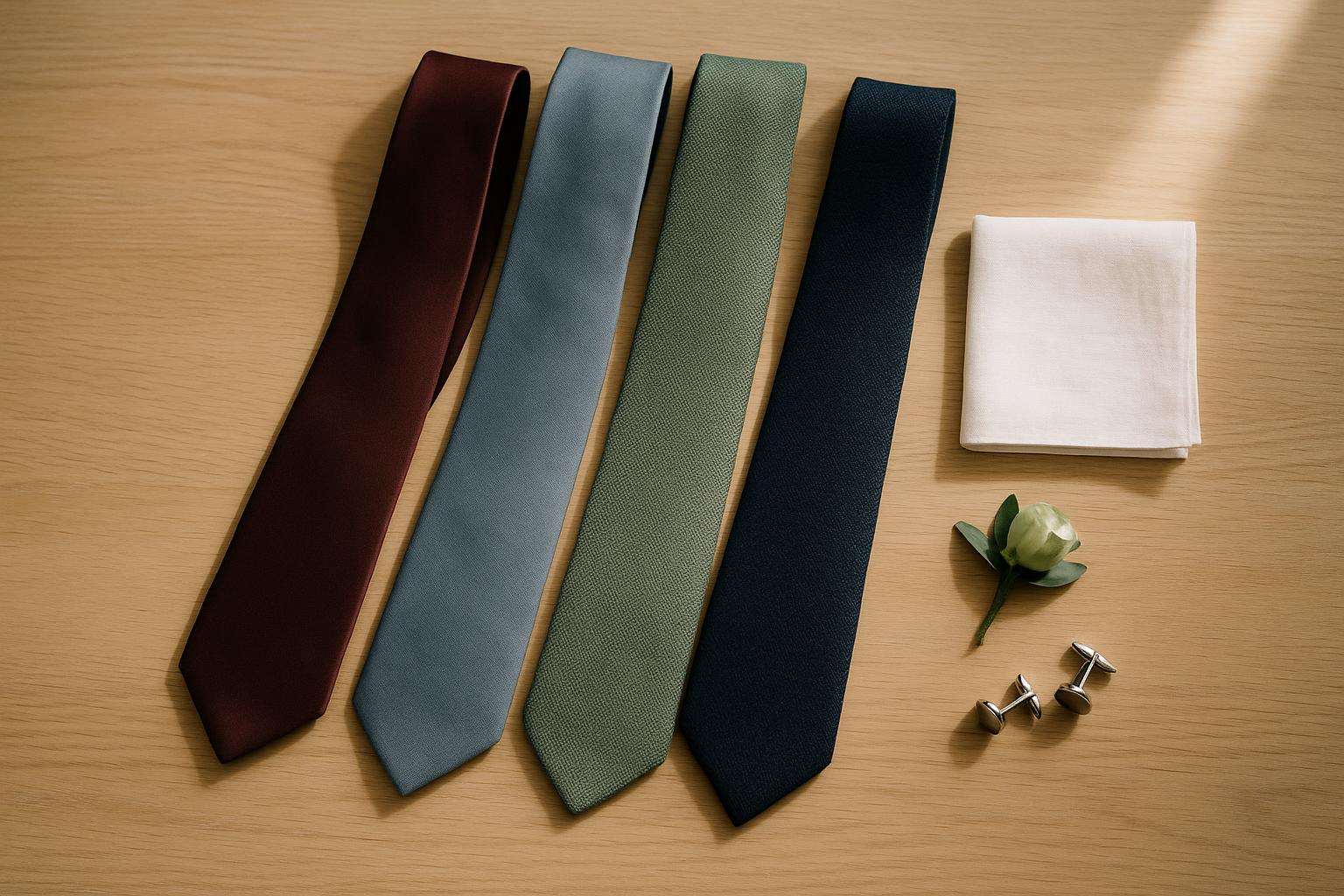
How to tie his tie to the wedding palette and his groomsmen — tonal versus contrast, the seasons, and the one rule about the pocket square — without dead-matching a single thing.
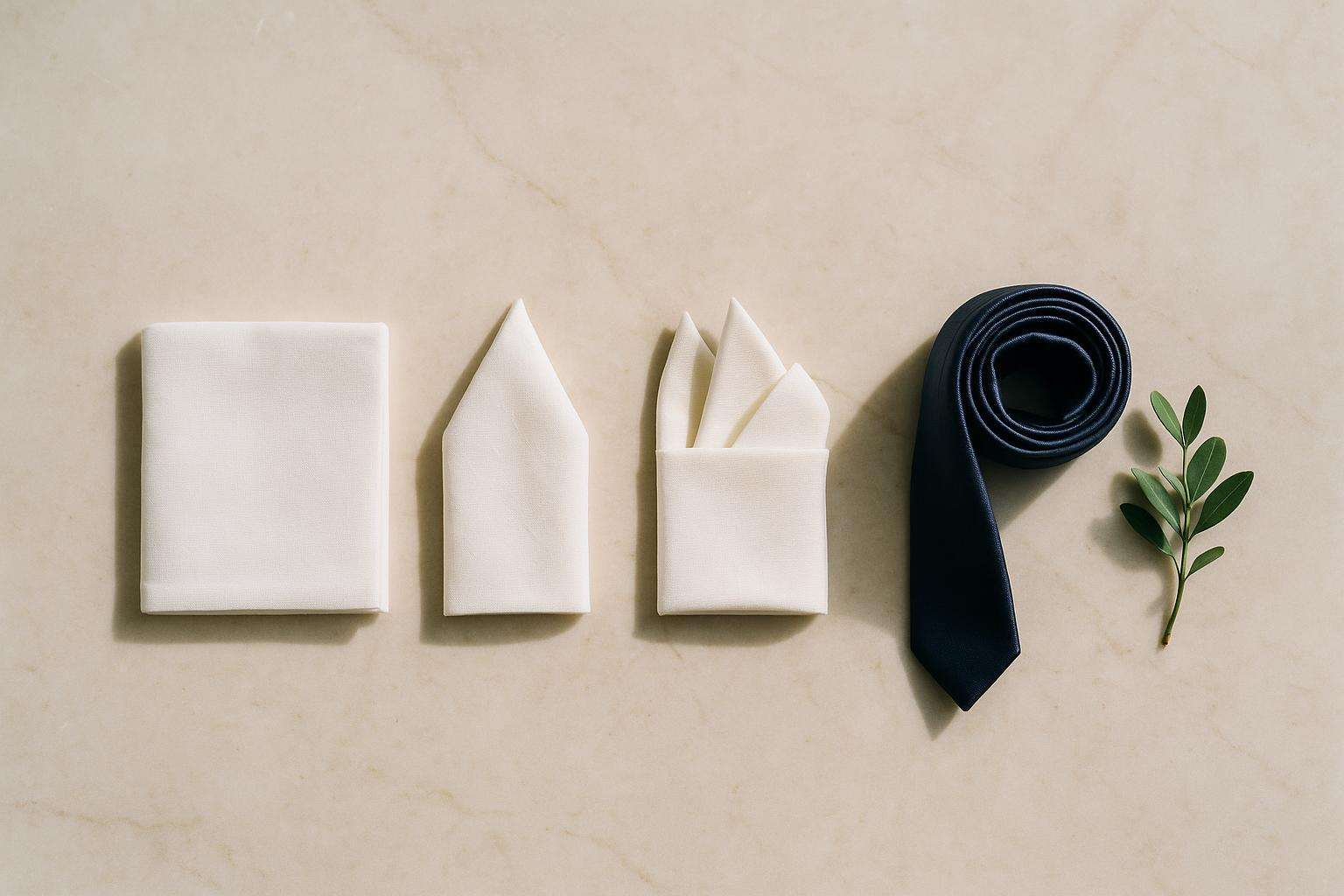
The four wedding-day folds, when to reach for silk over linen, and the one rule that decides it all — his pocket square should complement his tie, never match it.
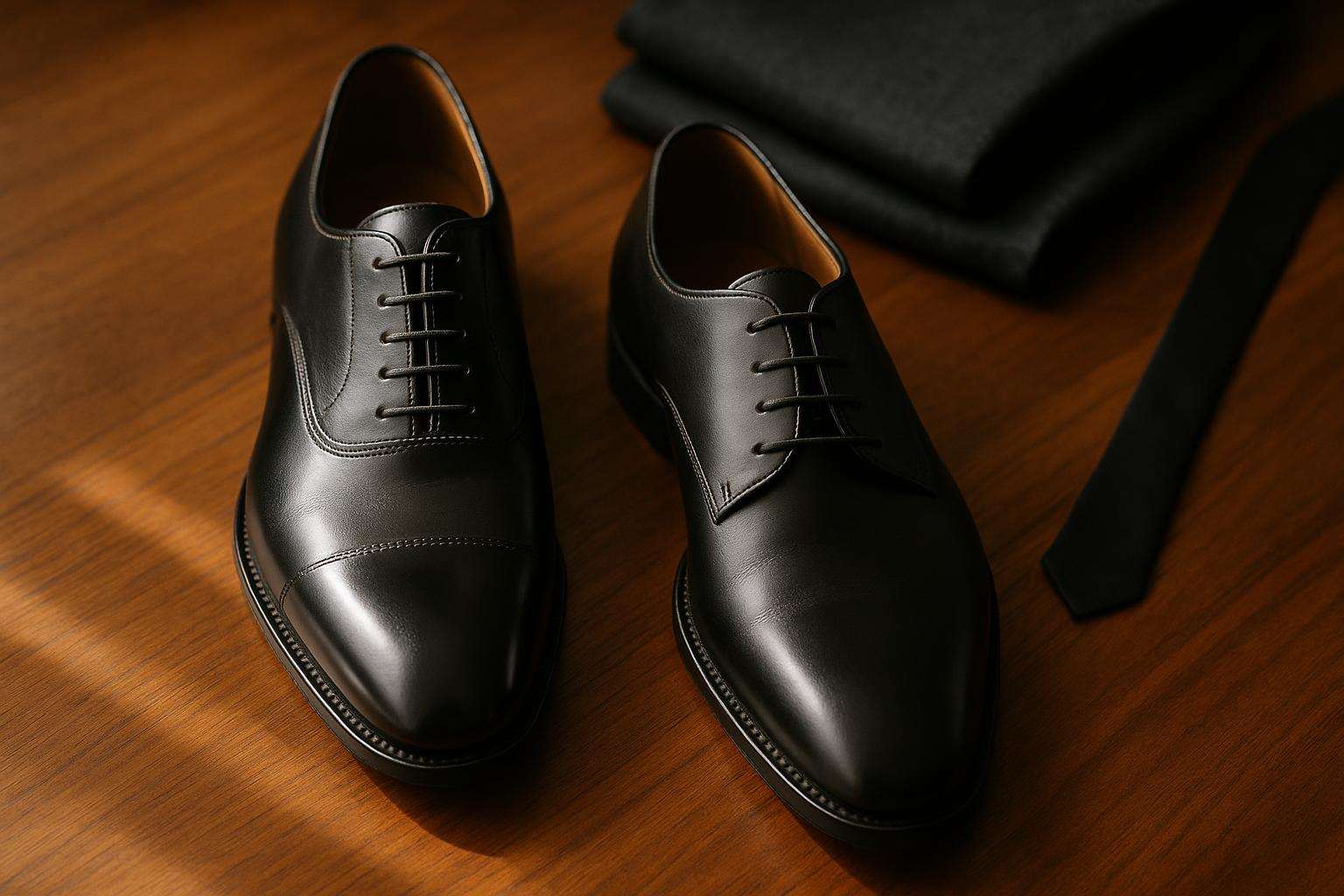
The closed-versus-open lacing distinction, a clear formality ranking, and how each shoe pairs with his tuxedo or suit — grounded in real brands.
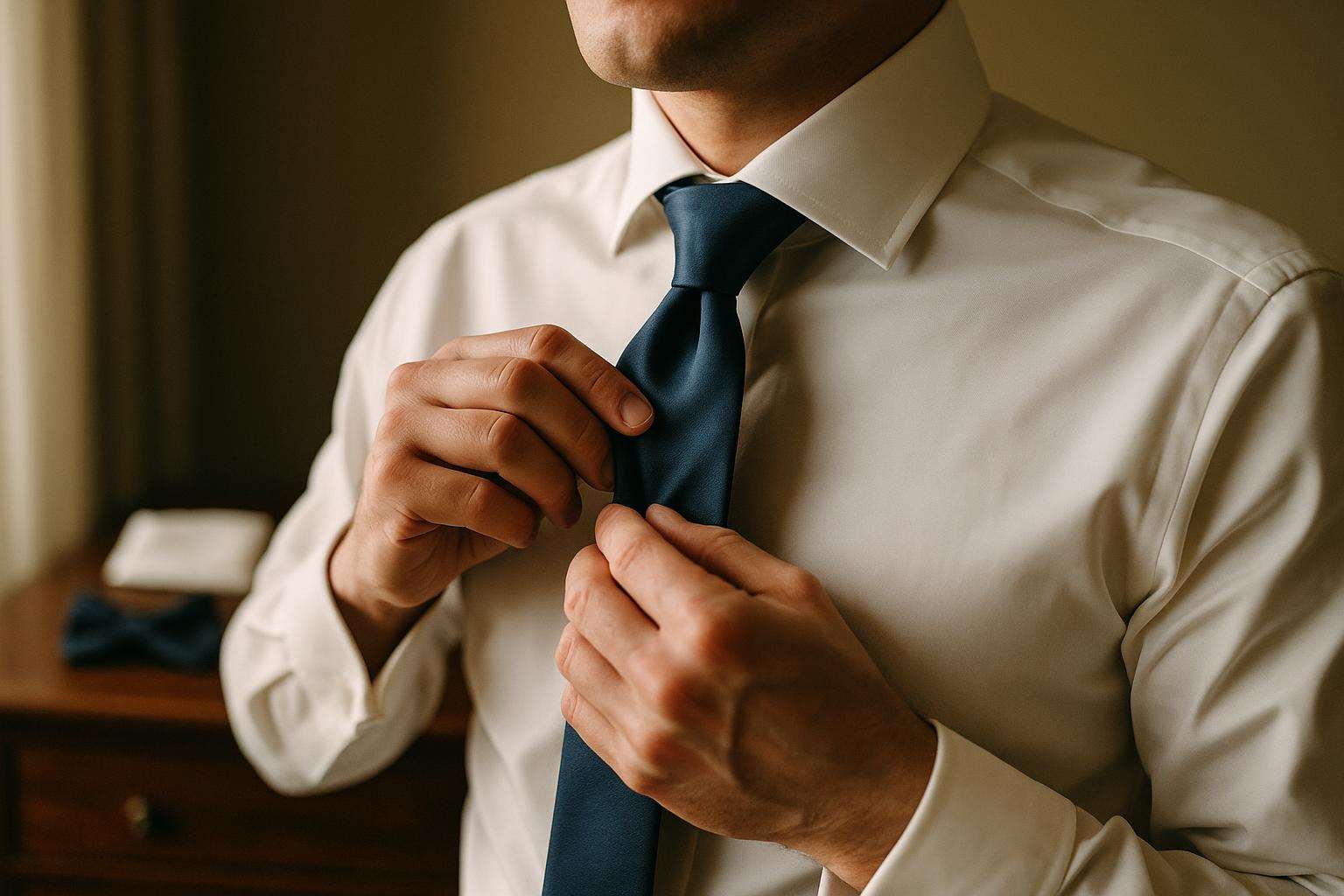
The groom's neckwear is settled first by his garment and dress code, then fine-tuned by venue, build, and face shape — here is exactly when each is correct.
The three knots that matter, a proper self-tie bow tie, and how to match each one to his collar so he looks composed in every photograph.
A dress watch is the one accessory he'll keep for life. How to choose his wedding watch — leather vs. metal, dial size, formality, and real options from Tissot to Omega.
Socks are invisible until he sits, kneels, or crosses his legs — and then they are in every photo. How to choose length, color, and the right amount of fun for his big day.
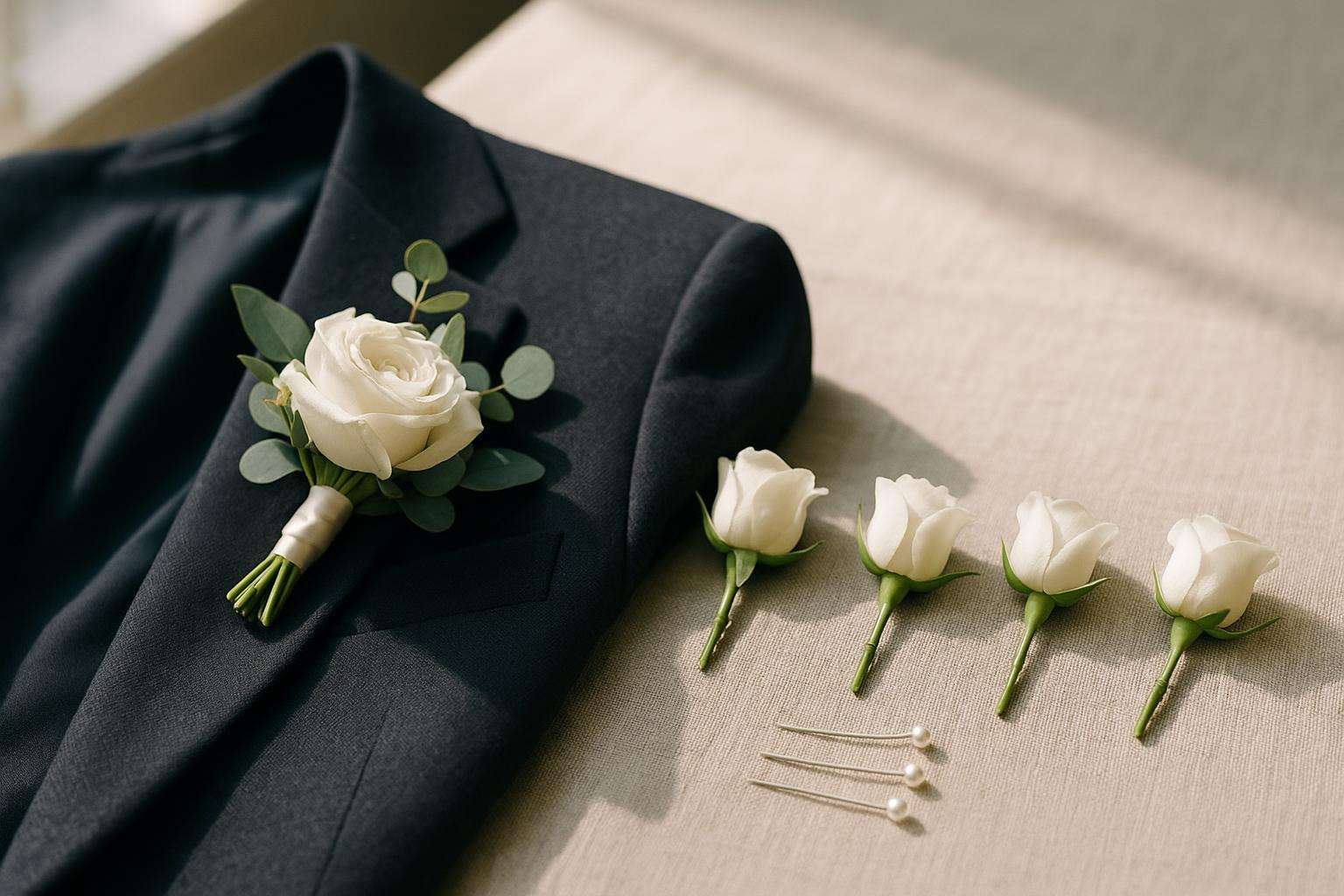
A calm, complete guide to the lapel flower — who in the wedding party wears one, how his is set apart, which side it pins to, and whether to choose fresh or faux.
The three small pieces of metal on his finished look — cufflinks, tie bar, lapel pin — and the quiet rules that make them read intentional rather than busy.
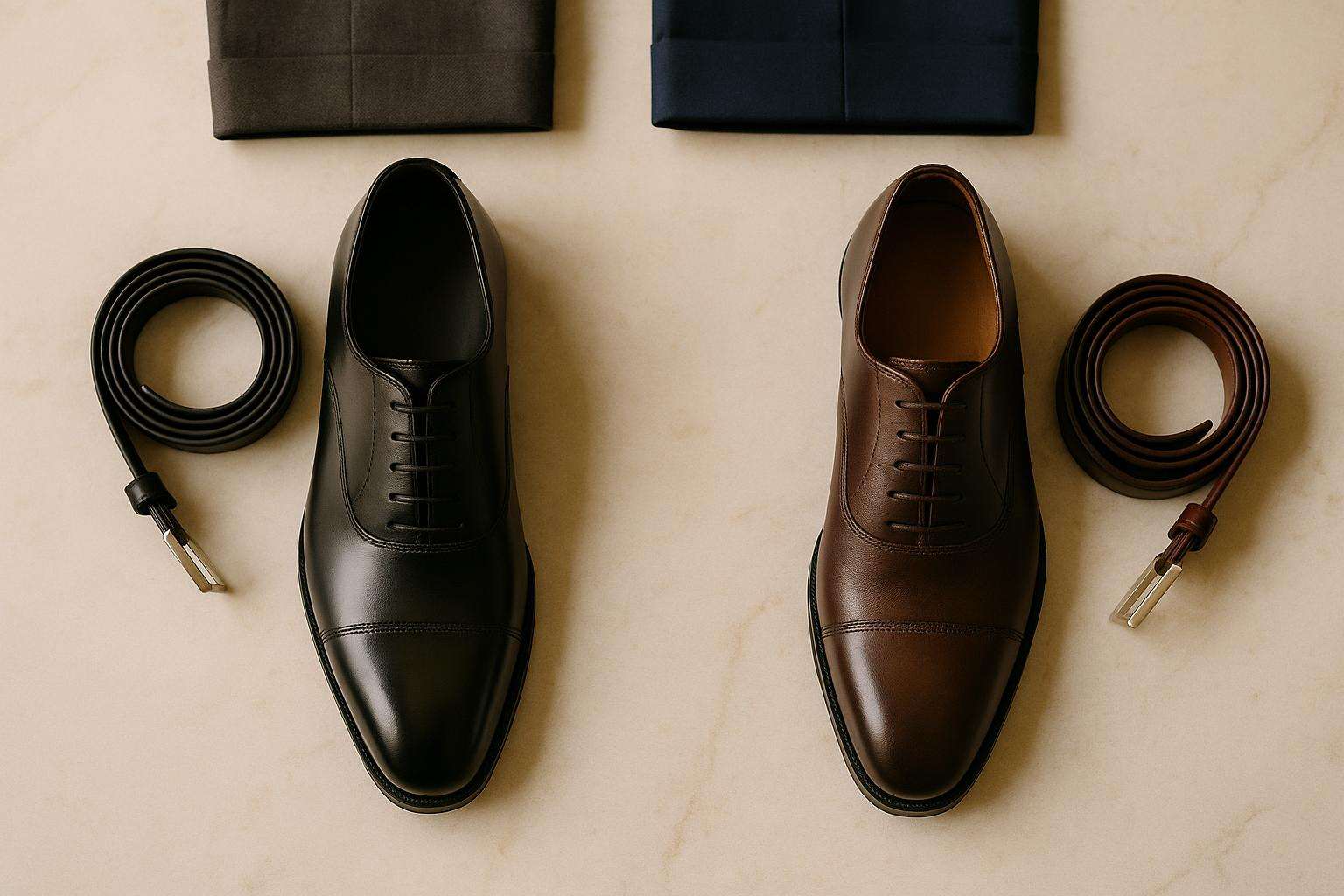
Which shoe color his suit actually demands — the black-tie black-only rule, the navy and grey pairings, and how the belt has to match.
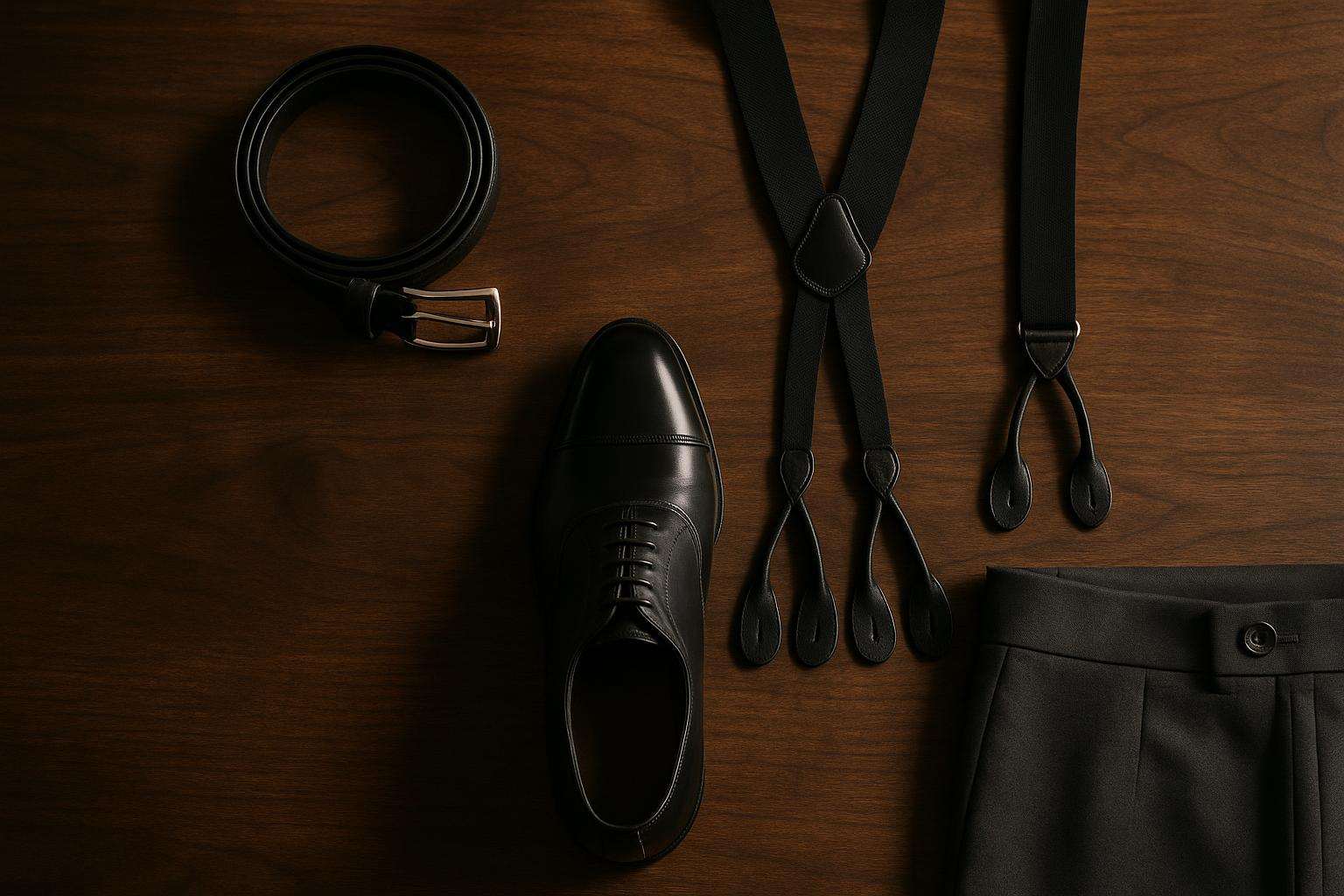
One rule settles it: belt or suspenders, never both. Here is how to choose by the formality of the day, his trousers, and the leather he is already wearing.
Let the formality lead. A bow tie belongs with a tuxedo and a true black-tie or formal evening look; a necktie suits a business suit and most daytime or semi-formal weddings. Proportion matters too — a bow tie flatters a leaner face and frame, while a well-chosen necktie reads correctly almost anywhere a suit is worn.
The suit decides. Black shoes pair with black, charcoal and most navy suits, and they are the only correct choice with black tie. Brown — from chocolate to tan — suits navy, grey and earth-tone suits for daytime and outdoor weddings. Whatever he chooses, the belt should match the shoe leather, and the metals (buckle, watch, cufflinks) should agree.
It should complement, not copy. The groom's boutonniere traditionally echoes a single bloom or note from the bride's bouquet so the two read as a pair, while a subtle difference — a distinct flower or a touch of greenery — sets the groom apart from his groomsmen, whose boutonnieres are usually simpler.