Groom Attire
Casual Groom Attire: A Complete Style Guide
A garden, backyard, or barn wedding gives him the most room to dress down — and the easiest way to read underdressed. Here is the calm, earth-toned way to get it right.
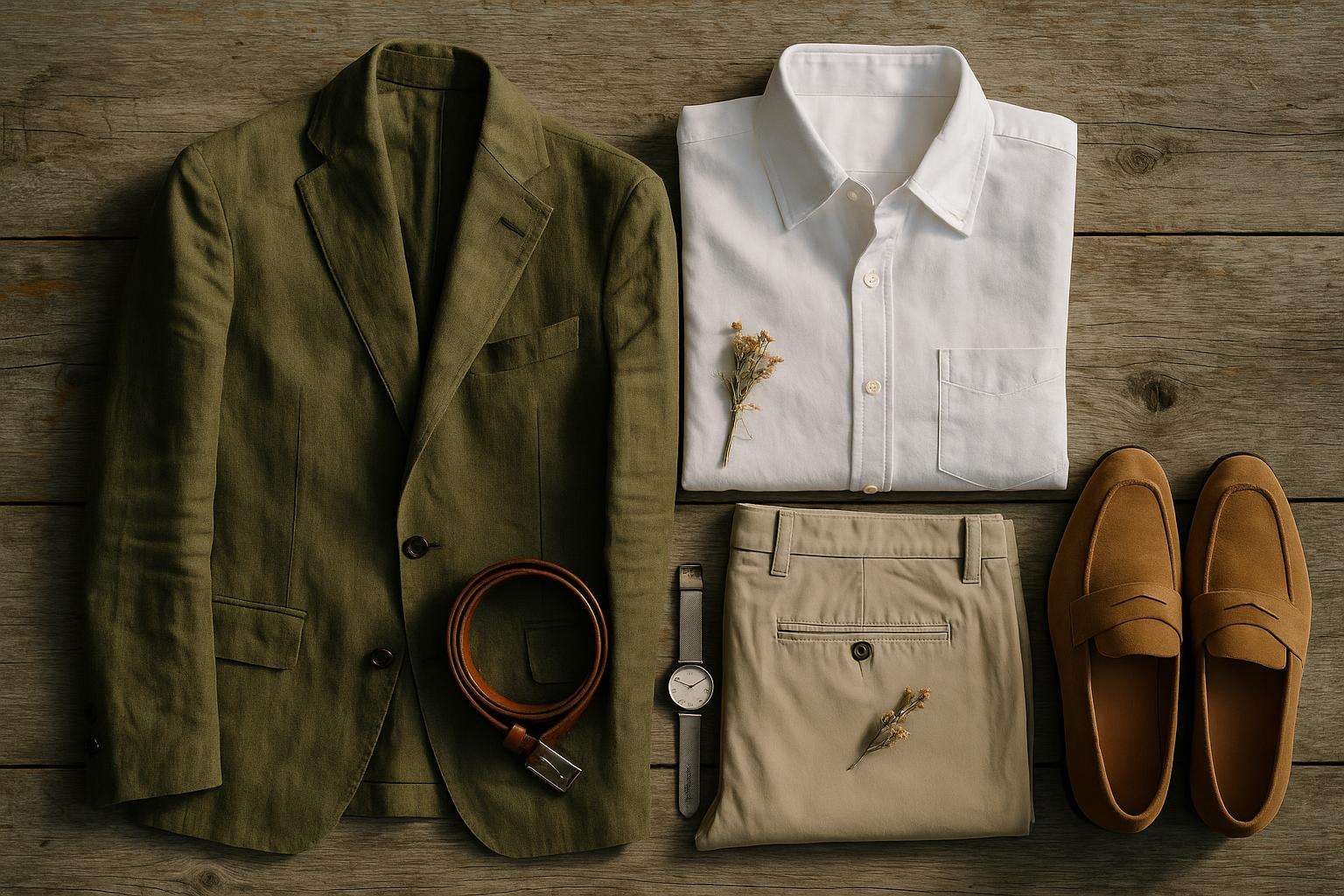
A casual outdoor wedding gives the groom the most freedom of any dress code — and the easiest way to read underdressed. Build the look on a ladder: tailored chinos and a linen blazer at the floor, mix-and-match separates in the middle, a soft unstructured suit at the top. Anchor it in earth tones, choose a breathable natural fabric, and let fit — not formality — do the heavy lifting. He should sit one notch above the most-dressed guest.
When the invitation reads "garden," "backyard," "barn," or simply "casual," the groom is handed both a gift and a trap. The gift is latitude: no rented tuxedo, no rigid rules, room to look like himself. The trap is the same latitude, because casual is the one dress code where it is genuinely possible to look like a guest who wandered to the front. The job is to dress him so that, from across a sunlit field, there is no doubt about who is getting married.
What does the groom wear to a casual or outdoor wedding?
Start by retiring the word "casual" as he might use it on a Saturday. At a wedding, casual still means intentionally dressed up — never jeans and a tee. The cleanest way to think about it is a ladder, least to most formal, and he can stand on whichever rung suits the day:
- Tailored chinos and a sport coat, no tie — the floor for a casual or garden wedding. Chinos in khaki, stone, or olive; a linen or cotton blazer in an earth tone over an open-collar shirt.
- Mix-and-match separates — a tan or beige jacket over brown or olive trousers, perhaps with a vest worn for the ceremony and the jacket shed for dancing. Relaxed but considered, and right at home in a barn.
- A soft, unstructured suit — a full linen, cotton, or lightweight-wool suit in sage, beige, tan, or muted navy for the groom who wants a clearly "groom" silhouette without going formal.
Whichever rung he chooses, he should read about one notch above the most-dressed guest. Accessible brands make this easy: Bonobos is built around fit-focused stretch chinos and lightweight blazers, J.Crew is the home of the mix-and-match oxford-shirt-and-sport-coat look, and Express covers the same territory at a friendlier price.
What colors and fabrics work best for an outdoor wedding groom?
Outdoors, color and fabric matter more than any single garment, because both have to answer to nature and to the weather.
Color: earth tones win. Olive, warm or rust brown, tan, camel, cream, sage green, dusty blue, and a soft muted navy all harmonize with wood, grass, and natural light, and they photograph beautifully. There is a practical bonus, too — light shades reflect heat while dark ones absorb it, so a beige or sage suit is genuinely cooler under a summer sun.
Fabric: breathable and a little textured. Linen is the heat champion — lightweight, moisture-wicking, with a relaxed drape. It wrinkles, but that softness reads as ease rather than mess. Cotton is the more structured runner-up, breathable but holding a sharper line for a slightly dressier garden look. Lightweight wool and seersucker also belong in summer; tweed suits a fall or winter barn. According to The Knot, lighter tones and breathable weaves are exactly what keep a warm-weather look seasonally right. For beach or very hot days, choose an unlined or half-lined jacket so air can move.
| Setting | The move | Color | Fabric |
|---|---|---|---|
| Garden | Blazer + chinos or soft suit | Sage, dusty blue, tan | Half-lined cotton or linen-blend |
| Backyard | Separates, vest optional | Olive, stone, warm brown | Cotton, linen-blend |
| Barn / rustic | Three-piece or tweed separates | Brown, forest green, burgundy | Tweed, linen, wool |
| Beach | Soft suit, no tie, loafers | Beige, cream, light blue | Unlined linen |
How does the groom avoid looking underdressed?
Three levers separate "the groom" from "a guy at a backyard barbecue," and none of them require spending a fortune.
Fit over formality. An impeccable fit is the single defining element of the whole look. Chinos and a blazer read elevated the moment the shoulder seam sits clean, the jacket nips gently at the waist, and the trousers break just at the shoe. Off-the-rack pieces from Bonobos, J.Crew, or Express should, at minimum, be tailored through the waist and at the sleeve and hem — a thirty-dollar alteration does more for the photographs than a hundred-dollar fabric upgrade.
One deliberate groom signal. A boutonnière, a vest, a quality watch, or simply a jacket in a color distinct from the groomsmen quietly tells every eye in the field who he is. He wants subtle separation — a camel jacket against the party's olive — not a costume.
Shoes that suit the terrain. Loafers, suede brogues, or clean leather or suede boots in tan or brown handle grass and gravel far better than thin-heeled dress shoes, which sink and wobble. For a beach ceremony, espadrilles or clean white sneakers are entirely fair. Keep the rest restrained — a knit tie or none at all, a warm-hued pocket square, simple cufflinks — and the natural setting does the rest.
Chinos and a blazer or a full suit — which should he choose?
Both are correct; the choice is about how clearly he wants to read as the groom and how dressed-up the guests will be. Chinos and a blazer are the most comfortable in heat and perfect for a relaxed garden or backyard ceremony. A soft unstructured suit gives a more obviously "groom" silhouette while still feeling laid-back, and earns its place when the crowd is dressed up a touch. The middle path — separates with a vest — lets him wear the full ensemble for the vows and lose the jacket for the dancing, which is often the most-photographed and most-comfortable version of all. The honest answer for most couples is to decide the rung first, then spend the budget on tailoring it to him rather than on a label.
Frequently asked
What does a groom wear to a casual outdoor wedding?
The reliable starting point is tailored chinos and a sport coat with no tie — chinos in khaki, stone, or olive, and a linen or cotton blazer in an earth tone over an open-collar shirt. From there he can dress up to mix-and-match separates (a tan jacket over brown trousers, perhaps with a vest) or a soft, unstructured suit in sage, beige, or muted navy. The guiding rule is that casual still means intentionally dressed up: he should sit one notch above the most-dressed guest so he reads as the groom, not a guest. Loafers or suede boots and a single deliberate detail — a boutonnière or a distinct jacket color — finish the look.
What colors are best for a barn or garden wedding groom?
Earth tones are the move. Olive, warm brown, tan, camel, cream, sage green, dusty blue, and soft navy harmonize with wood, grass, and natural light and photograph beautifully outdoors. Light shades also reflect heat, which makes them the safer choice under summer sun, while dark colors absorb it. A useful trick from Hangrr's barn-wedding guide is to dress the groom in a slightly richer or different earth tone than his groomsmen — a camel jacket against their olive, say — so he stands apart without anyone needing to wear a costume. Steer away from shiny satin or silk, which look out of place against a rustic backdrop.
Should the groom wear a full suit or just chinos and a blazer?
Both are correct for a casual wedding — the choice is about how clearly he wants to read as the groom and how formal the day is. Chinos and a blazer are perfect for a relaxed garden or backyard ceremony and the most comfortable in heat. A soft, unstructured suit in linen or lightweight cotton gives a more obviously "groom" silhouette while still feeling laid-back, and works well when guests are dressed up a little. A practical middle path is separates with a vest: he wears the full ensemble for the ceremony and sheds the jacket for dancing. Whatever the level, fit matters more than formality.
What fabric should an outdoor wedding suit be?
Linen is the heat champion — lightweight, moisture-wicking, with a relaxed drape; it wrinkles, but that softness is part of its charm. Cotton is the more structured runner-up: breathable but holds a sharper line, good for a slightly more polished garden look. Lightweight wool and seersucker also work in summer, and tweed suits a fall or winter barn setting. As Hockerty notes, linen-cotton or linen-wool blends add durability and reduce wrinkling. For beach or very hot days, choose an unlined or half-lined jacket so air moves freely.
How does the groom avoid looking underdressed?
Three levers do the work. First, fit over formality — even chinos and a blazer read elevated when the shoulder sits clean and the trousers break just at the shoe, so tailor off-the-rack pieces through the waist and sleeve. Second, one deliberate groom signal: a boutonnière, a vest, a watch, or a jacket color distinct from the party tells the eye he is the groom. Third, shoes suited to the terrain — loafers or suede boots rather than thin-heeled dress shoes that sink into grass. Keep accessories subtle and the whole look stays celebratory without ever tipping into "just a guest."
What shoes and accessories work for a casual groom look?
Footwear should suit the ground he will stand on. Loafers, suede brogues, or clean leather or suede boots in tan or brown handle grass and gravel far better than thin-soled dress shoes; for a beach wedding, espadrilles or clean white sneakers are fair game. Accessories stay quiet and warm: a knit tie or no tie at all, a pocket square in a muted hue, simple cufflinks, and a good watch. The point of casual is restraint — a couple of considered details rather than a pile of them — so the natural setting and a well-fitting jacket do most of the talking.