Groom Attire
How to Coordinate the Groom's Suit With the Wedding Color Palette
A whole-outfit strategy — a versatile suit base, then the palette echoed through tie, pocket square, boutonnière and socks — so he complements your colors without matching them.
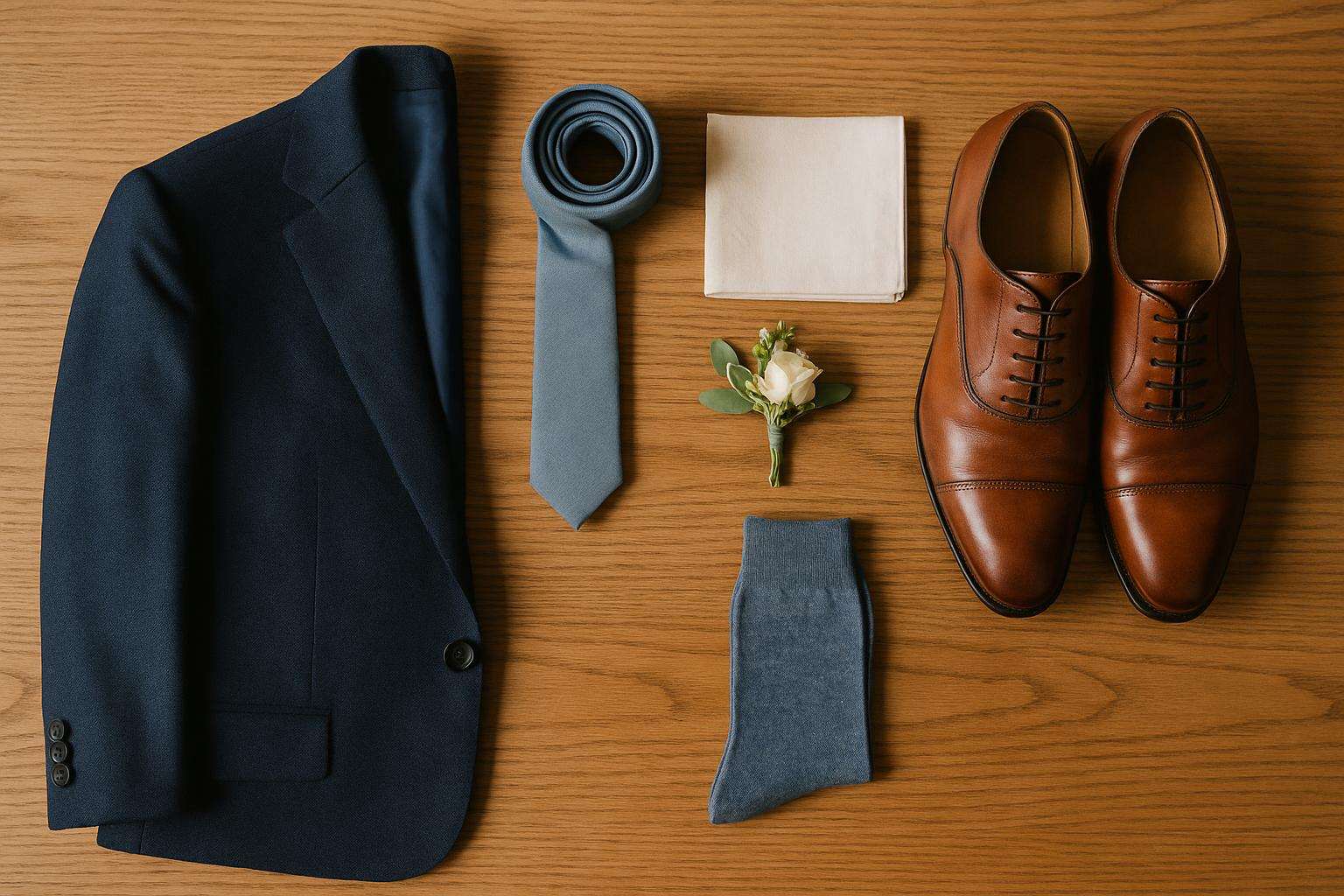
Coordinate from the bottom up: choose a versatile suit base that holds your palette — navy, charcoal, grey, tan, or a single restrained palette tone — then let the actual wedding colors live in the small, swappable accents (tie, pocket square, boutonnière, socks). The goal is a groom who complements your colors, not one who matches the bridesmaids swatch-for-swatch.
The instinct, when you have spent months building a color story, is to pull him into it directly — a suit in your exact shade, a tie cut from the same cloth as the bridesmaid dresses. Resist it. The most cohesive grooms are dressed in layers, and the palette belongs in the small pieces. Think of his outfit as a canvas and a few brushstrokes: the suit is the canvas, and your colors are the brushstrokes. Get that hierarchy right and he will read as part of the day without looking costumed into it.
Should the groom's suit match the wedding colors exactly?
Almost never. A suit cut in your precise palette color — an exact blush, an exact sage — tends to look like a uniform rather than a considered outfit, and it dates quickly in photographs. The guidance retailers and stylists return to is the same: his suit should complement your attire and the overall palette, not duplicate it. As The Black Tux notes in its color guide, darker, versatile suits anchor a palette while the wedding color is added as “a pop” through a tie or pocket square.
There is one elegant exception. He can wear a palette color as the suit — a burgundy three-piece, an emerald jacket, an olive or tan suit — but then the accents should step back to neutral. A burgundy suit with a crisp ivory pocket square is one of the strongest looks going; a burgundy suit with a burgundy tie and burgundy square is too much of one note. When the base is loud, keep the accents quiet, and vice versa.
What suit color works with almost any wedding palette?
If you want maximum flexibility, start with a neutral or palette-adjacent base and decide the accents last. Four bases carry nearly any color story:
| Suit base | Best for | Why it works | Accent move |
|---|---|---|---|
| Navy | Almost any palette; blue, blush, dusty tones | Blue undertones make adjacent colors look richer | One pop — tie or square in your color |
| Charcoal / grey | Formal, evening, fall & winter | Deep neutral; reads dressy without going black | Jewel-tone tie; silk or grenadine for texture |
| Tan / sand / light grey | Garden, vineyard, beach, daytime spring/summer | Warm and relaxed; flatters earth-tone palettes | Sage, terracotta or dusty-blue tie |
| Palette tone (burgundy, emerald, olive) | The groom who wants to stand out | Becomes the statement; needs restraint elsewhere | Neutral ivory/white square; keep the rest quiet |
Navy is the easiest yes. Because its blue undertones lift the colors placed beside them, a navy suit makes a dusty-blue, blush, sage or champagne accent look intentional and rich. Charcoal is the more formal cousin, ideal for evening or cold-weather ceremonies, where texture — a silk or grenadine tie — can stand in for color entirely. For warm, outdoor palettes, a tan or light-grey suit with a sage or terracotta accent is one of the most natural pairings of the season.
Which accents should carry the wedding colors?
This is where your palette finally appears, layered from largest piece to smallest:
- Tie or bow tie — the primary color carrier. Pull it straight from your palette: your dusty blue, your burgundy, your sage.
- Pocket square — coordinate, never match. An identical tie-and-square set reads as overly coordinated and a touch dated. Keep them in the same family with a different pattern or scale — a dusty-blue tie with a white or subtly patterned square. Tie specialists make exactly this point about the 2026 looks.
- Boutonnière — pull it from your actual ceremony flowers so the groom connects to the florals rather than a fabric swatch.
- Socks — a quiet, joyful echo of the tie color; a small move that lands well in seated photos and doubles as a groomsmen gift.
The one firm rule is restraint: pick one controlled pop, not five. If the tie carries the color strongly, let the square recede to white or a faint pattern. Two pieces in conversation always look more deliberate than four pieces shouting the same shade.
How do you coordinate the groom with the groomsmen and with you?
The current standard is complementary, not uniform. Keep the suit color and cut consistent across his men, then let the groom step forward and give each groomsman a small piece of styling identity — a slightly different tie, square or vest, with the best man often in the darkest tie. The groom might wear a statement jacket while the party holds steady in navy or charcoal, so he stands out while everyone still reads as one party. The Black Tux's party-coordination guide frames this as a wedding party that looks “styled together rather than dressed in a uniform.”
Coordinating to you is the gentlest layer of all. His accent color should sit beside your bouquet and the bridesmaids without copying them — if your party wears blush, a champagne or dusty-rose tie nods to it rather than cloning it. And finish with the practical anchors: shoes follow the suit's depth (black for charcoal and deep navy, brown for tan, navy or burgundy), and the belt matches the shoe.
How early should you settle the suit?
Decide the suit base and the palette accents together, and start earlier than feels necessary. The Black Tux recommends beginning roughly three to four months out for the groom alone, and four to six months when a full party needs measuring and fitting. That window matters because, more than any color choice, fit is what makes a wedding suit photograph well — no shade, however perfect, survives a jacket that does not fit. Lock the base, layer the accents, allow time for tailoring, and the cohesion takes care of itself.
Frequently asked
Should the groom's suit match the wedding colors exactly?
No — matching the suit to your exact palette shade tends to look like a uniform and dates quickly in photos. The cohesive approach is to choose a versatile suit base (navy, charcoal, grey or tan) and let the wedding color appear in the accents instead. The one exception is wearing a palette color as the suit — a burgundy or emerald jacket — but then you should keep the tie and pocket square neutral so the look isn't oversaturated. The aim is for him to complement the palette, not duplicate it.
What suit color goes with the most wedding palettes?
Navy is the most flexible base because its blue undertones make adjacent colors — blush, sage, dusty blue, champagne — look richer and more intentional. Charcoal or grey is the more formal choice for evening and cold-weather weddings, where a textured silk or grenadine tie can stand in for color. For warm, outdoor palettes, a tan or light-grey suit pairs beautifully with sage or terracotta accents. Reserve a palette-color suit (burgundy, emerald, olive) for the groom who genuinely wants to be the statement, and keep his accents neutral when he does.
How should the tie and pocket square relate to each other?
They should coordinate, never match exactly. An identical tie-and-square set reads as overly coordinated and slightly dated. Keep them in the same color family but vary the pattern or scale — for example, a dusty-blue tie with a plain white or subtly patterned blue square. Think of the tie as the main color carrier and the square as a quieter companion. If the tie is bold and patterned, let the square recede to a solid; if the tie is a quiet solid, the square can introduce a small print that picks up the palette.
How do you coordinate the groom with the groomsmen without everyone matching?
Keep the suit color and cut consistent across the men, then differentiate with small styling details. Let the groom step forward — a distinct jacket, a different lapel, or simply a unique tie and boutonnière — while groomsmen share one color family. A common, polished move is to give each groomsman a slightly different tie or pocket square, with the best man in the darkest tie. The result, as The Black Tux describes it, is a party that looks styled together rather than dressed in a uniform.
What about shoes, belt and socks?
Shoes follow the depth of the suit: black shoes with black, charcoal and deep-navy suits; brown shoes with tan, lighter navy, grey, burgundy and green. The belt should match the shoe color for a clean, consistent line. Socks are the most playful layer — a subtle echo of the tie color reads well in seated photographs and makes a practical groomsmen gift. Keep these anchors disciplined; they are the quiet framework that lets the one color accent do its job without the outfit feeling busy.
How early should the groom choose his suit and accent colors?
Start roughly three to four months before the wedding for the groom alone, and four to six months ahead when a full wedding party needs measuring and fitting. Decide the suit base and the palette accents together rather than separately, so the colors are settled before you order anything. The earlier window matters most for fit: more than any color choice, proper tailoring is what makes a wedding suit photograph well, and alterations need time. Lock the base, layer the accents, and leave room for a final fitting close to the day.