Groom Attire
Match the Groom's Suit to the Venue: Ballroom, Vineyard, Beach, Barn
Before the dress code, before the color swatches, look at the place. The venue is the most reliable style guide he has — here is how to read it.
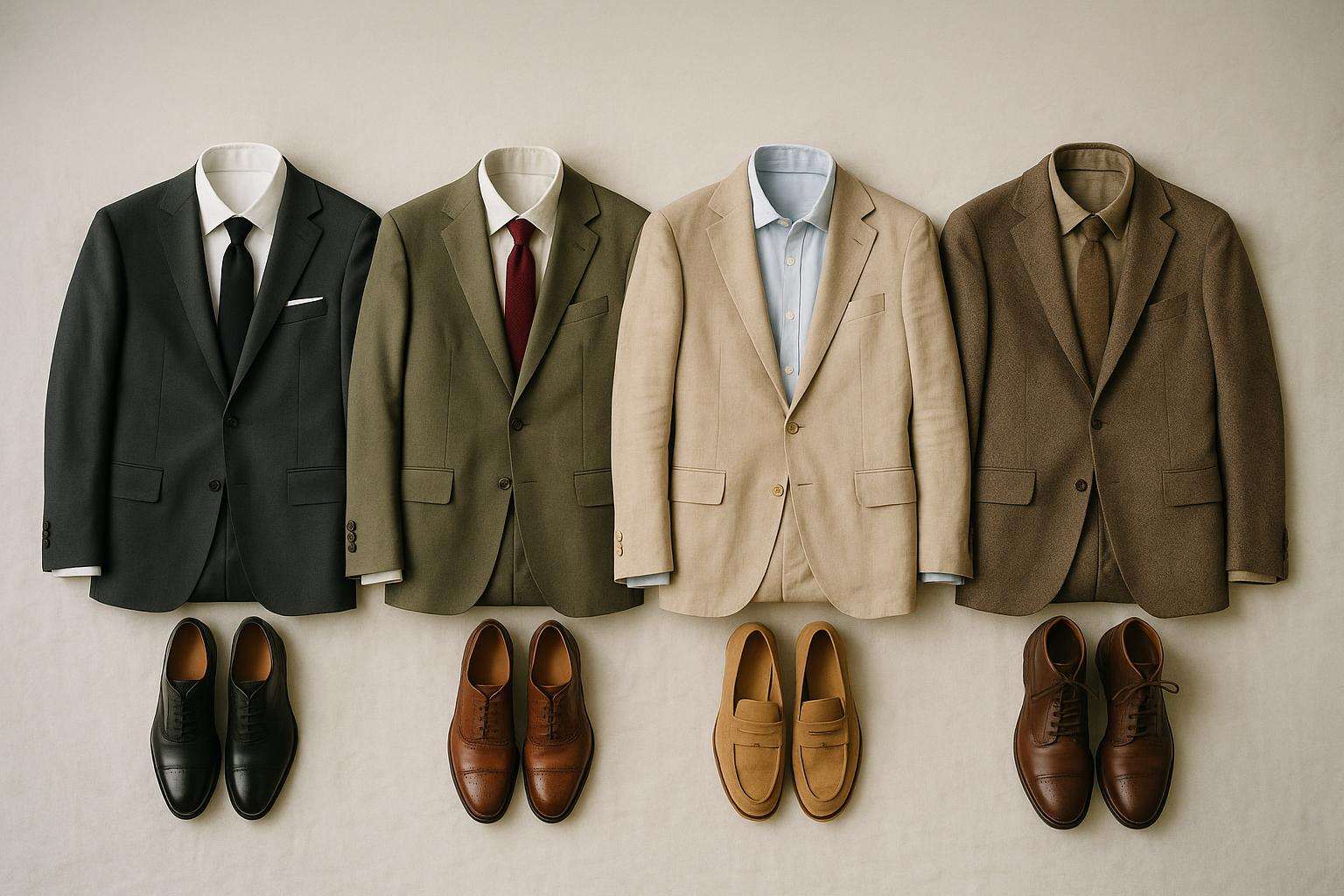
The groom tends to start in the wrong place — with a color he likes, or a suit a friend wore, chosen in the abstract. The faster, surer way begins one step earlier: look at the venue. The dress-code line on the invitation sets the ceiling of formality, but the place itself — the grand ballroom, the vineyard at golden hour, the beach, the barn — tells him what he will actually feel right in and, just as importantly, what photographs correctly against that backdrop. As The Black Tux frames it, the venue is the real style guide. This piece reads each of the four most common settings and hands you the fabric, color, and structure that belong in it.
The short version: Ballroom wants structured wool in black, midnight blue, or charcoal — tux at the formal end. Vineyard or estate wants mid-weight wool or a wool-linen blend in olive, navy, or jewel tones. Beach wants linen or seersucker in tan, beige, or soft blue. Barn wants tweed or textured wool in earthy browns and greens. Then filter the palette through the season and the hour.
Why does the venue, and not just the dress code, decide the suit?
The dress code answers how formal; the venue answers what kind of formal. A black tuxedo that looks commanding under chandeliers looks faintly ridiculous barefoot on sand, and a breezy tan linen suit that reads effortless by the water looks underdressed beneath crystal lighting. The venue sets three dials at once — fabric weight (how the cloth behaves in the room's temperature and light), color (what harmonizes with the backdrop), and structure (how sharp or relaxed the silhouette should read). The same groom may genuinely need different answers for a two-o'clock garden ceremony than for a seven-o'clock ballroom reception, which is why time of day rides alongside the venue in every decision below.
What should he wear to a formal ballroom, hotel, or country-club wedding?
This is the most formal end of the matrix: grand rooms, candlelight, sharp tailoring. The suit should read refined and structured. The classic answer is a tuxedo or a tailored two- or three-piece suit in black, midnight blue, or deep charcoal; at a true black-tie ballroom, a satin peak lapel adds the expected note of luxury. The cloth should be worsted wool or a wool blend — it holds its line all evening and photographs cleanly under artificial light. A crisp white shirt, a classic black or silk tie, and polished black oxfords finish it. SuitSupply's black-tie tailoring is a useful off-the-rack benchmark for what ballroom formality should look like, while Indochino's made-to-measure wool suits let him dial the fit to the millimeter — the difference between a suit that looks bought and one that looks his.
What suit works for a vineyard, estate, or garden wedding?
Romantic, earthy, polished-casual: stone, greenery, and a daytime ceremony that often slides into golden hour. Color is where the venue speaks loudest. Earthy jewel tones — olive, deep navy, burgundy, sage — coordinate with floral palettes and the green backdrop, and navy and olive are the safe, flattering bets that photograph beautifully across the day. For cloth, reach for mid-weight wool or a wool-linen blend: per Hockerty, the blend adds airflow and a natural texture while the wool keeps structure and resists wrinkles better than pure linen — ideal for standing about a vineyard on a warm afternoon. Let the hour fine-tune it: a daytime ceremony tilts lighter and more relaxed, an evening estate reception allows something richer and darker, and a formal black-tie vineyard wedding can still carry a classic tuxedo.
What should a groom wear to a beach or destination wedding?
Relaxed, breezy, effortlessly stylish — and yet it still has to honor the occasion. The challenge, as The Black Tux's beach guide notes, is dressing for sand, sun, and humidity without looking sloppy. Fabric is non-negotiable here: choose linen or seersucker. Seersucker's signature puckered weave lets air flow through and holds its shape without pressing; linen is the most breathable cloth of all but wrinkles freely, so a made-to-measure fit makes those natural creases read as intentional rather than careless. For color, tan, beige, light grey, and soft blue sit beautifully against an ocean backdrop, with terracotta or sky blue available for a groom who wants a statement. Finish with light leather or suede loafers; many beach grooms skip the tie altogether, or add a vest that gives structure he can keep once the jacket comes off. This is where custom makers earn their place — Hockerty's linen and seersucker suits, cut from over a hundred fabrics with your choice of lapel and lining, and Indochino's linen suiting, are built precisely for this lane.
What suit suits a rustic barn or country wedding?
Rustic charm, warmth, texture — and a groom who wants to look dapper, stay comfortable, and be ready to dance. Color follows the setting: olive, beige, deep blue, muted green, and brown all mirror the pastoral backdrop. The defining choice is fabric: tweed and textured wool channel barn charm in a way smooth worsteds cannot, and for a winter barn wedding, wool or even velvet looks striking, with a vest adding both warmth and dimension. Brown leather boots can be a practical, on-theme nod to uneven terrain. The thread that ties it together — the one thing Hangrr's barn-attire guide insists on — is fit: amid all that rustic texture, a tailored line is what keeps the look intentional rather than costume.
How far ahead should he buy and alter the suit?
The venue picks the cloth; the calendar decides whether it arrives in time to fit properly. For an off-the-rack suit, plan and alter three to four months before the day, and buy in season for the wedding — shop in early spring for a summer-weight wool, so the fabric weight matches the date rather than the day you happened to walk into the store. Made-to-measure runs on its own clock: Hockerty advises ordering at least six to eight weeks ahead despite fast turnarounds, to leave room for adjustments. And if the groomsmen are ordering alongside him, build in extra runway — a group order multiplies the odds that one suit needs a second fitting. Read the venue first, let it set the fabric, color, and structure, then give the calendar its due, and he will look exactly right in the place you chose, in the photographs you keep for decades.
Frequently asked
Does the venue or the dress code decide the groom's suit?
Both, in that order. The dress-code line on the invitation sets the ceiling of formality — how dressed-up he may go — but the venue tells him what he will actually feel right in and what photographs correctly against the backdrop. As The Black Tux puts it, the venue is the real style guide. A black tuxedo is commanding under ballroom chandeliers and absurd barefoot on sand; tan linen is effortless on a beach and underdressed beneath crystal lighting. Read the dress code first, then let the place set fabric weight, color, and structure.
What fabric is best for a hot outdoor or beach wedding?
Lightweight, breathable cloth — linen or seersucker. Seersucker's puckered weave lets air flow through and holds its shape without pressing, which is why it suits casual outdoor and beach settings. Linen is the most breathable of all but wrinkles freely, so a made-to-measure fit, from a maker like Hockerty, makes the natural creases read as intentional rather than sloppy. A wool-linen blend is the clever middle path: the linen adds airflow and texture while the wool keeps structure and resists wrinkles better than pure linen. Stick to tan, beige, light grey, or soft blue against the water.
What color suit works best for a vineyard or garden wedding?
Earthy jewel tones. Olive, deep navy, burgundy, and sage coordinate with floral palettes and the green backdrop, and they photograph beautifully in daylight and at golden hour. Navy and olive are the safest, most flattering bets. A daytime vineyard ceremony tilts toward lighter, more relaxed tailoring; an evening estate reception allows something richer and more polished, and a black-tie vineyard wedding can still take a classic tuxedo. Mid-weight wool or a wool-linen blend is the ideal cloth here — structured enough to look considered, breathable enough for an outdoor afternoon.
Should the groom buy or have his suit made to measure for the venue?
It depends on the cloth and the venue. For a structured ballroom suit, off-the-rack tailoring from SuitSupply is excellent and fast. For linen or seersucker, where drape and fit decide whether the suit reads relaxed or sloppy, made-to-measure earns its keep — Indochino and Hockerty cut to your exact measurements and let you choose fabric, lapel, lining, and monogram. A made-to-measure summer suit also lets you specify a half-canvas or unstructured build for breathability. Either way, fit is the variable that matters most across every venue.
What should a groom wear to a rustic barn wedding?
Texture and earth tones. Tweed or textured wool in olive, brown, deep blue, or muted green mirrors the pastoral setting and channels the rustic charm, per Hangrr's barn-attire guide. For a winter barn wedding, wool or even velvet looks striking, and a vest adds warmth and dimension. Brown leather boots can be a practical, on-theme nod to the terrain. The one rule that holds the look together is fit: amid all that texture, a tailored line keeps it looking intentional rather than like a costume.
How far ahead should he order the suit?
For off-the-rack, plan and alter three to four months before the day, and buy a suit in season for the wedding — shop in early spring for a summer-weight wool, for instance, so the cloth weight matches the date. Made-to-measure runs on its own clock: Hockerty recommends ordering at least six to eight weeks ahead despite fast turnarounds, to leave room for adjustments. Build in extra time for groomsmen coordination, since a group order multiplies the chances that one suit needs a second fitting.