Groom Attire
Linen Beach Wedding Attire for the Groom
How to choose and wear linen — tan, sand, or light blue — so he looks cool and considered, not rumpled, on a hot wedding day.
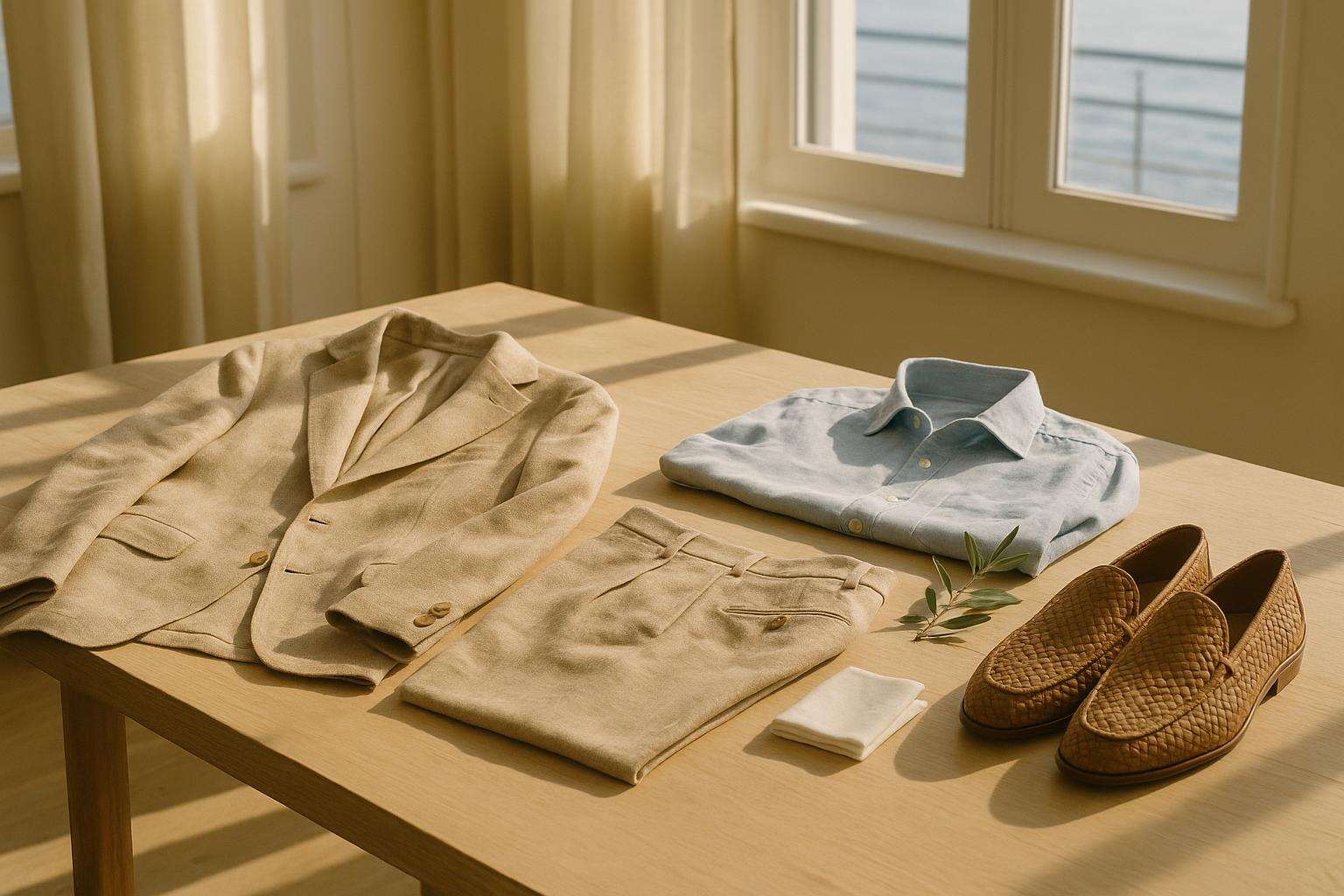
Linen is the warm-weather groom's cloth — cool, matte, and quietly elegant. It will crease; that is the trade. Choose tan, sand, or light blue, lean toward a linen blend in a mid-weight cloth, steam it late, and put the jacket on at the last moment. Do that and a few honest wrinkles read as relaxed Italian ease, not carelessness.
If he is marrying in the heat — a vineyard in August, a garden at midday, a beach at sunset — linen is the cloth that will let him look unbothered by it. Where tropical-weight wool can feel like armor on a 90-degree day, linen breathes, drapes softly, and catches the light with a matte, lived-in texture that photographs as quiet confidence. The one thing to make peace with up front: linen wrinkles, and nothing prevents it entirely. The whole art of wearing it well is turning a wrinkle into a rumple — and that is more achievable than most grooms fear.
Why is linen the right cloth for a warm-weather wedding?
Linen is woven from flax, with a loose, open weave that moves air against the skin and pulls moisture away from it. That is why it has dressed men in hot climates for generations, and why it stays comfortable long after wool would have a groom quietly suffering through the toasts. It also reads beautifully in a wedding's natural light: the texture softens harsh sun, and the matte surface never looks shiny or synthetic in photographs.
The honest caveat is creasing. As InsideHook puts it, the goal with linen is to manage the wrinkling, not eliminate it — by the end of a long, joyful day, the cloth will show that it was lived in. For a warm-weather wedding that is precisely the point: when it is sweltering, no one notices a few creases, but everyone notices how cool and composed he looks.
What color linen suit should a groom choose?
The flattering linen palette is narrow, which makes the decision easier. Sand and tan are the workhorses — grounded, warm against skin, photogenic beside stone and greenery, and effortless to style with a white or pale-blue shirt and tan or off-white footwear. Ivory and cream read a touch crisper and more formal, ideal for a daytime ceremony. Light or sky blue brings a coastal freshness that suits seaside and sunset weddings.
Match the color to the venue and the light: sand or tan for a garden or vineyard, ivory for a formal daytime affair, light blue for the shore. SuitSupply's Havana — its signature soft-tailored summer model — neatly brackets this palette, offered in a Sand linen-cotton and a Light Blue wool-silk-linen. Heavier tobacco and olive linens exist, but they read warmer and more rustic — save them for a barn or autumn-edge wedding rather than a bright summer day.
How does a groom keep a linen suit from looking rumpled?
The difference between rumpled and crumpled comes down to cloth choice and a handful of small disciplines on the day.
- Pick a blend, not 100% linen. A linen-cotton or wool-silk-linen blend creases far less while keeping the breathability — exactly the logic behind SuitSupply's Havana cloths and J.Crew's Irish cotton-linen.
- Go a touch heavier. Tissue-weight linen wrinkles sharply; a mid-weight cloth softens into a gentle rumple instead.
- Steam, don't iron, and do it late. Steam relaxes creases without flattening the cloth's character. No steamer? Hang the suit in a steamy bathroom for ten minutes.
- Put the jacket on last. Linen wrinkles from contact and time, so keep it on a wide wooden hanger until just before the ceremony and photos.
- Sit gracefully. Unbutton the jacket when seated so the cloth drapes rather than folds at the waist.
Most of all, reframe it. A degree of rumple is the very thing the cloth is admired for in classic Italian tailoring — embrace it and he will look at ease, not undone.
Where can a groom buy a linen wedding suit, and what does it cost?
Three reliable routes cover most grooms, from accessible to fully bespoke:
| Source | Route | Cloth | Starting price | Best for |
|---|---|---|---|---|
| J.Crew Ludlow | Ready-to-wear separates | Irish cotton-linen (Baird McNutt mill) | Mid-hundreds | Accessible quality; sizing jacket and trousers independently |
| SuitSupply Havana | Ready-to-wear + in-store alterations | Italian linen-cotton / wool-silk-linen | Mid-hundreds and up | Soft-tailored fit, sand or light-blue wedding looks |
| Hockerty | Made-to-measure | 100% linen or blends | ~$299 | Custom fit, non-standard colors, 3D configurator |
J.Crew's Ludlow is the unstructured "un-suit" cut from Irish cotton-linen, sold as separates so a longer torso or trimmer waist can each be sized true. SuitSupply's Havana brings Italian cloth and a soft, modern shoulder with in-store tailoring. Hockerty makes the suit to his measurements from around $299, with a configurator for lapels, lining, buttons, and monogram and a fit guarantee — the move for a custom cut or an unusual color. Renting is possible too (The Black Tux carries a Mojave tan linen), though linen's relaxed character rewards owning a piece cut to him.
Should groomsmen match, and how formal can linen go?
Linen photographs wonderfully across a party. The standard approach is to match the fabric and color family — sand linen for everyone, say — while letting each man's suit be fitted individually. SuitSupply offers group consultation for exactly this. Set the groom apart with a small distinction: a different shirt or tie, a fuller boutonnière, or a slightly lighter tone.
On formality: for a daytime, outdoor, or destination wedding, a well-fitted linen suit is not too casual — it is arguably the most appropriate thing he can wear. For a black-tie or formal evening affair, linen is too relaxed, and a tropical-weight wool suit or a tuxedo is the better call. Judge by the setting and the heat. If guests are dressing for sun and celebration al fresco, linen lets him look both considered and quietly luxurious — exactly the impression a groom wants to leave.
Frequently asked
Should the groom wear 100% linen or a linen blend?
For a wedding, a blend is usually the wiser call. Pure linen breathes beautifully but creases sharply — it can look tired by the reception. A linen-cotton or wool-silk-linen blend keeps most of the coolness while wrinkling far less, which is why SuitSupply's Havana wedding cloths and J.Crew's Irish cotton-linen are built that way. If he loves the romance of true linen and a relaxed rumple by day's end suits the celebration, 100% linen is a confident choice — just plan to steam it late and accept the texture as part of the look.
What is the best linen suit color for a groom?
The warm-weather palette is narrow and forgiving. Tan and sand are the most versatile — grounded, photogenic against stone and greenery, and easy to pair with a white or pale-blue shirt. Ivory and cream read crisper and a touch more formal for a daytime ceremony. Light or sky blue brings a coastal note that flatters seaside and sunset weddings. Match the color to the venue and light: sand for gardens and vineyards, ivory for formal daytime, blue for the shore. Avoid heavy tobacco or olive linens unless the wedding leans rustic.
How does the groom keep a linen suit from looking rumpled in photos?
You cannot stop linen from creasing entirely, but you can manage it. Steam the suit — never iron it flat — shortly before the ceremony; a steamy hotel bathroom works in a pinch. Keep the jacket on a wide wooden hanger and put it on at the last possible moment, since linen wrinkles from contact and time. When seated, unbutton the jacket so the cloth drapes rather than folds. As He Spoke Style notes, a degree of rumple is the fabric's charm — aim for relaxed, not crumpled, and the photographs will read effortless.
How much does a linen wedding suit cost?
It spans a wide range. Made-to-measure from Hockerty starts around $299 with extensive customization and a fit guarantee. Ready-to-wear quality such as J.Crew's Ludlow cotton-linen separates or SuitSupply's Havana typically runs from the mid-hundreds upward, depending on cloth and sales. Renting a linen suit is possible — The Black Tux carries a Mojave tan linen — but linen's relaxed character rewards owning a piece cut to him. Budget separately for shirt, shoes, and a quick alterations pass; a perfect fit matters more than the label.
Can groomsmen wear linen suits to match the groom?
Yes, and it photographs beautifully. The standard approach is to match the fabric and color family — say, sand linen across the party — while letting each man's suit be fitted individually, since bodies differ. SuitSupply offers group consultation for exactly this, coordinating cloth and styling while honoring each fit. To set the groom apart, give him a small distinction: a different shirt or tie, a boutonnière, or a slightly lighter tone. Order early so every suit can be altered in time, and ask one person to own the coordination so the looks stay consistent.
Is a linen suit too casual for a wedding?
Not for a warm-weather or outdoor wedding — there, linen is arguably the most appropriate cloth a groom can wear. Its matte texture and ease suit gardens, vineyards, beaches, and destination ceremonies far better than heavy wool. For a black-tie or formal evening affair, linen is too relaxed, and a tropical-weight wool suit or tuxedo is the right move. Judge it by the formality and setting: if guests are dressing for heat and the celebration is daytime or al fresco, a well-fitted linen suit looks both considered and quietly luxurious.