Groom Attire
The Three-Piece Wedding Suit: When a Waistcoat Elevates the Groom
A waistcoat is the one detail that sets the groom apart from his groomsmen and keeps him polished once the jacket comes off. Here is when it earns its place — and when to leave it home.
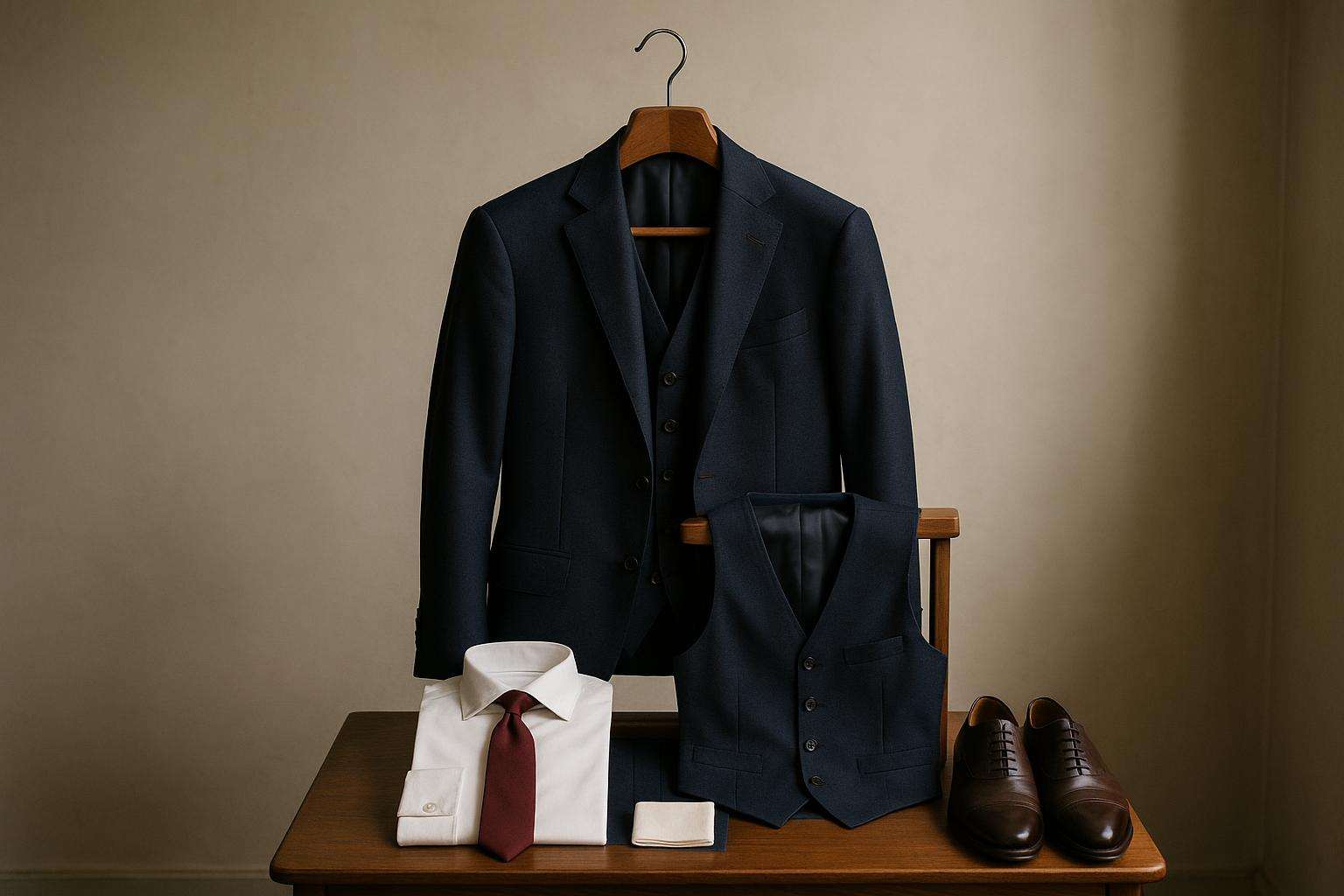
He keeps asking whether he needs the waistcoat, and the honest answer is that he does not need it — a two-piece suit is a complete, correct outfit. The better question is whether the waistcoat earns its place on your particular day. Done right, it is the single detail that lifts the groom a clear notch above his groomsmen, holds his look together once the jacket comes off, and photographs beautifully. Done wrong — the bright rental vest, the wrong weather, the gaping fit — it is the detail that drags the whole look down. This guide gives you the framework to decide, and the few rules that make a three-piece look considered rather than costumed.
The short version: A three-piece adds formality and gives him three looks in one day, and a matched waistcoat (same cloth as the suit) is the safest, most elegant choice. Reach for it at a formal, traditional, or evening wedding; skip it for heat, heavy movement, or a genuinely casual day. No leather belt with a waistcoat — braces instead — and the bottom button always stays undone.
What is a three-piece wedding suit, and what does the waistcoat actually add?
A three-piece suit is simply a jacket, trousers, and a matching waistcoat (vest) cut from the same cloth. The vested suit is the matched outgrowth of the waistcoat — in good fabric it draws one unbroken line of cloth from ankle to shoulder, which reads as balanced and quietly expensive. For a groom specifically, that third piece does real work. It adds a layer of formality and sophistication without crossing into tuxedo territory, which makes it a natural fit for a traditional or evening wedding. It gives him three distinct looks across the day: jacket and waistcoat for the ceremony and photographs, jacket alone, or — the one most people forget — just the waistcoat at the reception, when the jacket comes off and he is still unmistakably put-together. As SuitShop points out, without the vest a jacketless groom can look half-dressed; with it he stays finished. A dark waistcoat in navy, charcoal, or black is also genuinely slimming and keeps his shirt close to the body, so it does not blouse loose on the dance floor.
Should the waistcoat match the suit, or contrast it?
This is the question that separates a sharp groom from an overstyled one. For a wedding, the matched waistcoat — identical cloth and color to the jacket and trousers — is the safer, more formal, and traditionally correct choice. The contrasting odd vest, in a different color or fabric, has a long and respectable history (it was the Victorian and Edwardian default) and can look genuinely elegant, but it carries two caveats worth knowing before you put him in one.
| Approach | Formality | Best for | The risk |
|---|---|---|---|
| Matched (same cloth) | Highest | Formal, traditional, or evening weddings; the groom who wants to look unmistakably correct in the photos. | Almost none — this is the default. |
| Contrasting / odd vest | A notch lower | Relaxed daytime, rustic, or country weddings where personality is welcome. | Lowers formality; easy to overdo; the “clown effect” if colors clash. |
If he does contrast, the rules from Gentleman's Gazette are clear: keep the tones soft, pair a subtle pattern with a solid (a Prince-of-Wales-check vest with a plain jacket, say), and avoid the bright, novelty vests rental outlets push to “match the bridesmaids” — those have no place in a serious wardrobe. The current direction, per The Black Tux, leans matched: the 2026 waistcoat sits higher on the chest, is cut closer to the body, and is more often the same cloth as the suit than the contrast-vest, rustic moment of the early 2010s. The cleanest move, and a quietly clever one, is for the groom to wear the full three-piece while the groomsmen wear the two-piece version of the same suit. The party stays unified; he is distinguished without a single louder color.
When should the groom skip the waistcoat?
An honest guide has to say when not to wear it. The first reason is heat. A summer ceremony or a destination wedding in the sun can make a third layer genuinely uncomfortable, and a common, graceful compromise — flagged by menswear tailor Nathon Kong — is to drop the jacket but keep the vest for the reception, or to shed both layers entirely as the evening warms. The second reason is movement: a waistcoat wants buttoning and unbuttoning as he sits and stands, and a ceremony heavy on kneeling or a long, active reception can turn that into a fidget. The third is simple register — at a truly casual or backyard wedding a three-piece can read overdressed, and a lighter two-piece in a soft fabric is the more comfortable, more appropriate choice. None of this argues against the waistcoat; it argues for matching it to the day. At a formal, traditional, or evening wedding the vest is an asset. At a barefoot beach ceremony it is a burden he will quietly resent by hour three.
What are the fit and belt rules he has to get right?
Two small mechanical points cause most of the three-piece mistakes, and both are easy to fix at the fitting. First, the belt: a waistcoat is meant to fully cover the trouser waistband, so a leather belt and its buckle have no place under it — they peek out and break the clean line. The traditional answer is braces (suspenders) that button inside the trousers, or trousers cut with built-in side adjusters that need no belt at all. Decide this when the trousers are made, not the morning of the wedding. Second, the fit: a waistcoat looks its best worn rather snugly, must cover the waistband completely so no shirt shows between vest and trousers, and — the rule everyone half-remembers — the bottom button is always left undone. Fasten every button above it. Ask the tailor to check the vest both standing and seated; a waistcoat that looks perfect at the mirror but gapes when he sits has not actually been fitted.
Where should he buy a three-piece, and what does adding a vest cost?
Two anchors bracket the market, and they answer two different questions. If you want the off-the-rack benchmark for what a sharp modern three-piece should feel like, SuitSupply's Lazio three-piece is the reference point: pure S110's wool woven by Vitale Barberis Canonico in Biella, Italy, half-canvas construction that molds to him over time, and its matching Ferrara waistcoat. Because it is sold as a suit or as separates, the waistcoat can be re-worn with a blazer long after the wedding — a three-piece is genuinely versatile that way. If you want it built to his measurements, Indochino is the popular groom route: every suit comes in two- and three-piece options, and turning a two-piece into a three-piece is the Add Vest choice for roughly $99 — the only customization beyond premium fabric that carries a surcharge. Wedding groups frequently qualify for a group discount and free alterations, which makes outfitting the groom and his men together unusually cost-effective. Whichever route you choose, spend the time on the fitting: of the three pieces, the waistcoat is the one that most rewards it, and the one most likely to betray a rushed job in the photographs you will keep for decades.
Frequently asked
Should the groom wear a three-piece suit or just a two-piece?
It depends on the formality of the day and the look you want for him. A three-piece adds a layer of formality and sophistication that suits a traditional or evening wedding, and it gives him three looks in one day — jacket and waistcoat for the ceremony, jacket alone, or just the waistcoat at the reception. As SuitShop notes, the vest keeps him looking finished even with the jacket off. At a smart-casual or backyard wedding, though, a two-piece is more at home and a three-piece can read overdressed. Match the suit to the venue and the dress code, not to a rule.
Should the waistcoat match the suit or contrast it?
For a groom, the matched waistcoat — same cloth, same color as the jacket and trousers — is the safer, more formal, and traditionally correct choice; it draws one unbroken line from shoulder to ankle. A contrasting odd vest adds personality and has real history behind it, but per Gentleman's Gazette it lowers formality somewhat and is easy to get wrong. If he does contrast, keep the tones soft and pair a subtle pattern with a solid — and avoid the bright novelty vests rental shops push to match the bridesmaids. The cleanest 2026 look is a matched three-piece.
When should the groom skip the waistcoat?
Leave it off for heat and for movement. A summer or destination wedding can make a vest uncomfortable, and many grooms drop the jacket but keep the vest, or shed both layers for the reception. If the ceremony involves a lot of standing, kneeling, and sitting, the constant buttoning and unbuttoning a waistcoat asks for can become a fidget. And at a genuinely casual wedding a three-piece can feel overdressed, where a lighter two-piece is the gentler choice. The waistcoat is an asset at a formal or traditional wedding; it earns its place by the occasion, not by default.
Can he wear a belt with a three-piece suit?
Not a leather belt. A waistcoat is meant to fully cover the trouser waistband, and a belt buckle peeking beneath the vest breaks the clean line and the formality. The traditional answer is braces (suspenders) that button inside the trousers, or trousers with built-in side adjusters that need no belt at all. This is one of the small mechanical details that separates a three-piece that looks considered from one that looks improvised, so it is worth sorting at the fitting rather than the morning of.
Does the bottom button of the waistcoat get fastened?
No — the bottom button of a single-breasted waistcoat is always left undone. It is a long-standing convention (often traced to King Edward VII) and, practically, leaving it open lets the vest sit cleanly when he moves and sits. Fasten every button above it. The waistcoat should also be worn rather snugly and must cover the waistband completely; a vest that gapes or rides up reads as ill-fitting no matter how good the cloth. Have the tailor check the fit buttoned and seated, not just standing at the mirror.
Where can the groom buy a good three-piece, and what does adding a vest cost?
Two anchors bracket the market. For off-the-rack, SuitSupply's Lazio three-piece — pure S110's wool from Vitale Barberis Canonico, half-canvas, with its matching Ferrara waistcoat — is the benchmark for a sharp modern three-piece. For made-to-measure, Indochino lets him turn a two-piece into a three-piece with its Add Vest option for about $99, the only customization beyond premium fabric that carries a surcharge, and wedding groups often qualify for a discount plus free alterations. Either route, insist on a proper fitting — the waistcoat is the piece that most rewards it.