Accessories
Belt vs. Suspenders: What the Groom Should Wear
One rule settles it: belt or suspenders, never both. Here is how to choose by the formality of the day, his trousers, and the leather he is already wearing.
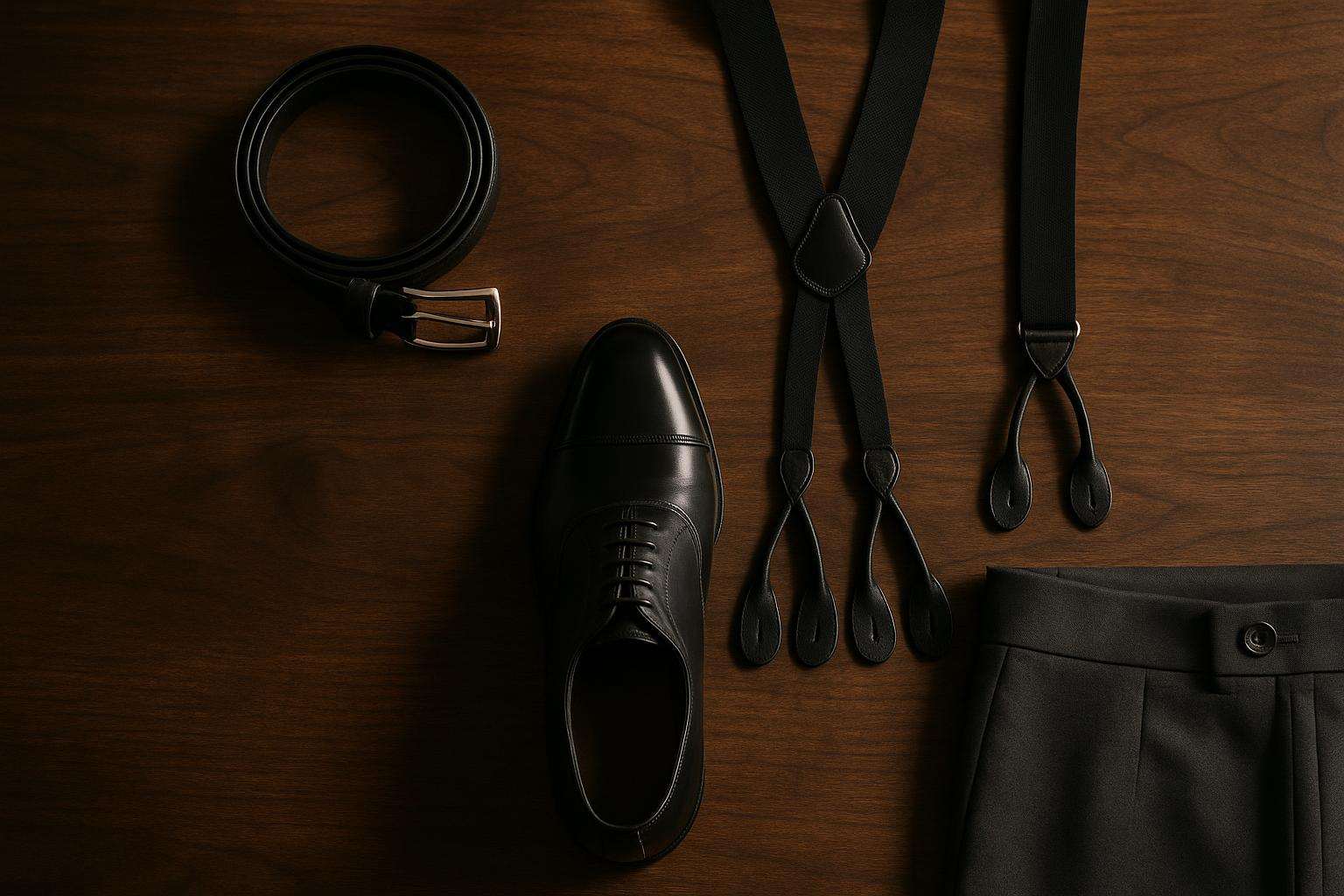
A groom holds his trousers up exactly one way: a dress belt, suspenders, or built-in side adjusters — never two at once. The choice is set by two things: how formal the wedding is, and whether the trousers have belt loops. Belt loops and a suit-level dress code mean a slim dress belt is correct. Tuxedo trousers, cut without loops, take button-on braces or side adjusters — and never a belt. Whatever leather he wears, match it: belt to shoes, shoe to suspender tab.
It is one of the smallest decisions on his packing list and one of the easiest to get subtly wrong. The good news is that the answer is not a matter of taste so much as a short rule, and once you know it, the whole question settles in a sentence. He picks one way to hold his trousers up — and the day's formality, plus the trousers themselves, decide which.
What is the belt-vs-suspenders rule for grooms?
The rule every menswear authority repeats is simply this: belt or suspenders, never both. A belt and a pair of suspenders perform the identical job — keeping the trousers at the waist — so wearing them together is redundant and reads as over-accessorized, the same way a belt over a cummerbund does. Once that is settled, the rest is mechanical. If his trousers have belt loops and the wedding sits at suit level, a dress belt is correct. If the trousers were cut for a tuxedo, with no loops, he wears braces or relies on side adjusters instead. As SuitShop notes in its wedding styling guide, suspenders and a belt simply serve the same purpose, so the choice is one or the other.
| Dress code | Trousers | What he wears at the waist |
|---|---|---|
| Casual / semi-formal suit | Belt loops | A slim dress belt (or braces, by preference) |
| Three-piece suit | Belt loops | Suspenders preferred — clean line under the vest |
| Black-tie / tuxedo | No belt loops | Button-on braces or side adjusters — never a belt |
| White-tie (rare) | No belt loops | White silk button-on braces, hidden |
Why does a tuxedo never take a belt?
Because a tuxedo is built to be beltless. Tuxedo trousers are traditionally cut without belt loops for a reason: a belt would break the smooth, uninterrupted line from shirt to shoe, pile extra bulk at the waist, and cause a cummerbund or waistcoat to bunch. The team at Generation Tux are direct about it — a belt does not belong with a tuxedo. The classic solution is a pair of button-on braces in black or white silk, attached to buttons inside the waistband and worn hidden under the jacket, since formal suspenders are not meant to be seen. The modern alternative, side adjusters, does the same work without anything to fasten.
So if you are helping him build a tuxedo for the day, the instruction to the tailor or rental shop is clean: trousers without belt loops, and either side adjusters or interior buttons for braces. That keeps the look aligned with proper black-tie and, just as importantly, photographs beautifully, with no buckle interrupting the front of the trouser.
Button vs. clip suspenders — which should the groom buy?
If he is going with suspenders, the next fork is button-on versus clip-on, and for a wedding the answer leans firmly toward button-on braces. Button-on suspenders fasten to interior buttons sewn into the waistband, which hides all the hardware and keeps the waistline smooth and unbroken — the cleaner look, and the one that reads right in close-up photographs. Clip-on suspenders have their appeal: they work with any pair of trousers and can move between tuxedos. But they read more casual, and over time the clips tend to crush and wear the waistband.
The practical test, courtesy of JJ Suspenders, is whether the trousers have buttons: buttons mean button-on braces; no buttons means clip-ons. For a formal wedding, the small investment is having a tailor sew in interior buttons so he can wear proper braces. On width, keep it formal — roughly three-quarters of an inch to one inch; anything wider drifts toward workwear and away from the occasion.
How does the groom match the leather?
This is where a good outfit either holds together or quietly falls apart. The reliable rule is that all the leather he wears should be one color. A black belt goes with black shoes; a brown belt goes with brown shoes; and if he is wearing suspenders with leather tabs, those tabs should echo the shoe tone too. The one combination to avoid at a formal event is a brown belt with black shoes — it is the small mismatch the eye catches first.
The exception, again, is black-tie. With a tuxedo, black shoes are mandatory and the braces stay hidden under the jacket, so the matching-leather rule is allowed to relax. Whatever the dress code, keep the belt itself understated: a slim strap around an inch and a third wide, a clean buckle with no statement hardware, and good leather with no cracking or peeling finish. A tired belt with scuffed edges will show in photographs as surely as a great one will disappear into a polished whole.
Belt or suspenders for a three-piece suit?
For a three-piece suit, suspenders are the more refined pick. The waistcoat covers the waistband, so braces hold the trousers at a steady height and draw an uninterrupted line from vest to trouser, without the bulk a belt buckle would add beneath the vest. High-waisted trousers, which have come back into wedding suiting, pair naturally with braces as well — and many grooms simply find suspenders more comfortable across a long day, with no sagging or re-tucking between the ceremony and the last dance. A belt is not wrong with a three-piece if the trousers have loops; just keep the buckle behind the vest and, as ever, never pair it with the suspenders. Whichever way he leans, the principle holds: one accessory at the waist, matched leather throughout, chosen to suit the formality of the day at his side.
Frequently asked
Can a groom wear a belt and suspenders at the same time?
No. A belt and suspenders do the same job — they hold the trousers at the waist — so wearing both is redundant and reads as over-accessorized. Every menswear guide treats it as a firm rule: choose one, never both. The same logic rules out a belt with a cummerbund or waistcoat at a black-tie wedding, since the formal waistband is already covered. Decide based on the trousers in front of you: if they have belt loops and the wedding is a suit-level affair, a dress belt is correct; if they were cut without loops for a tuxedo, he wears button-on braces or side adjusters instead — and the belt stays in the drawer.
Should the groom wear suspenders or a belt with a tuxedo?
Suspenders, always — or the trousers' built-in side adjusters. Tuxedo trousers are traditionally cut without belt loops, because a belt breaks the clean line from shirt to shoe and adds bulk under a cummerbund or waistcoat. As Generation Tux puts it, you do not wear a belt with a tuxedo. The classic choice is button-on braces in black or white silk, kept hidden under the jacket. If his formal trousers came with side adjusters — small tabs at the waistband — those work too. Either holds the waistline at the right height; a belt is simply not part of the black-tie equation.
Are button or clip suspenders better for a wedding?
Button-on suspenders, called braces, are the better pick for a wedding. They attach to interior buttons sewn into the waistband, so no hardware shows and the waistline stays smooth and uninterrupted — which photographs cleaner. Clip-on suspenders work with any trousers and are reusable, but they read more casual and tend to crush the waistband over time. The simple test from JJ Suspenders: buttons on the trousers means button braces; no buttons means clip-ons. For a formal wedding, have a tailor add interior buttons and choose button-on. Keep the width to roughly three-quarters of an inch to one inch so it stays formal.
Does the groom's belt have to match his shoes?
Yes. The reliable rule is that all the leather a groom wears should be the same color: a black belt with black shoes, a brown belt with brown shoes, and any suspender leather tabs echoing the same tone. A brown belt with black shoes is the one combination to avoid at a formal event. The single exception is black-tie — with a tuxedo, black shoes are mandatory and the braces are hidden under the jacket, so the matching-leather rule is allowed to relax. Beyond color, keep the belt itself restrained: a slim profile, clean understated buckle, and good leather with no cracking or peeling finish.
What are side adjusters, and can the groom use them instead?
Side adjusters are small fabric-and-buckle tabs sewn into the sides of the waistband that let the groom tighten or loosen the trousers slightly without a belt or suspenders. They first appeared in 1934 on DAKS "self-supporting trousers" and remain a refined, streamlined option on quality dress and tuxedo trousers. According to Gentleman's Gazette, the governing rule is belt, or side adjusters, or braces — never a combination. If his trousers have side adjusters, he can skip both belt and suspenders entirely and keep the cleanest possible waistline, which is ideal under a tuxedo jacket.
Suspenders or a belt for a three-piece suit?
Suspenders are the more elegant choice for a three-piece suit. The waistcoat covers the waistband, so braces hold the trousers at a steady height and create an uninterrupted line from vest to trouser — with none of the bulk a belt buckle would add beneath the vest. High-waisted trousers, increasingly common in wedding suiting, also pair naturally with braces. Many grooms choose suspenders for comfort over a long day: the trousers stay put through dinner and dancing with no sagging or re-tucking. A belt is not wrong with a three-piece if the trousers have loops, but keep the buckle hidden behind the vest and never pair it with suspenders.