Accessories
The Boutonniere: Who Wears One and What It Means
A calm, complete guide to the lapel flower — who in the wedding party wears one, how his is set apart, which side it pins to, and whether to choose fresh or faux.
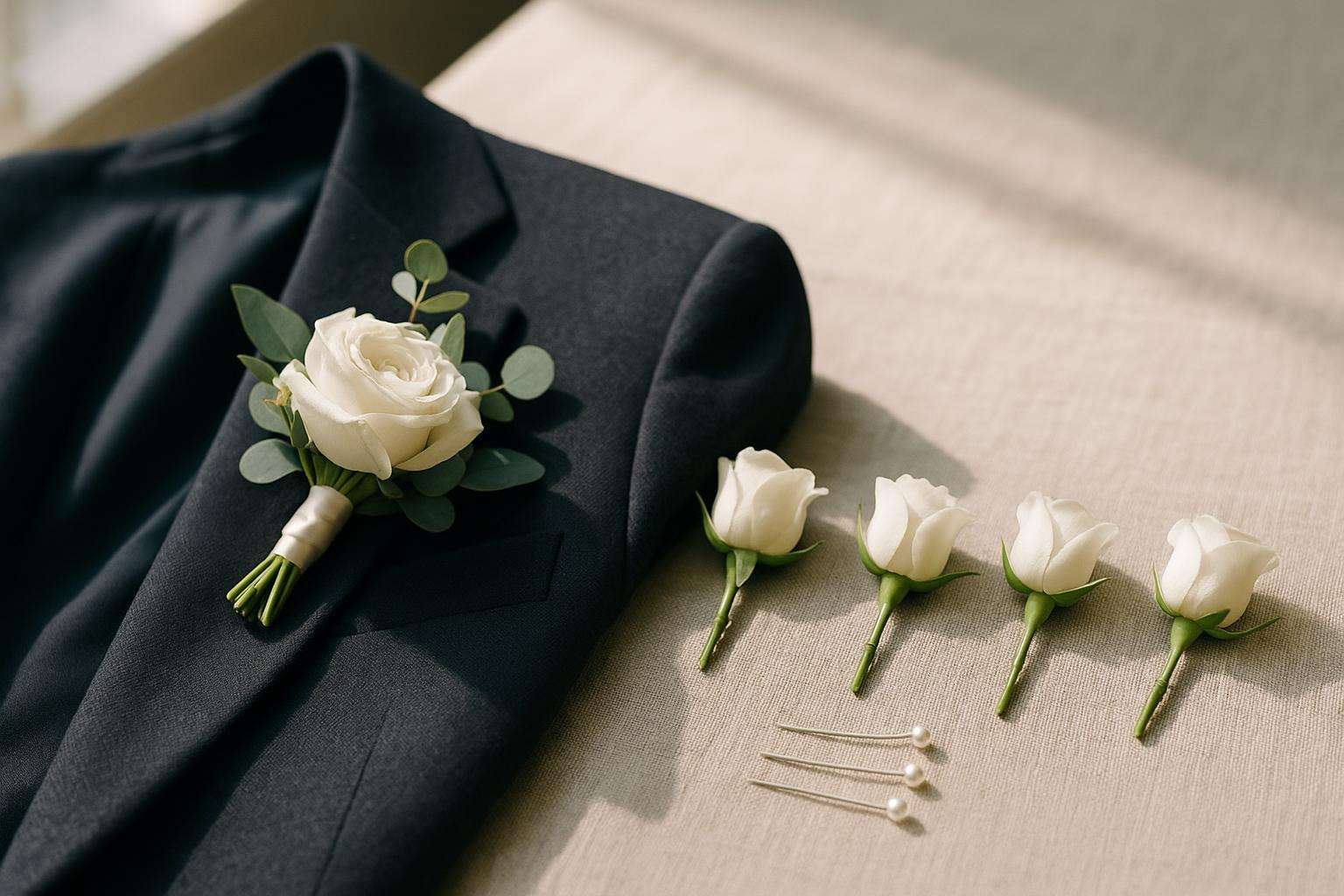
A boutonniere is the small flower or sprig worn on the left lapel, over the heart, by the groom and the honored men of the wedding — groomsmen, both fathers and stepfathers, grandfathers, ushers, the ring bearer, and often the officiant. The groom's is deliberately made the most distinctive of all; the groomsmen's match one another. It pins from behind the lapel so no metal shows (or attaches by magnet or pocket on a tuxedo), and it can be a fresh bloom or a durable faux keepsake.
Of everything he wears on the day, the boutonniere is the one piece of living detail — a single flower over the heart that quietly says, beside the bride, this is the groom. It is also the most misunderstood accessory in his kit: who exactly should be given one, how his ought to differ from the men standing with him, which side it goes on, and whether to trust a fresh bloom to last the reception. None of it is complicated once it is laid out plainly, and getting it right costs almost nothing but attention.
Who actually wears a boutonniere at a wedding?
The traditional wearers are the groom, the best man and groomsmen, both fathers (and stepfathers), grandfathers, ushers, the ring bearer, and the officiant if he is in ordinary secular dress. The whole point of distributing them is gentle signposting: the lapel flowers tell guests and the photographer, at a glance, who the principals of the day are, and they help guests find an usher when they need one.
Etiquette is now firm on one point in particular — include stepfathers. Unless a relationship genuinely does not exist, leaving a stepfather off the flower count reads as a public slight, and it is an easy kindness to extend. As WeddingWire notes in its etiquette guide, grandfathers, ushers and the officiant all sit comfortably on the list as well. A typical wedding ends up ordering four to eight boutonnieres in total: one for the groom, three to five for the groomsmen, and one or two for the fathers.
| Wearer | How their boutonniere reads |
|---|---|
| The groom | The most distinctive of all — fuller, a different flower, or tied to the bride's bouquet |
| Best man | Often a slight variation from the groomsmen to mark his role |
| Groomsmen & ushers | Matching, coordinated blooms that signal solidarity (ushers may vary slightly) |
| Fathers & stepfathers | Match the groomsmen or are simplified one step further |
| Grandfathers, ring bearer, officiant | Honored wearers; the ring bearer's is a scaled-down version |
How should the groom's boutonniere differ from the groomsmen's?
The governing principle is simple: his bloom should be the most distinctive in the party, and the groomsmen's should support his look rather than compete with it. The men wear identical boutonnieres on purpose — uniformity reads as solidarity and gives the photographs clean symmetry. His job is to stand a single, graceful step apart.
The most elegant way to do that is to change one variable, not all of them. You might make his fuller — a multi-stem arrangement where the men wear a single stem. You might give him a more notable flower, a calla lily or an orchid where the groomsmen wear rosebuds. The most romantic option is to pull one or two flowers from the bride's bouquet into his lapel, so the two of them are visually linked across every photograph of the day. A small accent — a sprig of rosemary or lavender, a discreet ribbon wrap — does the same work quietly. What you want to avoid is changing the color, the flower, the size and adding a charm all at once; that turns a refined detail into a busy one. One clear difference is plenty.
Which side does a boutonniere go on, and how do you pin it?
A boutonniere always sits on the left lapel, over the heart, with the stem pointing down and the flower roughly at the height of the lapel buttonhole. The reason is the buttonhole itself: the French word boutonnière means buttonhole, and on a man's jacket that hole has long lived on the left lapel, so that is where the flower went. A frequent error — worth heading off in advance — is tucking the flower into the breast pocket like a pocket square. On a classic notch or peak lapel, it belongs pinned to the lapel face.
To pin it so no metal shows, hold the flower flat against the lapel covering the buttonhole, then work the pin from the underside: push a pearl-headed or floral pin up through the fabric, drive it through the thickest part of the wrapped stem, and return the point back into the fabric so the sharp end finishes behind the lapel. If the bloom tips forward, cross a second pin behind the first in an X. Two modern, hole-free options have become common: a small magnet behind the lapel that the flower clings to (never used on anyone with a pacemaker), and the pocket boutonniere that slides into the breast pocket. A smooth shawl-collar tuxedo effectively cannot be pinned — a hole there is permanent and visible — so a magnet or pocket style is the only graceful choice.
Should the groom choose fresh or faux flowers?
This is a question of how hard the day will be on the flower. A fresh boutonniere is alive and lightly fragrant, but it lasts only about four to six hours out of water and bruises with handling. The hardiest choices — spray roses, carnations, even a small succulent — hold up best, and any fresh piece should be kept refrigerated until thirty to sixty minutes before the ceremony (away from a food fridge, where produce gives off a gas that ages petals quickly). A silk or dried boutonniere, by contrast, survives every embrace on the receiving line, keeps indefinitely afterward as a memento, and costs less. Many couples now run a sensible hybrid: fresh flowers for the bride's bouquet, where they are seen up close and handled little, and faux for the wearables that must endure hours of movement and hugging. That is not cutting a corner; it is simply matching the material to the demand placed on it.
What do the boutonnieres cost, and who pays?
A fresh boutonniere from a florist generally runs about $15 to $35, with the groom's often a little more because it is larger or more elaborate. Faux pieces are cheaper — roughly $15 for a statement groom's boutonniere down to under $5 each in a groomsmen set from brands such as Ling's Moment. Because the count multiplies across the party and immediate family, personal florals alone can reach $500 to $800 before a single centerpiece is ordered. Traditionally the groom's family covered the personal flowers; today most couples simply fold the cost into the shared floral budget and decide together where the money is best spent. However you split it, the boutonniere is one of the smallest line items on a wedding and one of the most visible — a worthwhile place to spend a little care.
Frequently asked
Does the groom have to wear a boutonniere?
There is no rule that requires it, but the boutonniere is one of the few pieces of personal flower a groom wears, and it does meaningful work in the photographs — it marks him, beside the bride, as the center of the day. If he would rather not pin a flower, gracious alternatives keep the spirit without the stem: a folded white linen pocket square, a small pocket boutonniere tucked into the breast pocket, or a faux lapel pin he can keep. Most grooms do wear one, simply because so many of the people who matter to him will be wearing theirs.
Which side does a boutonniere go on?
The left lapel, sitting over the heart, with the stem pointing down and the flower at about the height of the lapel buttonhole. The convention follows the buttonhole itself — the word boutonnière simply means buttonhole, and on a man's jacket that hole has long lived on the left lapel. A common misstep is sliding the flower into the breast pocket like a pocket square; on a classic notch or peak lapel it belongs pinned to the lapel face, as Gentleman's Gazette lays out in its lapel-flower guide.
How do you pin a boutonniere so the pin does not show?
Hold the flower flat against the left lapel, covering the buttonhole. Working from the underside of the lapel, push a pearl-headed or floral pin up through the fabric, drive it through the thickest part of the wrapped stem, then return the point back into the fabric so the sharp end finishes behind the lapel. Done well, no metal shows on the front. If the bloom tips forward, add a second pin crossed in an X behind the first. For a smooth shawl-collar tuxedo — where a pinhole would be permanent and visible — skip the pin entirely and use a magnetic backing or a pocket style.
How should the groom's boutonniere be different from the groomsmen's?
Change one thing, not everything. The groom's bloom should read as the most distinctive in the party while the groomsmen's match one another to show solidarity. The cleanest ways to set his apart: make it fuller (a multi-stem arrangement where the men wear a single stem), choose a more notable flower such as a calla lily or orchid, or pull one or two flowers from the bride's bouquet into his lapel so the two of them are visually linked in photographs. A small accent — a sprig of rosemary or lavender, a ribbon wrap — also works. Restraint is the point: one clear difference, gracefully done.
Are fresh or faux boutonnieres better for a wedding?
It depends on how hard the day will be on the flower. A fresh boutonniere looks and smells alive but lasts only about four to six hours out of water and bruises easily; durable choices like spray roses and carnations hold up best, and they should be refrigerated until shortly before the ceremony. A silk or dried boutonniere survives every hug, keeps indefinitely as a keepsake, and costs less. Many couples now run a hybrid — fresh for the bouquet, faux for the wearables that must endure hours of motion. Brands such as Rinlong Flower and Ling's Moment specialize in the faux option.
How much do wedding boutonnieres cost, and who pays?
A fresh boutonniere from a florist generally runs about $15 to $35, with the groom's often a touch more because it is larger or more elaborate. Faux pieces are cheaper — roughly $15 for a statement groom's boutonniere down to under $5 each in a groomsmen set. A typical wedding orders four to eight in all, and across the full party and immediate family personal florals alone can reach $500 to $800. Traditionally the groom's family paid for the personal flowers; today most couples simply fold the cost into the shared wedding floral budget.