Accessories
Necktie vs. Bow Tie: Which Suits Your Wedding
The groom's neckwear is settled first by his garment and dress code, then fine-tuned by venue, build, and face shape — here is exactly when each is correct.
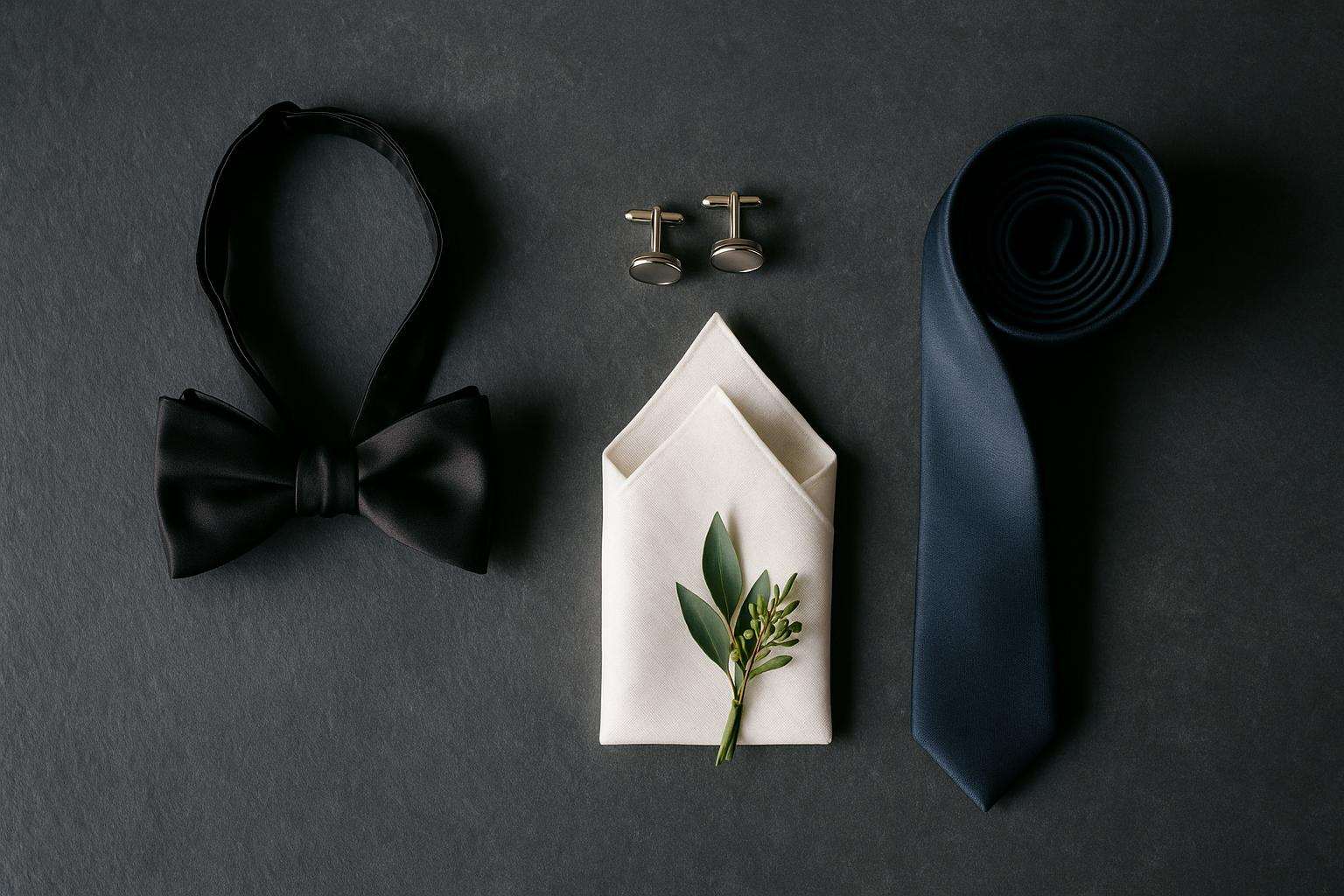
Let the garment and the dress code decide first: a tuxedo asks for a bow tie, a suit asks for a necktie, and black tie always means a black bow tie. Once the code allows either, fine-tune by venue, time of day, his build, and his face shape. The right choice is the one he will still love in the photographs decades on.
When the conversation turns to his neckwear, it is easy to treat it as a matter of pure preference. It is not — at least not at first. The single most useful thing to understand is that the decision is governed before taste even enters: by what he is wearing and by what the invitation asks of him. Get that hierarchy right and the rest becomes a pleasure to fine-tune rather than a worry.
When is a bow tie required and when is a necktie correct?
A tuxedo asks for a bow tie; a suit asks for a necktie. This is not fashion fussiness. A long four-in-hand tie has belonged to the business suit for a century, while the dark solid bow tie has been the tuxedo's signature for just as long. Worn with a dinner jacket, a long tie actually lowers the tuxedo toward the formality of an ordinary dark suit, according to Gentleman's Gazette's black-tie etiquette guide. The dress-code language maps cleanly onto the choice:
| Dress code / setting | Garment | Correct neckwear |
|---|---|---|
| White tie | Tailcoat | White bow tie (never a tuxedo) |
| Black tie | Tuxedo | Black silk bow tie — non-negotiable |
| Black tie optional | Tuxedo or dark suit | Bow tie with tux, or a dark solid necktie with the suit |
| Formal / semi-formal | Suit or tuxedo | Either; bow tie reads a touch more formal |
| Casual / outdoor / beach | Suit or odd jacket | Silk or linen necktie |
The one rule never to break: black tie means a black bow tie. A long necktie or a colored bow tie with a dinner jacket reads as a clear misstep to anyone who knows the code, and a wedding is exactly the occasion where that is noticed.
Can you wear a necktie with a tuxedo?
He can — but it should be a considered, modern choice rather than a default, and only when the wedding is not strictly black tie. There is an aesthetic reason the pairing is delicate. With the jacket closed, the lapels frame a dramatic white V at the shirt; a long tie divides that V in half and reads as an extension of the silk lapels, turning the clean V into a downward-pointing arrow that pulls the eye away from his face. A bow tie instead sits up at the collar and underscores it.
If he does want a tie with a tux, keep three things true: the material should be black satin or grosgrain matched to the lapel finish; it should never be a skinny tie; and the shirt should have a plain placket rather than a wing collar, studs, or pleats, which all belong to the bow-tie world. Generation Tux's tuxedo-with-tie guide is a good reference if he is set on the look — but for a formal evening, the bow tie is still the surer footing.
Does body type and face shape change the answer?
Once the dress code allows either, proportion is the tiebreaker, and this is where a little tailoring eye pays off. The two styles do opposite things to the silhouette:
- Neckties draw a vertical line down the torso, elongating the frame. They flatter broader or stockier builds and read as taller.
- Bow ties draw a horizontal line at the collar, putting the focus on the shoulders and face. They add visual width, which flatters slimmer frames.
A long necktie can visually shorten a shorter groom, so many shorter men are better served by a bow tie — or by a well-proportioned tie that ends right at the waistband, tied in a trim half-Windsor rather than a bulky full Windsor. Taller grooms carry either with ease, as The Tie Bar's wedding neckwear guide notes.
Face shape governs bow-tie size in particular. The simplest rule: the bow should not be wider than his face at its widest point. A broader face or fuller neck carries a butterfly bow tie — the classic flared shape — handsomely, while a narrower face suits a slimmer batwing or slimline style. A self-tied silk bow always reads a small step above a pre-tied one, though a quality pre-tied bow is the pragmatic way to get a whole party looking uniform and symmetrical when everyone is dressing at once.
How does the groom stand apart from his groomsmen?
Because most men default to the necktie, the simplest way to set the groom apart is to put him in a bow tie while the groomsmen wear neckties — or to reverse it. Either reads beautifully in photographs as long as one color palette holds the party together. A second clean approach is the same style for everyone, with the groom taking a contrasting tone: a deep eggplant for him against a lighter purple for the party, for instance. Coordinate the color to the wider palette — lighter neckwear when the bridesmaids wear pastels, darker when they wear jewel tones, advice echoed across The Knot's wedding bow-tie roundup.
Material and time of day round out the picture. Silk in a subtle solid suits formal and semi-formal weddings; a patterned linen or cotton tie suits a genuinely casual daytime celebration. Daytime skews less formal and necktie-friendly, while an evening ceremony rewards the elevated note a bow tie strikes. Rental and retail houses such as The Black Tux, Generation Tux, Men's Wearhouse, SuitSupply, and The Tie Bar stock both in coordinated colors, so whichever way he leans, the whole party can be dressed to match without compromise.
So which should he choose?
Start with the garment and the invitation; they will answer most of the question for you. If the wedding is black tie, the bow tie is decided. If it is a suit-and-tie affair, the necktie is the natural home, with a bow tie available as a deliberate signature for the groom. Everywhere in between, let venue, light, his build, and his face make the final call — and choose the one he feels most himself in. That ease, more than any rule, is what reads in the photographs.
Frequently asked
Can the groom wear a necktie with a tuxedo?
He can, but it should be a deliberate, modern choice rather than a default. A long four-in-hand tie technically lowers a tuxedo toward the formality of an ordinary dark suit, because the dark bow tie is the tuxedo's century-old signature. If he does want a tie with a tux, keep the material to black satin or grosgrain matched to the lapel finish, never a skinny tie, and pair it with a plain-placket shirt rather than one with wing collar, studs, or pleats. For a strict black-tie wedding, though, the bow tie remains the correct and expected choice.
Does black tie always mean a bow tie?
Yes. A black-tie dress code means a tuxedo, and a tuxedo means a black silk bow tie — this is the one rule in the whole conversation that should never be broken. Etiquette authorities are unambiguous that a long necktie or a colored bow tie with a dinner jacket reads as a faux pas. Note the difference with "black tie optional," which does allow a dark suit and a dark, solid necktie as an alternative to the full tuxedo-and-bow-tie ensemble.
Should a shorter groom choose a bow tie or a necktie?
A bow tie often flatters a shorter groom. A long necktie draws a vertical line that can visually cut his height, while a bow tie keeps the focal point up at the collar and face. If he prefers a necktie, the fix is proportion: a tie that ends right at the waistband, tied in a neat half-Windsor rather than a bulky full Windsor. Broader or stockier builds, by contrast, are usually flattered by a necktie's elongating vertical line, so body proportion is a genuine tiebreaker once the dress code allows either.
How do you size a bow tie to his face?
The simplest guide is that the bow tie should not be wider than his face at its widest point. A broader face or fuller neck carries a butterfly bow tie — the classic flared shape — beautifully, while a narrower face suits a slimmer batwing or slimline style with a slim-fit collar. A self-tied silk bow always reads a small step above a pre-tied or clip-on, but a quality pre-tied bow is the pragmatic way to keep a whole wedding party looking uniform and symmetrical when everyone is dressing at once.
How can the groom stand apart from his groomsmen with neckwear?
Because most men default to a necktie, the easiest way to set the groom apart is to put him in a bow tie while the groomsmen wear neckties — or reverse it. Either way, keep one shared color palette so the party still reads as a set. A second clean approach is the same style for everyone with the groom in a contrasting tone, such as a deep eggplant for him against lighter purple for the party. Coordinate to the wedding palette: lighter neckwear for pastel bridesmaids, darker for jewel tones.
What neckwear suits an outdoor or daytime wedding?
A necktie is the natural fit for relaxed, outdoor, beach, and daytime weddings, where the bow tie can feel more formal than the setting. Lean into texture and a touch of color: a silk tie in a soft solid for semi-formal daytime, or a patterned linen or cotton tie for a genuinely casual celebration. Evening and ballroom or cathedral settings invite the bow tie. As a rule of thumb, daytime skews less formal and necktie-friendly, while an evening ceremony rewards the elevated note a bow tie strikes.