Grooming
Should the Groom Keep the Beard? A Decision Guide for the Big Day
Keep it or shave it? A calm framework — face shape, the formality of his suit, and the photographs you will keep for decades.
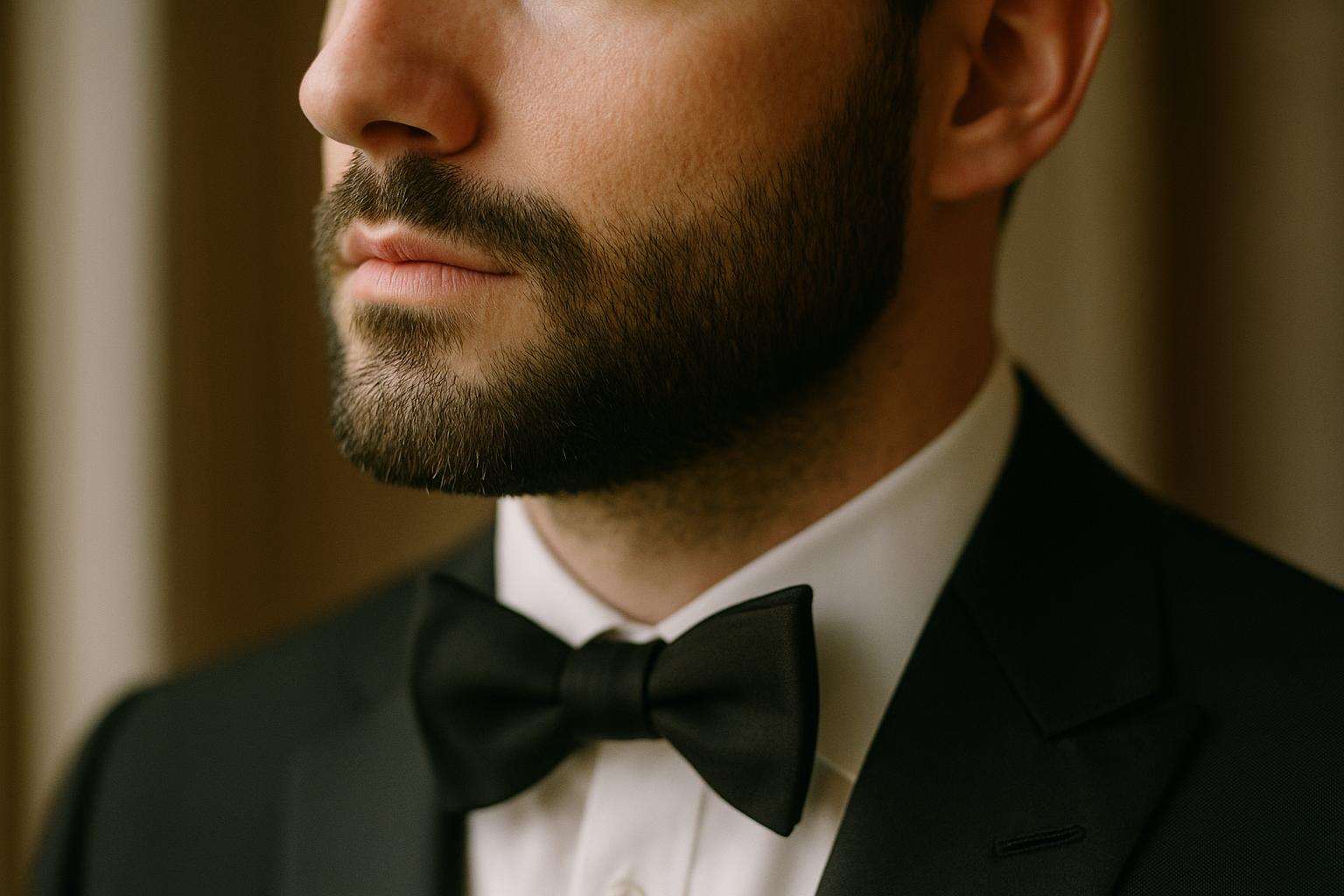
If he already wears a beard and wears it well, keep it — and make it deliberate: a defined neckline, a clean cheek line, even length, freshly shaped a few days out. For the bearded groom, a tidy, sharp line beats a clean shave; the clean shave belongs to the man who is usually clean-shaven, or who wants it and has tested it in advance. The wedding is the wrong day to become a stranger in your own photographs.
You have an opinion, and that is allowed. The beard question is one of the few grooming decisions a partner genuinely gets a vote on, because you are the one who will look at these photographs for the next forty years — and because you, more than anyone, know what he looks like as himself. The good news is that the decision is calmer than the internet makes it sound. For most grooms it is not really "beard versus clean shave" at all. It is "the beard he already has, made intentional."
Should the groom keep the beard or shave for the wedding?
Start from the principle that wedding-grooming editors return to again and again: he should look like himself, just polished to the highest version of it. The Knot is explicit that being clean-shaven is not a requirement of the day — if people are used to seeing him in a beard, the beard stays. The photographs are the reason. An album is looked at for decades, and a groom who shaved off a beard he had worn for years often reads, in his own pictures, as a slightly unfamiliar man. If you fell for the bearded one, the bearded one is the one who should be standing beside you.
So the real default is gentle: keep the beard, and make it deliberate. A neat, defined beard signals exactly the thing a wedding wants from a groom — that he showed up considered, confident, and at ease. The razor is reserved for two men: the one who is usually clean-shaven anyway, and the one who truly wants the change and has earned it with a trial run.
Does his face shape decide whether he keeps the beard?
Face shape is a useful tie-breaker, not a verdict. It rarely tells a bearded man to shave; it tells him how long to go and where to draw the lines. The conventional barbering logic, echoed in Zola's roundup of wedding-day beard styles and in Gillette's facial-hair guide, runs like this:
| Face shape | Flattering direction | What it suggests |
|---|---|---|
| Round | A little more length at the chin | Lengthens and structures the face — keep, don't shave |
| Square | Shorter, even beard; or a clean shave to show the jaw | Softens a strong jaw, or frames it cleanly — his call |
| Oval | Almost any style works | The most forgiving — choose by suit and personality |
| Heart | Short stubble or a defined short beard at the chin | Balances a narrower chin — a beard helps, not hurts |
Read the table the way a barber would: only the strong square jaw makes a real case for the clean shave, and even then it is a preference, not a rule. For everyone else, face shape is an argument about length and line — never a reason to remove a beard he already suits.
How does the formality of his suit or tux change the call?
Formality raises the standard of the grooming, not the requirement to shave. A well-kept beard sits comfortably with everything from a navy three-piece to a black tuxedo; what changes with black tie is how exacting the shape has to be. With a tux, a wing collar, and a bow tie, the bar is crisp and conservative: a clean neckline that stops where the collar begins, tidy cheek lines, and even length with no straggle. An overgrown, soft-edged beard is what actually fights formal tailoring — not the beard itself. SuitShop's groom facial-hair guidance is built entirely around keeping it sharp and defined rather than telling grooms to go bare for formal looks. The lesson for you: when the dress code climbs, send him to the barber for a tighter line — not to the razor for a blank slate.
When should he trim, and is a clean shave on the day a mistake?
This is where regret is manufactured, and it is entirely avoidable with a calendar. A full beard wants a shaping trim about a week before the wedding, which gives any over-correction a few days to grow back in and lets the lines settle. A shorter beard or deliberate stubble is best neatened a couple of days before, so a fresh trim reads in the photos instead of an overgrown one. The morning of, the job is conditioning and a light tidy of stray neck hairs — nothing structural.
The clean shave deserves a sharper warning. Razor burn shows up plainly in photographs, gets worse in the sun and after a full day of congratulatory kissing, and simply needs time to settle. So if a clean shave is the chosen look, he should do it a few days before — never the wedding morning. A professional hot-towel, straight-razor shave gives the closest, calmest result and can be booked closer to the day, but only after a trial run weeks or months ahead so you both know how his skin reacts. The one rule every editor repeats: do not debut a brand-new facial-hair look in the final week. Test the change, photograph it, sleep on it — then decide while there is still time to grow it back. Land it right, and the beard question turns out to be the easiest grooming decision of the whole wedding.
Frequently asked
Should the groom keep the beard or shave for the wedding?
If he already wears a beard and wears it well, the steady answer is keep it and make it deliberate — a defined neckline, a clean cheek line, even length, freshly shaped a few days out. The wedding is not the occasion to introduce a face nobody recognizes. Reserve the clean shave for the man who is usually clean-shaven, or who genuinely wants it and has tested it well in advance. As The Knot puts it, the goal is to look like himself, just polished — being clean-shaven is never a requirement of the day.
Does his face shape mean he should shave?
Rarely. Face shape is a tie-breaker for length and line, not an argument for the razor. A round face is flattered by a touch more length at the chin; a strong square jaw is softened by a shorter, even beard; an oval face carries almost anything; a heart shape is balanced by a short, defined beard. If he already suits a beard, his face shape almost never says "remove it" — it tells you how short to keep it and where to draw the lines.
Will a beard look out of place with a tuxedo or formal suit?
No — a well-kept beard reads as intentional with even the most formal attire. Formality raises the grooming standard, not the shaving requirement. With a tuxedo or sharp dark suit, the bar is a crisp, conservative shape: clean neckline, tidy cheek line, even length. A heavy, overgrown beard can fight a wing collar and bow tie, so the work is in the trim, not the removal. SuitShop's groom guidance is built around keeping it sharp rather than telling grooms to shave for black tie.
When should the groom trim the beard before the wedding?
Trim on a schedule, not on the morning of. A full beard takes a shaping trim about a week before, which lets the lines settle and any unevenness grow in. A shorter beard or stubble is best neatened a couple of days before, so a fresh trim — not an overgrown one — shows up in the photographs. The morning of, keep it to conditioning and a light tidy of stray hairs along the neckline. Never debut a brand-new shape in the final week.
Is a clean shave on the wedding morning a mistake?
For most men, yes. Razor burn shows up clearly in photos, is made worse by sun and by a full day of congratulatory kissing, and needs time to calm down. If he wants to go clean, a self-shave should happen a few days before so any nicks and redness fade. A professional hot-towel, straight-razor shave can be booked closer — even the day before for experienced skin — but only after a trial run months ahead, so you know how his skin reacts, as Bridal Musings advises.
What if you and the groom disagree about the beard?
Have the conversation early and treat it as styling, not surrender. If you fell for the bearded version of him, that is worth saying out loud — and if he has worn a beard for years, the photographs will look most like the two of you with it kept. The middle ground is almost always a tidier beard rather than no beard: a defined neckline and crisp cheek lines satisfy the wish for polish without erasing him. If a clean shave is genuinely wanted on either side, agree on a trial weeks ahead so the day itself holds no surprises.