Grooming
The Groom's Skincare Timeline: What to Do 12 Months, 3 Months, and the Week Before
A calm, staged countdown to clear, photograph-ready skin — the dermatologist consult at a year out, the simple routine that settles at three months, and the gentle taper in the final week.
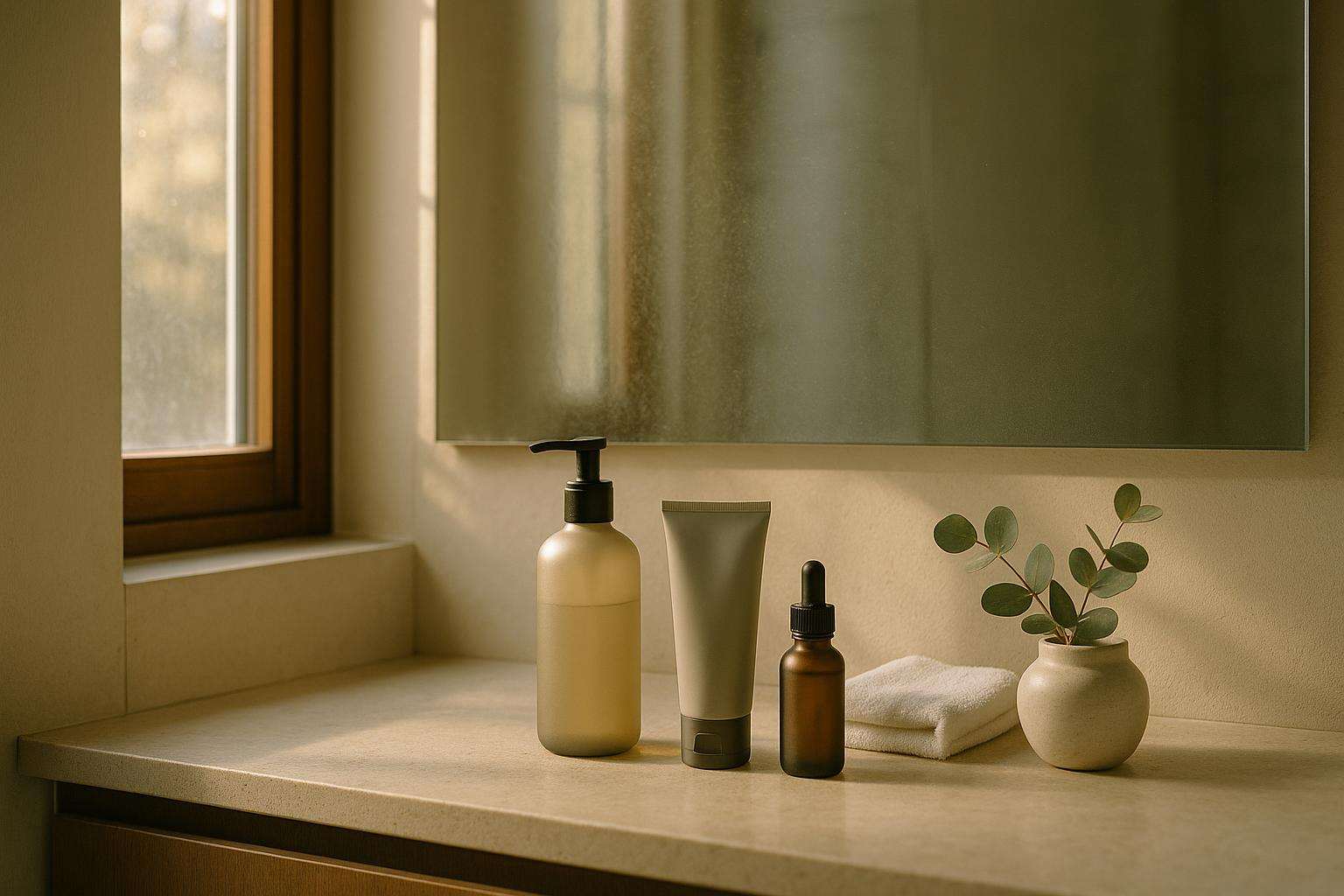
Wedding-day skin is won on the calendar, not in the final week. See a board-certified dermatologist around twelve months out and name every concern at once; settle a simple three-step routine — cleanser, moisturizer, broad-spectrum SPF 30+ — by three months; and in the final week change nothing, hydrate, sleep, and book his shave a few days early. Earlier is always better, because good actives take two to three months to show and resurfacing work needs six to twelve.
If you are the one quietly managing the run-up to the day, his skin is one more line on the timeline — and a forgiving one, provided you start it on time. The good news is that the groom does not need a complicated regimen or a clinic membership. He needs a calendar, three honest products, and the discipline to leave well enough alone in the last week. Here is the whole project, staged the way the dermatologists themselves stage it.
Why does the groom need a 12-month head start, and not a last-minute facial?
The most common mistake in pre-wedding dermatology is arriving late with a long list. Birmingham dermatologist Corey L. Hartman has said there is nothing more frustrating than a soon-to-be-wed who presents a laundry list of needs two to three months before the wedding, with no runway to address them. The reason is biology: as San Francisco dermatologist Caren Campbell told The Knot, good skincare takes two to three months to start working, and improvements then accrue slowly over time. Anything that resurfaces or remodels the skin — peels, lasers, acne-scar revision — needs far longer, and laser hair removal can take up to a year for full results.
So the first move, ideally about twelve months out, is a consult with a board-certified dermatologist. He should name every concern in one sitting rather than dribbling them out: any chronic condition (acne, rosacea, eczema, the rough keratosis pilaris many men carry on the neck), whether a prescription retinoid is worth starting, and whether any in-office work is on the table. A year of runway lets a slow active clear its purging phase, lets a medical regimen settle before wedding stress arrives, and leaves room to change course. For a groom with simple, healthy skin, the consult may simply confirm that an over-the-counter routine is all he needs — which is a useful thing to know early too.
What is the right routine to build at the 3-month mark?
By three months out he should be on a settled, almost boring routine — long enough for any active to show, short enough that there is still time to adjust before the day. The American Academy of Dermatology keeps the core to three steps: a gentle, alcohol-free cleanser; a moisturizer (non-comedogenic if his skin is oily or breaks out); and a broad-spectrum sunscreen of SPF 30 or higher every day, applied as the last step of his morning. That really is the whole foundation. Everything else — serums, eye creams, a weekly exfoliant — is optional polish layered on top of those three.
The products men actually keep up with are the ones with the fewest steps and a scent they do not mind. Three widely stocked lines fit comfortably, all available at Nordstrom, Sephora, Ulta and the brands' own sites:
| Brand | Cleanser | Moisturizer (with SPF) | Best for the groom who |
|---|---|---|---|
| Kiehl's (since 1851) | Facial Fuel Energizing Face Wash | Facial Fuel Daily Energizing Moisture Treatment SPF 20 (around $52) | wants a refined, science-backed staple and does not mind the cost |
| Brickell Men's Products | Purifying Charcoal Face Wash | Daily Essential moisturizer; Daily Defense SPF for daytime | prefers natural-leaning, fragrance-light formulas |
| Jack Black | All-Over Wash (hair, face, body) | Double-Duty Face Moisturizer SPF 20 | will commit to exactly one or two multitasking products |
One rule protects him from himself: over-washing is the most common male error, stripping the skin and provoking more oil, so he should cleanse no more than twice a day with a gentle formula. And the SPF step is non-negotiable — for a man who refuses to add steps, a daytime moisturizer with SPF 30+ built in is the single highest-value habit he can keep, on the wedding day and for every day after.
What should the groom do, and stop doing, the week before the wedding?
The final week is a taper, not a flourish. Dermatologists are emphatic that it is not the time to experiment: no new product, no strong chemical peel, no deep laser, nothing that risks lingering redness or peeling on the day. He sticks to the routine that already works, leans hard on hydration and sleep — skin does much of its repair overnight — and books any beard trim or close shave for a few days out rather than the morning of, so razor irritation has time to settle. If he wants a treat, a gentle hydrating facial roughly a week to ten days ahead is early enough to calm the skin and never close enough to inflame it.
That is the entire arc, and its discipline is what makes it work. The groom who starts twelve months out has the luxury of fixing real concerns slowly; the one who starts at three months can still build a clean, settled complexion; and every groom, regardless of when he began, wins the last week by leaving his skin alone. Manage it like any other line on the timeline — early, simple, and calm at the finish — and he will look unmistakably like himself, on a very good day.
Frequently asked
How far in advance should the groom start a skincare routine before the wedding?
Ideally about twelve months out, with a board-certified dermatologist consult. Visible improvements from a good routine take roughly two to three months to appear and then build slowly, and anything that resurfaces the skin — peels, lasers, acne-scar work — needs six to twelve months. Even three months is enough to settle a simple routine and clear minor concerns, but the earlier he starts, the more runway there is to adjust. As one dermatologist told The Knot, the worst position is arriving with a long list of concerns and only weeks to address them.
Does he really need to see a dermatologist, or is a drugstore routine enough?
For most grooms with healthy skin, a simple over-the-counter routine — gentle cleanser, moisturizer, daily SPF — is genuinely enough. A dermatologist becomes worth it when there is a real concern to manage: persistent acne, rosacea, eczema, noticeable scarring, or interest in prescription retinoids or in-office treatments. The value of an early consult is time: a doctor can start a slow active or a medical regimen months ahead, long before wedding stress and the date itself arrive. If his skin is uncomplicated, save the appointment and the money.
What products do men actually tolerate and stick with?
The ones with the fewest steps. Three widely stocked lines fit the bill: Kiehl's Facial Fuel (a face wash plus a Daily Energizing SPF 20 moisturizer), Brickell Men's Products (a natural-leaning Daily Essential moisturizer and an SPF daytime version), and Jack Black (an All-Over Wash and the Double-Duty SPF 20 moisturizer). All three are sold at Nordstrom, Sephora, Ulta and the brand sites. The honest truth is that adherence beats sophistication — a two-product routine he keeps up will outperform a seven-step regimen he abandons by week three.
What should the groom avoid in the final week before the wedding?
Anything new or aggressive. The week before is explicitly not the time to try a fresh product, book a strong chemical peel, or have a deep laser treatment — each risks lingering redness, peeling or breakouts on the day. He should stick to the routine that already works, prioritise hydration and sleep (skin repairs itself overnight), and book any beard trim or close shave for a few days out rather than the morning of, so razor irritation has time to calm. Restraint is the whole strategy in the final week.
How important is sunscreen in a groom's routine?
It is the single most valuable step, and the easiest to skip. The American Academy of Dermatology recommends a broad-spectrum sunscreen of SPF 30 or higher, applied every day and reapplied roughly every two hours outdoors. The simplest path for a man who will not add steps is a daytime moisturizer with built-in SPF, used as the last step of his morning. Beyond the wedding, daily sun protection does more to keep skin even-toned and youthful than any serum — and it lowers skin-cancer risk year-round.
Can a groom fix acne or scarring in time for the wedding?
Active breakouts can usually be calmed within a few months under a dermatologist's care, which is another reason to start early. Scarring is slower: treatments that depend on the skin remodeling collagen — resurfacing lasers, microneedling, scar revision — need six to twelve months and several sessions to show their best result, so they belong at the far end of the timeline, not near the date. If the wedding is close and scarring is the concern, a good concealer and a calm, hydrated complexion on the day will do more than a rushed procedure that risks redness.