Grooming
Teeth Whitening for the Groom: How Far Ahead to Start
A timing-and-method guide to whitening his smile — professional versus at-home, sensitivity, and the start-early rule so the result peaks on the day, not before.
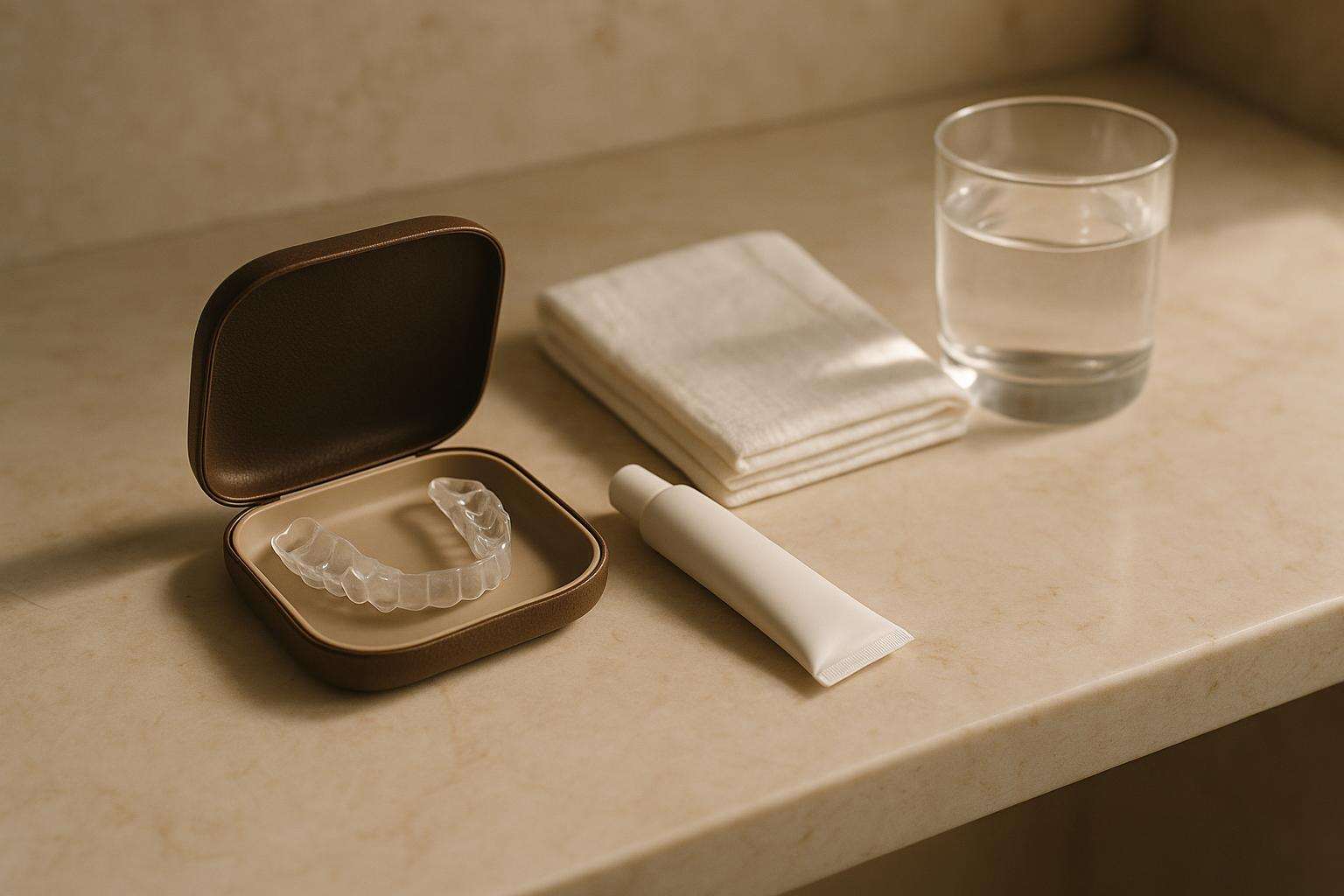
Start early. Book a cleaning six to twelve months out, begin active whitening about two to three months before the wedding, and stop roughly a week before so the shade settles and any sensitivity has passed. For most grooms, dentist-prescribed custom trays are the best balance of result, comfort, and cost; in-office whitening is the fastest if time is short.
A groom rarely thinks about his teeth until he sees the first engagement photos — and then suddenly the smile in every frame is the thing he notices. Whitening is one of the simplest, highest-return parts of getting ready, but it rewards planning and punishes the last-minute rush. The single rule that matters most is this: whitening is a process with a settling period, not a same-week fix, so the calendar is as important as the method. Done right, it leaves him looking unmistakably like himself on a very good day; done in a panic the week before, it can leave teeth sensitive and the shade still settling in the photographs.
How far ahead should the groom start whitening?
The advice from cosmetic dentists is remarkably consistent, and it reads as a layered timeline rather than a single appointment.
| When | What he does | Why |
|---|---|---|
| 6–12 months out | Dental exam & cleaning | Whitening only works on healthy enamel; a cleaning alone removes some surface stain |
| 2–3 months out | Begin active whitening (ideal) | Room for multiple sessions, a touch-up, and recovery from sensitivity |
| 3–4 weeks out | Minimum for custom take-home trays | Trays work gradually over one to two weeks |
| 2–3 weeks out | Minimum for in-office whitening | Fastest method; still leaves a buffer to recover |
| ~1 week before | Stop whitening | Shade settles; the porous post-bleach window passes before the events |
The reason early beats late is that whitening results are not instant-and-stable. For a day or two the color can look faintly uneven or translucent before it settles into its true shade, and the enamel is briefly more porous and prone to re-staining. Starting two to three months out, as most wedding-focused dentists recommend, turns a gamble into a controlled, repeatable process with time to spare.
Professional or at-home — which method suits the groom?
There are three real tiers, and the right one depends on how much time he has, how stained his teeth are, and his budget.
In-office professional whitening is the fastest and most dramatic. A single 60-to-90-minute visit can lift teeth eight shades or more. Philips Zoom uses a roughly 25% hydrogen-peroxide gel activated by a blue LED light in short intervals; Opalescence Boost uses a stronger 40% chemically-activated gel with no light, plus added potassium nitrate and fluoride to soften sensitivity. Expect to pay in the region of $500–$1,500. This is the right call for a groom who is short on time or wants a noticeable change.
Dentist-prescribed custom trays — Zoom's DayWhite and NiteWhite, or Opalescence PF — are widely rated the best value. They reach essentially the same end shade as in-office over one to two weeks, are gentler because the gel is weaker carbamide peroxide, and are reusable for years with refill gel. Cost runs roughly $300–$600. For a groom with sensitive teeth or a modest budget and a few weeks of runway, this is the sweet spot, and a cost comparison of the two routes bears that out.
Over-the-counter strips such as Crest 3D Whitestrips (~10% hydrogen peroxide) or Opalescence Go pre-filled trays are inexpensive at around $40–$50 and good for mild whitening or maintenance — typically one to three shades over a few weeks. The American Dental Association caps unsupervised over-the-counter hydrogen peroxide near 3.5% and advises choosing products that carry the ADA Seal of Acceptance.
How does the groom manage sensitivity?
Sensitivity is the most common side effect, and it is the practical reason the timeline exists. In-office treatment causes short-term sensitivity in roughly 45–60% of patients for a day or two; over-the-counter strips cause it in more people but for longer, because the exposure is prolonged. None of this should reach the wedding day if he finishes early.
The mitigations are simple and well established. He should brush with a potassium-nitrate desensitizing toothpaste — Sensodyne is the common choice — for a week or two before and after whitening. He should never exceed the recommended wear time, and in trays use only a small drop of gel per tooth so it does not ooze onto the gums. A single dose of ibuprofen handles any lingering ache. Because the strongest professional gels already include potassium nitrate and fluoride, much of the discomfort is engineered out when he goes the dentist route.
What about crowns, veneers, and existing dental work?
This is the detail that most often surprises a groom. Whitening gel lightens only natural enamel; it does nothing to crowns, veneers, bonded edges, or fillings. If he has a restoration on a visible front tooth, the sequence matters: whiten the natural teeth first, then have the dentist judge whether the restoration now looks darker by comparison. Matching or replacing a restoration is a separate, slower job — yet another argument for raising the question at that early checkup rather than discovering a mismatch in the wedding gallery. If his visible smile is mostly natural enamel, this simply does not apply, and the timeline above is all he needs.
None of this is complicated, and the groom does not need a dramatic transformation to look right at the altar. He needs a clean, healthy, slightly brighter version of his own smile that has had time to settle — which is precisely what an early start, the right method for his teeth, and a sensible finish date roughly a week out will give him.
Frequently asked
How far ahead should the groom start whitening his teeth?
Plan it in layers rather than as a single appointment. Book his dental exam and cleaning six to twelve months out, since whitening only works well on healthy enamel and a cleaning alone removes some surface stain. Begin active whitening about two to three months before the wedding — that leaves room for more than one session, an optional touch-up, and full recovery from any sensitivity. Then stop roughly a week before the day so the shade settles and the porous post-whitening window has passed. The earlier he starts, the more it becomes a controlled process rather than a gamble, as cosmetic dentists consistently advise.
Is professional in-office whitening or at-home better for the groom?
It depends on his timeline and how stained his teeth are. In-office (Philips Zoom or Opalescence Boost) is fastest — one 60-to-90-minute visit can lift eight or more shades, at roughly $500–$1,500 — and is right if he is short on time or wants a dramatic change. Dentist-prescribed custom trays reach a similar end shade more gently over one to two weeks at about $300–$600, and are the best fit for sensitive teeth and tighter budgets. Over-the-counter strips like Crest 3D Whitestrips suit mild whitening or maintenance at around $40–$50. For most grooms with a few weeks of runway, custom trays are the sweet spot.
How can the groom manage tooth sensitivity from whitening?
Sensitivity is the most common side effect and the main reason to start early. Have him brush with a potassium-nitrate desensitizing toothpaste such as Sensodyne for a week or two before and after whitening. He should never exceed the recommended wear time, use only a small drop of gel per tooth in trays to avoid gum irritation, and take a single dose of ibuprofen if discomfort lingers. Professional and dentist-supervised take-home gels from Opalescence and Zoom include potassium nitrate and fluoride specifically to blunt this. Any sensitivity is usually short-lived, which is why he should finish well before the day.
Will whitening change the color of his crowns, veneers, or fillings?
No. Whitening gel only lightens natural enamel — it does not change the color of crowns, veneers, bonded edges, or fillings. If he has restorations on a visible front tooth, whiten the natural teeth first, then ask the dentist whether the restoration now mismatches the brighter shade. Matching or replacing a restoration is a separate, slower job, which is one more reason to begin the whole process months ahead rather than weeks. If his visible smile is mostly natural enamel, this is not a concern — but it is worth raising at the initial checkup so there are no surprises in the photographs.
Can the groom whiten his teeth the week of the wedding?
It is the one window dentists advise against. In the first day or two after whitening, the shade can look slightly uneven or translucent before it settles, and the enamel is briefly more porous — meaning coffee, red wine, and dark sauces re-stain more easily during exactly the rehearsal-dinner-and-toasts stretch. Any transient sensitivity also peaks in this window. Finishing about a week out lets the color stabilize into its true shade and lets him eat and drink normally at the events leading up to the day. If he is running late, a single in-office session two to three weeks before is the safer fast option.
Should the groom and his partner whiten together?
It is a lovely idea and often practical — many couples book a joint cleaning and whitening consult so their smiles are matched in the close-up portraits. Just remember that their timelines and sensitivity tolerances may differ, so each should follow their own dentist's plan rather than copying the other's schedule. The bride's whitening approach has its own considerations; the shared rules that hold for both are the same ones here — start early, choose the gentlest method that hits the goal, manage sensitivity, and stop about a week before. Coordinating the finish dates rather than the start dates is the easiest way to look matched on the day.