The Groom's Role
Father of the Groom Attire: How to Match the Formality (Without Matching the Groom)
What his father should wear, decoded — read the dress code, coordinate with the party rather than clash, and decide whether to rent or buy.
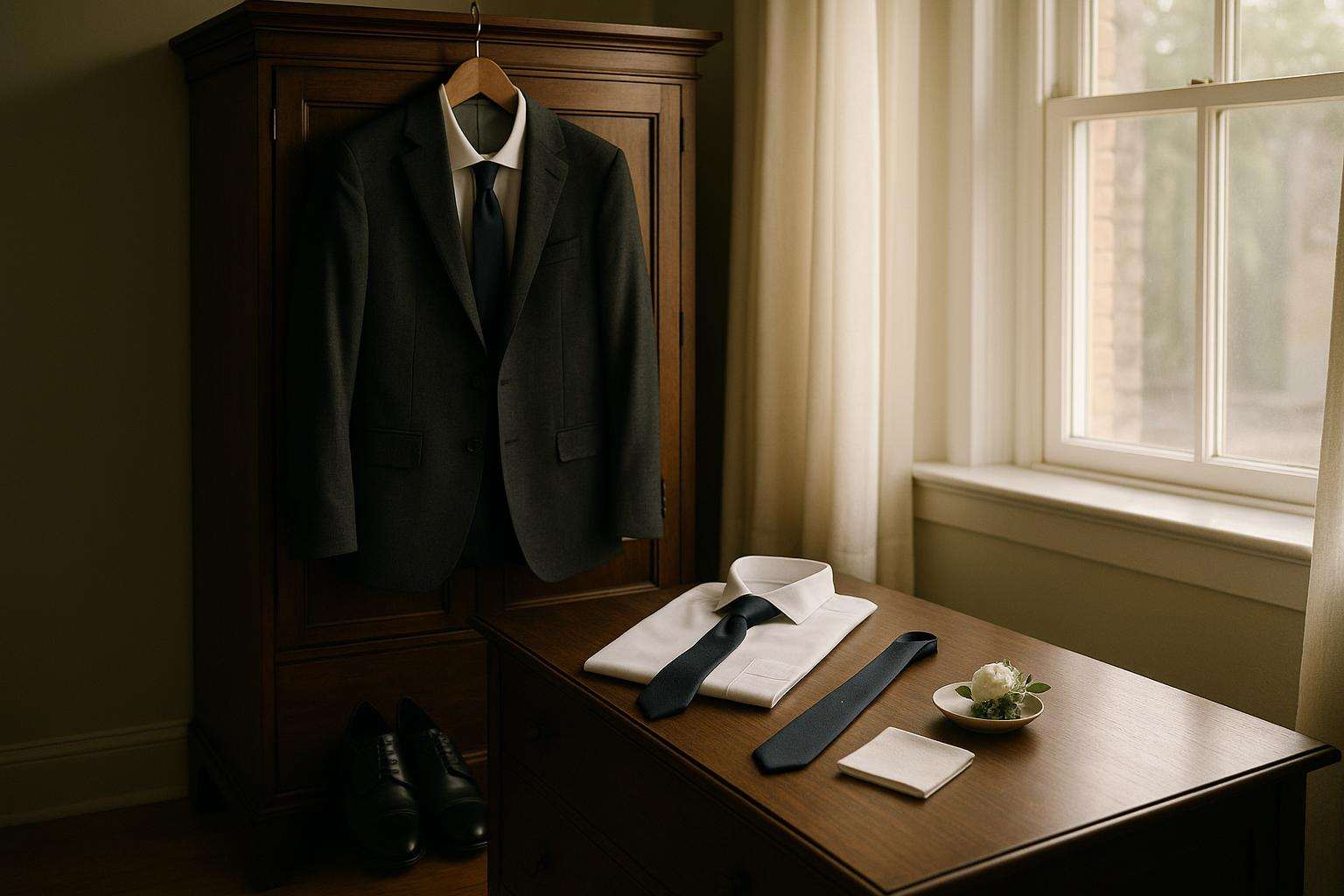
The father of the groom is in nearly every photograph, yet he is not a member of the wedding party. That is the whole puzzle, and it has one clean answer: match the formality of the wedding, then make the color and the details his own. Close enough to belong in the family portrait, distinct enough that no one mistakes him for a groomsman.
If you are the one planning the day at his side, his father's outfit is likely a small worry near the bottom of a long list — and it should stay small. There is no need for him to guess, and no need for the two of you to litigate lapels. The principle is settled, the dress code does most of the deciding, and a single early conversation closes the rest.
What is the father of the groom actually expected to wear?
His formality should track the wedding, not his personal taste for grandeur. Read the invitation's dress code and follow it up one notch from the guests — he is family, after all, not a seat in the back. As The Knot puts it, when you are unsure, it is better to be slightly overdressed than under: the photographs are permanent.
| Wedding dress code | His look | Neckwear & shoes |
|---|---|---|
| Black-tie / ultra-formal | Tuxedo (match the groom if he is in one) | Black bow tie; black patent or highly polished leather |
| Formal / cocktail / semi-formal | Dark suit — navy or charcoal | Long tie; black or dark-brown leather |
| Daytime / garden | Mid-grey or tan suit, wool or linen blend | Long tie or knit tie; brown leather |
| Beach / casual | Light suit or blazer with dress trousers; linen | Open collar or soft tie; loafers or clean leather |
On color, when in doubt the answer is navy. Charcoal carries a touch more gravitas and suits an evening or a formal venue without the severity of black, which is best reserved for black-tie. Tan and light grey photograph beautifully for spring and summer daytime weddings, and pair gracefully with a pastel shirt.
How does the father of the groom coordinate without matching the groomsmen?
The aim is to belong to the group without being absorbed into it. If the groomsmen are in navy, he might wear charcoal; if they are in tuxedos, he wears one too, but signals his own standing with a small, deliberate difference. Generation Tux recommends exactly this — coordinate with the party, then distinguish himself through a vest, a different tie color, or a boutonnière the florist sets apart from the groomsmen's.
What he should not do is wear the exact groomsmen look. He is not a groomsman, and an identical outfit reads as a costuming error in the photographs. A shared palette with a different cut, shade, or texture is the elegant solution. The single most useful move you can make is to have him ask the couple early what the groomsmen are wearing and whether there is a preference for the parents — most couples have an opinion and are glad to be asked.
Should the father of the groom match the father of the bride?
No — they should complement, not match. The two fathers anchor the family portraits together, so they ought to look as if they belong at the same wedding, not as if they coordinated their closets. If both land on navy, differentiate through texture (a solid versus a subtle windowpane), through shade, or through accessory color — one in a silver tie, the other in burgundy. The goal is two men clearly of the same occasion who plainly dressed as individuals.
Should the father of the groom rent or buy his suit?
Many fathers assume they will rent, then find that buying costs about the same and leaves them owning the suit. The honest test is whether he will wear it again. If a formal suit will sit in the closet until the next wedding, renting is the sensible call; if he attends events that call for one, buying earns its keep.
| Retailer | Rent / Buy | Approx. price | Best for |
|---|---|---|---|
| Men's Wearhouse | Both | ~$200 to rent a full package | In-person fittings; 700+ stores so a traveling party can be sized near home |
| The Black Tux | Both | ~$100–$200 to rent | Online fit survey, free home try-on, early delivery with free replacements |
| Generation Tux | Rent | ~$130–$200 | Coordinating a distributed wedding party online |
| SuitSupply | Buy | ~$750 | A tailored European cut he will re-wear |
| Brooks Brothers | Buy | $1,000+ | Classic American tailoring; an investment piece |
Wherever he shops, fit matters more than price: a well-tailored mid-range suit always outshines an expensive one that fits poorly. Book any alterations at least two weeks before the wedding so there is room to adjust.
Which accessories pull his look together?
Accessories are how he carries the wedding's palette without forcing a literal match. A pocket square in a complementary — not identical — color is the most effective single touch. His neckwear should echo the party's style: a long tie if they are in long ties, a bow tie if they are in bow ties. Add a dress watch, classic silver or gold cufflinks, and leather shoes — black or dark brown — that match the suit's formality. The boutonnière, traditionally worn by both fathers, should be coordinated with the florist so it reads as family, not party.
A note on lanes: this guide covers the father's attire. The mother-of-the-groom and mother-of-the-bride dress is a separate question with its own considerations — but for the men of the family, the rule holds steady. Match the formality, coordinate the color, and let one early conversation with the couple do the rest.
Frequently asked
Does the father of the groom have to wear a tuxedo?
Only if the wedding is black-tie or the groom and groomsmen are in tuxedos — then he should wear one too. For a formal or semi-formal wedding, a dark suit in navy or charcoal is correct, and a tuxedo would actually read as overdressed. The rule is to match the formality of the event, not to default to the most formal option. As The Knot advises, when genuinely unsure it is better to be slightly overdressed than under — but a tuxedo at a garden wedding overshoots and can quietly compete with the groom.
Should the father of the groom match the groomsmen?
He should coordinate with them, not match them exactly. Wearing the identical groomsmen outfit reads as a mistake in photographs, because he is family rather than a member of the wedding party. The graceful approach is to share the palette but distinguish himself — if the groomsmen are in navy, he might choose charcoal; if they are in tuxedos, he wears one but sets himself apart with a vest, a different tie color, or a boutonnière the florist makes distinct. Generation Tux frames it the same way: belong to the group without being absorbed into it.
What color suit should the father of the groom wear?
When in doubt, navy — it is flattering, photographs well, and suits nearly every venue. Charcoal carries slightly more gravitas and is the natural pick for evening or formal weddings, avoiding the severity of pure black, which is best saved for black-tie. For spring and summer daytime weddings, tan and light grey look wonderful in natural light and pair beautifully with a pastel shirt. Above all, the color should sit comfortably alongside the wedding palette rather than clash with it, so check the party's colors before he commits.
Do the father of the groom and father of the bride need to match?
No — they should complement each other rather than match. The two fathers appear together in the family portraits, so they ought to look as though they belong at the same wedding, not as though they planned their outfits in tandem. If both gravitate toward navy, differentiate through texture (a solid versus a subtle windowpane), through a different shade, or through accessory color — one in a silver tie, the other in burgundy. The goal is two men clearly of the same occasion who each dressed as themselves.
Is it better for the father of the groom to rent or buy his suit?
It depends on whether he will wear it again. If a formal suit will simply wait in the closet for the next wedding, renting from Men's Wearhouse (around $200 for a full package, with in-store tailors) or The Black Tux (roughly $100–$200, with a free home try-on and early delivery) is the sensible, budget-friendly route. If he attends events that call for a suit, buying earns its place — SuitSupply offers a tailored European cut around $750, and Brooks Brothers provides classic, investment-quality American tailoring above $1,000.
When should the father of the groom get his suit altered?
Schedule alterations at least two weeks before the wedding so there is time to adjust the fit and, if needed, return for a second fitting. Fit matters more than price — a well-tailored mid-range suit always looks better than an expensive one that hangs poorly. If he is renting, order early; The Black Tux, for example, ships rental orders about fourteen days ahead of the event with free replacements, which builds in a buffer if anything needs swapping. Booking the fitting early also leaves room to coordinate his tie and pocket square with the wedding party.