The Groom's Role
The Groom's First Look: What to Expect, Feel, and Do
From his side of the moment: what a first look really is, how he can prepare emotionally and logistically, where it fits in the day-of timeline, and how to make it photograph beautifully.
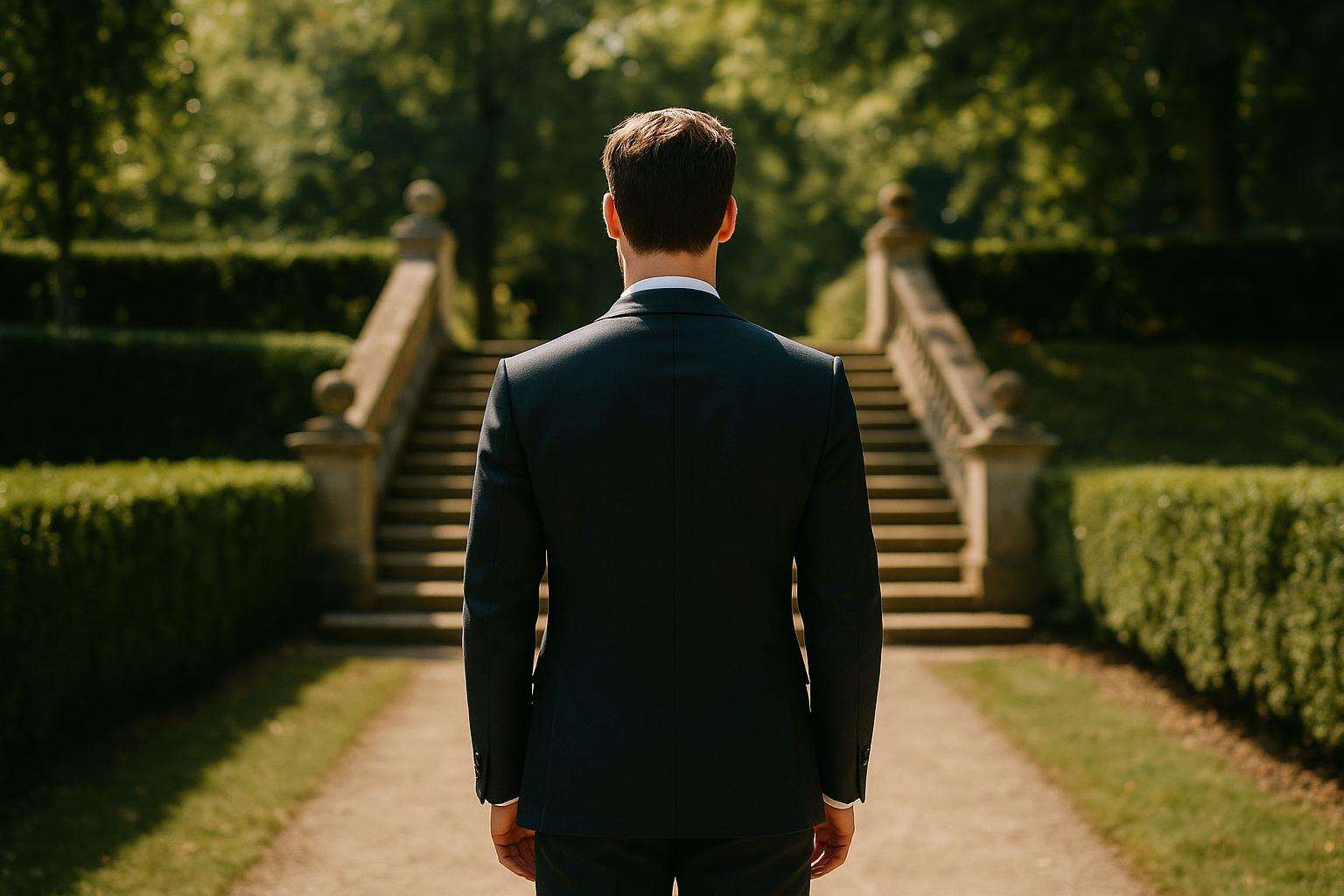
A first look is the planned, private moment he sees you before the ceremony. From his side it is far less about delivering a reaction and far more about feeling one — it strips away the pressure of a public audience, calms his nerves, and hands the day a calmer, more generous photography timeline. The aisle moment survives it; many grooms tear up twice.
There is a quiet myth about the wedding day that does grooms no favors: that the truest version of the moment is the one performed at the aisle, in front of every guest, with a camera trained on his face waiting for tears. The first look gently dismantles that. It gives him the same emotion in a setting built for him to actually have it — and it tends to make him a calmer, more present partner for the rest of the day. If you are weighing whether to plan one, it helps to understand the moment from his side.
What is a first look, and what does it look like from his side?
A first look is a pre-ceremony moment, arranged in advance, when the two of you see each other privately before walking down the aisle. The most common staging has him standing with his back turned at a scouted, secluded spot; you approach, tap his shoulder, and he turns to see you. It is popular and rising — The Knot's 2023 Real Weddings Study found that about 56% of couples now choose one.
The defining feature, from where he stands, is reduced pressure. Culture has loaded grooms with an expectation to react a precise way at the aisle, on cue, with everyone watching. The first look removes the audience. With only the photographer — and perhaps a glimpse of the wedding party — nearby, he can simply feel what he feels. Photographers will tell you they see as much emotion at the first look as at the aisle, and frequently more.
How should he prepare emotionally for the first look?
The single most useful thing to tell him is how the nerves actually move. Anxiety peaks just before the reveal and then drops sharply the instant you see each other; the moment calms grooms rather than winding them up. A few reassurances worth passing along:
- He does not have to cry. A genuine, beaming smile is as authentic as tears. According to Cait Kramer Photography, plenty of grooms light up rather than break down — the emotion is there either way.
- The aisle is not spent. Many grooms who tear up at the first look tear up again at the altar. The two moments are different in character, not in competition.
- Presence beats performance. The only real job is to show up genuinely and feel it, as Plan With Laur puts it — no script required.
If you love the idea of a private moment but still want a fresh surprise for him at the aisle, hold one element back — the veil, gloves, sleeves, or your bouquet — so there is something new to take in when you walk toward him.
Where does the first look fit in the wedding-day timeline?
The moment itself is short — roughly 10 to 30 minutes. Its real power is structural. With a first look, the couple, wedding-party, and family portraits can largely be done before the ceremony, which means he is not rushing through them during cocktail hour. The day can then breathe.
| Aspect | With a first look | Without a first look |
|---|---|---|
| Reaction setting | Private, low-pressure, photographer only | Public, at the aisle, all guests watching |
| Portraits | ~90% done before the ceremony | Crammed into cocktail hour |
| His nerves | Settle early; calmer reception | Carried until the aisle |
| Morning call time | Earlier; grooming ~45 min/person | Later start possible |
| Cost impact | Often extends photo hours | Shorter coverage window |
The honest trade-offs, as Wedgewood Weddings lays out: an earlier start, possibly extended photography hours and cost, and the loss of the surprise-at-the-aisle if that is the vision. A practical fix — do the first look indoors or on paving rather than in long grass, so his boutonniere and shoes stay crisp for the ceremony.
How can he make the first look photograph well?
Three things carry most of the weight. First, location: a scouted, scenic, lightly-trafficked spot — a garden, a grand staircase, a clean architectural backdrop — elevates every frame. Second, his look: he should be fully dressed and pressed, because portraits follow immediately. His boutonniere belongs on the left lapel, over the heart, bloom angled toward the shoulder, and it should be a clear step up from the groomsmen's — a larger bloom, or the “hero flower” pulled from your bouquet to tie the two of you together visually. The 2026 boutonniere report from Rinlong pegs florist boutonnieres at $15 to $40 and notes pocket and magnetic styles trending; whichever he chooses, do a test pin the night before.
Third, the first touch alternative. If he is more private or traditional and cannot bear to give up the aisle reveal, the couple can stand on opposite sides of a door or wall, hold hands, and talk — connection without the sight line. He gets the steadying private moment; you keep the full visual surprise for the ceremony. Whatever you choose, the goal is the same: give him a version of the moment in which he can simply be himself, on a very good day.
Frequently asked
What is a first look from the groom's perspective?
A first look is a planned, private moment when he sees you before the ceremony rather than for the first time at the aisle. The classic staging has him standing with his back turned at a quiet, scouted spot; you approach, tap his shoulder, and he turns. From his side, the defining feature is reduced pressure — he gets to react with only the photographer nearby instead of in front of every guest. Per The Knot's 2023 Real Weddings Study, about 56% of couples now choose a first look.
Does the first look ruin the moment when I walk down the aisle?
No. This is the worry that stops most grooms, and photographers see the opposite play out all the time: many grooms who tear up at the first look tear up again at the aisle. The reactions are different in flavor — the first look is intimate and private, the aisle is shared and ceremonial — but the second one is not diminished by the first. If you want to protect a little aisle surprise, leave one element back, such as the veil, gloves, or your bouquet, so there is still something fresh for him to take in at the altar.
What if he does not cry at the first look?
That is completely normal and tells you nothing about how he feels. Nerves and the sheer volume of the day can hold tears back, and a genuine, ear-to-ear grin is every bit as real a reaction as crying. According to Cait Kramer Photography, photographers routinely capture grooms whose whole face lights up the instant they turn — the look of a man who sees only one person in the world. Do not read the absence of tears as an absence of emotion.
How long does a first look take, and how early does he need to be ready?
The moment itself runs roughly 10 to 30 minutes. Its larger effect is on the timeline: with a first look you can usually finish about 90% of portraits — couple, wedding party, and family — before the ceremony, which frees cocktail hour and the reception. The trade is an earlier start. Hair and grooming teams plan around 45 minutes per person, so a first look can push the morning call time earlier and extend photography hours, as Wedgewood Weddings notes. Build that into the schedule rather than discovering it that morning.
Should he wear his boutonniere for the first look?
Yes — he should be fully dressed, boutonniere included, since most portraits happen right after. Pin it on the left lapel, over the heart, with the bloom angled slightly toward the shoulder, and do a test pin the night before rather than minutes before. His boutonniere should be a step up from the groomsmen's — a larger bloom or a hero flower pulled from your bouquet. Per the 2026 Rinlong boutonniere report, expect $15 to $40 from a florist, with pocket and magnetic styles trending.
What is a first touch, and is it a good alternative for him?
A first touch is a gentle alternative for the couple who wants the private connection of a first look but refuses to give up the aisle surprise. Instead of seeing each other, the two stand on opposite sides of a door or around a corner, hold hands, and talk — he hears your voice and feels your hand without a sight line. It calms the same nerves and gives the same quiet moment together, while preserving the full visual reveal for the aisle. It suits more private or traditional grooms who still want that beat of connection before they marry.