The Groom's Role
The Groom's Thank-You Notes: Who to Thank, What to Write, and When
His half of the thank-you notes — how to divide the list together, the real three-month deadline, gift-acknowledgment wording, and ready templates for groomsmen, parents, and every gift-giver.
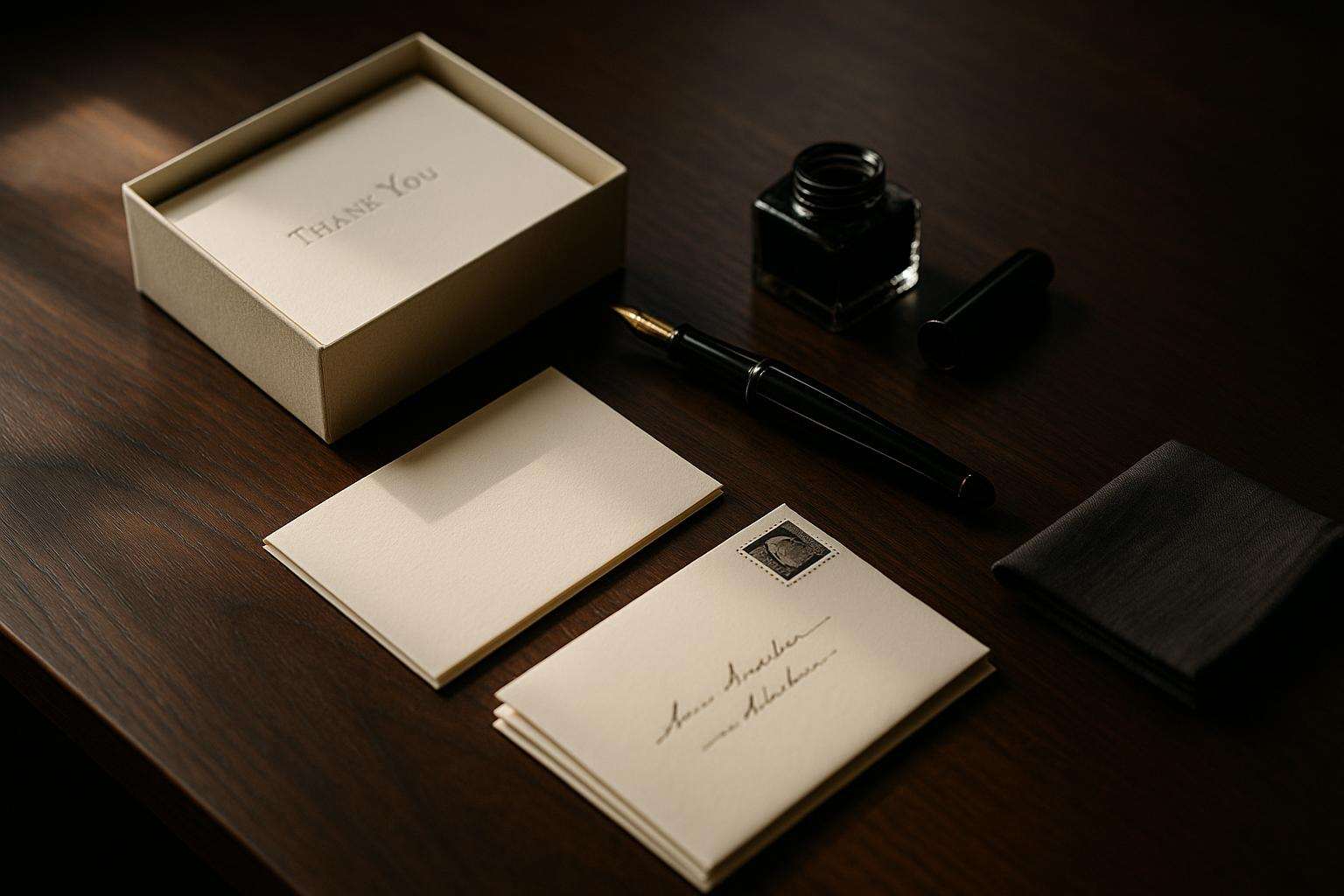
Thank-you notes are a shared duty, not a job to hand off — etiquette is explicit that both your names belong on every card. The groom's natural share is his side of the family and friends, his groomsmen and best man, and any vendors or helpers he managed. The real deadline is three months (the "you have a year" rule is a myth, per Emily Post and The Knot), every gift-giver and even gift-less attendees get a handwritten note, and monetary gifts are acknowledged by their use, never their amount. A simple four-part formula — greet, name the gift, make it personal, thank again — turns the whole stack into a weekend's gentle work.
Somewhere in the quiet week after the wedding, a box of cards arrives at the desk, and a fair question follows: how much of this is his to do? The reassuring answer is that the groom owns a real, definable share of the thank-you notes — and that with a little structure, his half is far smaller and far easier than the dreaded image of a hundred blank cards suggests. This is his side of the job, written so you can hand it to him with confidence.
Whose job is the groom's thank-you notes — and how do you split the list?
Etiquette has never made thank-you notes one person's responsibility. The Knot recommends dividing the list between the two of you, and the most natural division is the one that almost writes itself: each of you takes mainly your own family and friends, and you halve any guests you share. What is non-negotiable is that both of your names appear on every single card — in the body or the sign-off — no matter who held the pen.
For the groom specifically, his column of the list is clear and ownable:
- His side of the family and his closest friends.
- His groomsmen, best man, and ushers — the men who invested real time and money in the wedding party.
- Anyone he personally recruited or whose help he managed — a friend who ran the music, a vendor he booked, the host of an event on his side.
One small consistency rule prevents an awkward result: decide in advance who signs each card and hold a single voice across the whole batch. A pile in which some notes say "I" and others say "we" reads as inconsistent; pick "we" and both names, and write every note that way.
Who actually has to get a thank-you note?
The list is broader than most grooms expect, and getting it right is most of the etiquette. The Emily Post Institute and The Knot agree on the full roster.
| Recipient | Note required? | Timing |
|---|---|---|
| Anyone who gave a gift (engagement, shower, or wedding) | Yes — a separate note per gift | Within 3 months; sooner is better |
| Group-gift contributors | Yes — an individual note to each person | Within 3 months |
| Guests who attended but gave no gift | Yes — thank them for being there | Within 3 months |
| Parents & anyone who contributed financially | Yes | First couple of weeks |
| Wedding party (groomsmen, best man, ushers) | Yes — warm and personal | First couple of weeks |
| Shower or party hosts | Yes — a small gift may accompany it | Within 2 weeks of the event |
| Vendors | Recommended | Within 2 weeks (or a week of returning home) |
A few points trip grooms up. Each gift earns its own note, so a relative who gave at the engagement party, the shower, and the wedding receives three separate cards. Cash, a check, a contribution to a honeymoon or home fund, and a charitable donation are all acknowledged — you confirm the gift arrived without ever naming the amount. And the medium matters: for wedding gifts, the note is handwritten, full stop. No text, no email, no post on the wedding website.
When are the groom's thank-you notes actually due?
This is the single most-asked question, and the answer corrects a myth: you do not have a year. Emily Post sets the standard at three months from the wedding or from receiving the gift, and The Knot, while noting the old "up to a year" idea, urges couples to send well inside that window and sooner where they can.
Within the three months, faster tiers apply. Gifts that arrive before the wedding — shower gifts especially — should be acknowledged as they come in, while the moment is fresh. Vendors are thanked within about two weeks, or within a week of returning from the honeymoon. Parents and the wedding party come first, in the opening fortnight. The reason for the urgency is human, not procedural: a note that arrives late lets the giver quietly wonder whether their gift was forgotten, which is precisely the small hurt the note exists to prevent.
The pace trick every etiquette writer recommends is to write in batches. Five to fifteen notes an evening clears even a long list painlessly; the same hundred-and-thirty notes attempted in one weekend become the chore everyone fears. A man who writes his share ten at a time, on a couple of quiet evenings, is done before he has noticed the work.
What should the groom actually write — the four-part formula?
A blank card is intimidating; a formula is not. Etiquette writers at The Knot and Hallmark converge on the same four beats, and following them turns each note into a two-minute task:
- Greet by name and acknowledge their presence or effort.
- Name the specific gift — or, for money, name the use.
- Make it personal — how you will use it, what it meant, a shared memory.
- Thank them again and sign both names.
A few templates the groom can adapt:
For a registry gift: "Dear Aunt Carol — thank you so much for the cast-iron set. We have already broken it in on a Sunday roast and thought of you the whole time. It meant the world to have you with us. With love, James & Priya."
For a cash or fund gift: never the amount, always the use — "Your generous gift is going straight toward our honeymoon in Portugal, and we will raise a glass to you from a vineyard there. Thank you for being part of our day." For a charitable donation, name the specific charity in the note.
For a groomsman: "Thank you for standing beside me — and for keeping the whole morning calm when I needed it. Having you there meant more than I can put on a card." Pair it with his groomsmen gift if you are giving one.
For parents: thank the support, not a "gift" — "Thank you for everything, seen and unseen, that made the day what it was. We felt it all."
For the broader picture of what a groom owns across the whole wedding, see the Groom's Role hub, which maps his traditional and modern duties from the marriage license to the toast. The thank-you notes are simply the last of those duties — the quiet, gracious close to the work, and one of the few that a guest will remember receiving for years.
Frequently asked
Does the groom write thank-you notes too, or is it the bride's job?
Both of you write them — etiquette has never made this one person's job. The Knot recommends dividing the list, with the most natural split being that each partner writes mainly to their own family and friends and you halve any shared guests. What is non-negotiable is that both of your names appear on every card, whoever held the pen — in the body or the sign-off. So the honest answer is that he owns a real share: his side of the family, his closest friends, his groomsmen and best man, and any helpers or vendors he personally managed. If you would like, one of you can address and organize while the other writes; the work simply should not all land on one desk.
How long does the groom have to send thank-you notes after the wedding?
Three months — and the idea that you have a full year is a myth, despite how often it is repeated. Emily Post sets the standard at three months from the wedding or from receiving the gift, and The Knot urges sending sooner still. Within that window there are faster tiers: gifts that arrive before the wedding should be acknowledged as they come in, vendors within about two weeks (or a week of returning from the honeymoon), and the wedding party and parents in the first couple of weeks. Notes that arrive late risk the giver quietly assuming their gift was forgotten, which is exactly the small hurt the note exists to prevent.
How should the groom thank his groomsmen in a note?
Thank the specific effort, not the abstract idea of friendship. A groomsman gave you real time and money — he rented or bought a suit, traveled, perhaps ran the bachelor weekend, and stood beside you on the day. Name that. A note paired with the groomsmen gift works beautifully: thank him for standing with you, point to one concrete thing he did, and say what his being there meant. Something as plain as "Thank you for standing beside me — and for keeping the whole morning calm. It meant more than you know to have you there" lands far better than a generic line. Etiquette treats the wedding party as people who deserve a warm, personal note, not a form thank-you.
What is the four-part formula for writing a thank-you note?
Etiquette writers at The Knot and Hallmark agree on a simple four-beat structure that turns a blank card into a personal note in about two minutes. First, greet them by name and acknowledge their presence or effort. Second, name the specific gift — or, for money, name the use rather than the amount. Third, make it personal: how you will use it, what it meant, a shared memory. Fourth, thank them again and sign both names. Following the same four beats every time is what makes a stack of a hundred notes feel like a weekend's gentle work instead of a season-long dread.
How do you thank someone for a cash gift without naming the amount?
Acknowledge that you received it, then describe what it is helping you do — never the figure. Etiquette is firm that mentioning a dollar amount reads as transactional, so you redirect to the use: "Your generous gift is going straight toward our honeymoon in Portugal" or "Thanks to you we are that much closer to the kitchen we have been dreaming about." The same applies to a contribution to a honeymoon or home fund, and to a charitable donation made in your name — for a donation, name the specific charity in the note, which shows you noticed and personalizes what could otherwise feel like a form letter. The giver learns their gift arrived and mattered, without the awkwardness of a number on paper.
Does every guest get a thank-you note, even if they did not bring a gift?
Yes. Every guest who attends gets a note, and a guest who did not give a gift is simply thanked for being there — "We were so glad you could celebrate with us; having you there meant a great deal." Beyond attendees, write a note to anyone who hosted a shower or party, to parents and anyone who contributed financially, and to vendors. Each gift gets its own separate note, so a person who gave at the engagement party, the shower, and the wedding receives three. Group gifts are acknowledged individually to each contributor rather than with one note to the group. And for wedding gifts the note must be handwritten — not a text, email, or post on your wedding website.