Groomsmen
How to Make the Groom Stand Out From His Groomsmen
Coordinate, don't match. One or two deliberate tweaks — a different tie, a contrast vest, a distinct jacket — make him the unmistakable centre of the frame while the party stays cohesive.
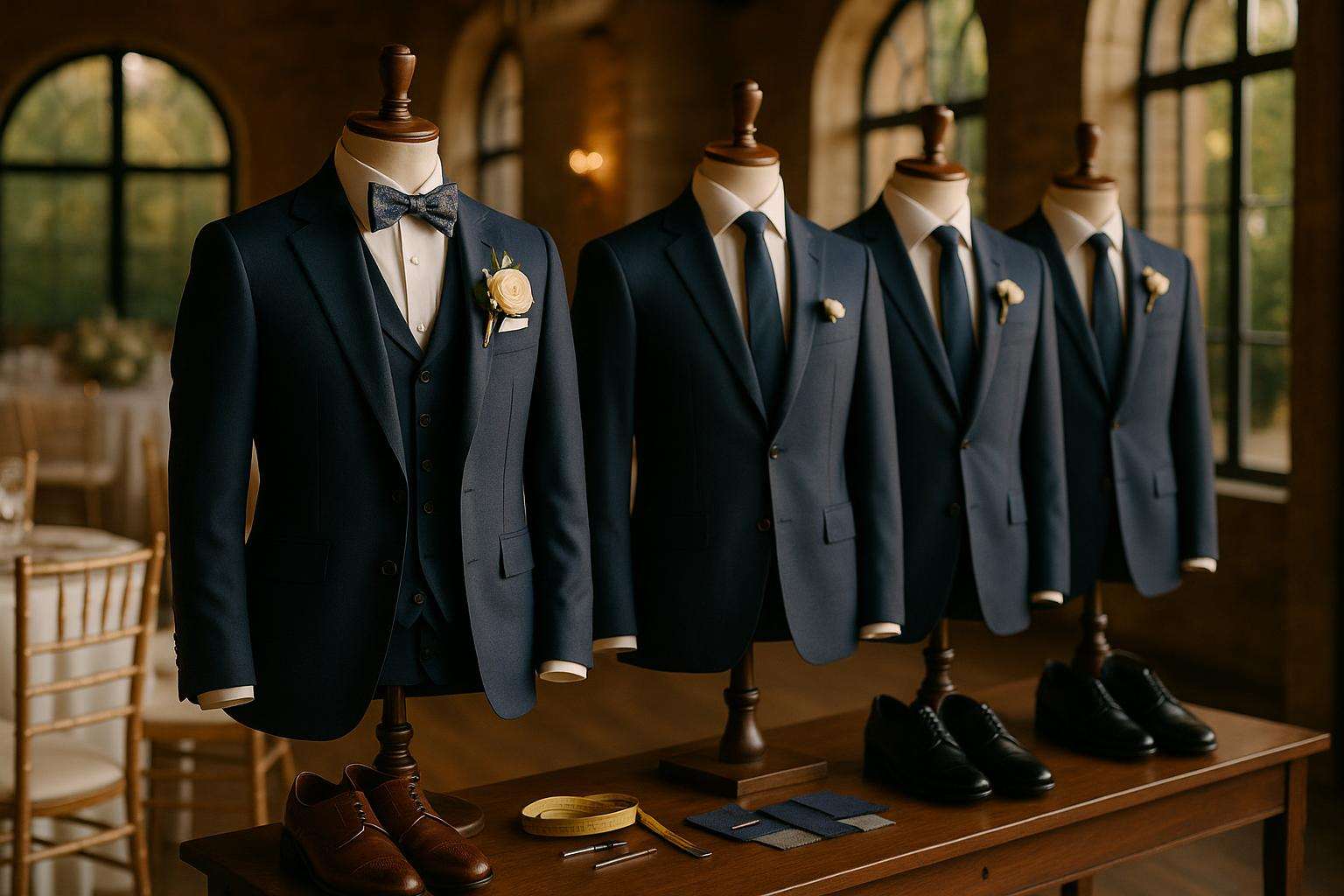
Dress the whole party in one palette, then give the groom one or two visible points of difference — and no more. The most photogenic levers, from subtlest to boldest: a different tie or bow tie, a contrast or three-piece vest, a distinct jacket (tux-vs-suit, velvet, or a peak lapel), a small colour step (midnight blue against black), a fuller boutonnière, and contrasting shoes. The aim is a clear hierarchy where he reads as the centre of the frame while the group still photographs as one.
The instinct used to be to put every man in the identical suit, tie, and shoes. Today that reads as flat and a little dated in photographs, and the groom can vanish into his own line-up. The modern standard — the one nearly every menswear house now recommends — is coordinate, don't match: keep the wedding party inside a single colour palette, then style the groom with one or two deliberate differences so he is unmistakably the lead. Helping him choose which differences, and how many, is the whole job. Below is the menu, ranked from the most subtle move to the boldest, so you can pull the right lever for his taste and your dress code.
Why should the groom stand out from his groomsmen at all?
For the same reason the bride is the focal point on her side: the groom is the centrepiece of the men, and the groomsmen are there to complement him, not to compete. A guest glancing at the altar, and the camera framing the recessional, should be able to find him in a heartbeat. The risk in a perfectly matched party is that he disappears — handsome, but indistinguishable. As Zola's stylists note, coordinating within a palette while letting the groom carry a touch of distinction creates depth in photographs and flatters a party of different body types far better than identical suits do.
How much difference is too much?
This is the question that matters most, and the answer is reassuringly strict: one or two visible tweaks, never five. Stylists at The Black Tux describe the sweet spot as a small handful of deliberate differences — say a bow tie and a vest — with everything else held inside the shared palette. Stack on more than that and he drifts out of the group's look entirely, reading as though he were dressed for a different wedding. Think of it as turning a dial, not flipping a switch: enough to mark him out, not so much that the party stops looking like a party.
What is the most subtle way to make the groom stand out?
Start at the neck. Neckwear is the lowest-risk, highest-clarity lever there is. If the groomsmen wear long neckties, switch the groom to a bow tie; or keep him in a necktie but make it patterned — paisley, polka dot, a quiet floral — while the men stay solid. It changes nothing about the silhouette of the group, yet it reads instantly in every photograph. A graceful coordinating trick: let the groom's tie or boutonnière echo the bride's palette while the groomsmen's echo the bridesmaids', so his accessories quietly pair him to her.
The boutonnière is the other near-invisible touch. Give the groom a fuller, more intricate, or slightly more colourful bloom and let the groomsmen wear a simpler accent flower — or none at all. It marks him without anyone quite registering why, and it doubles as the thing that ties him to the bouquet she carries.
How can a vest or a different jacket set the groom apart?
Two mid-level and bold levers do the heaviest lifting. The first is the vest: make the groom's look three-piece while the groomsmen go two-piece, and he gains a layer of formality that pays off most once jackets come off for the reception and the dance floor, where a waistcoat keeps him looking dressed and distinct. A bolder version uses a contrasting vest in a different colour or fabric.
The boldest lever is the jacket itself, and there are several refined ways to play it without breaking the line of the group:
- Tuxedo vs suit. The cleanest hierarchy of all — the groom in a tuxedo, the groomsmen in coordinated suits of the same shade. A tux is set apart chiefly by its satin lapels and the satin stripe down the trouser, which a suit lacks, and it reads as the more formal garment. Because the two can look similar at a distance, pair it with one more cue.
- Lapel. A peak lapel on the groom against notch lapels on the men keeps the silhouette aligned but quietly elevated.
- Fabric. A velvet dinner jacket in burgundy, emerald, or black against the men's wool jackets photographs richer without shouting — an especially strong cool-season move.
- A small colour step. The Black Tux's 2026 guidance favours a shade shift over a clash: midnight blue for the groom against black for the party — midnight blue reads richer under evening light and has overtaken black as the most-chosen tux colour — or an ivory or white dinner jacket against the party's darker tones for summer-evening and destination weddings. A widely used template puts the groom in an ivory tuxedo with a brown lapel and vest while the groomsmen wear chocolate-brown jackets, so the lapel tone unifies the group while the ivory keeps him unmistakable.
Which approach should the groom actually choose?
Match the lever to the dress code and his temperament. For a black-tie or formal evening wedding, the tux-vs-suit split (with a bow tie) is the natural, time-honoured choice. For a daytime or semi-formal celebration, a contrast vest plus a patterned tie carries all the distinction he needs. For a man who wants real presence, a velvet or ivory jacket makes the entrance. The table below lines them up by how bold each one reads.
| Lever | How it reads | Best for | Pair it with |
|---|---|---|---|
| Bow tie / patterned tie | Most subtle | Any wedding; cohesive parties | A fuller boutonnière |
| Fuller boutonnière | Subtle | Floral or garden weddings | Bride's palette accent |
| Three-piece / contrast vest | Mid-level | Jacket-off receptions | A different tie |
| Contrasting shoes | Mid-level | Rustic, relaxed venues | Brown vs the men's black |
| Tuxedo vs suit / peak lapel | Bold | Formal, evening weddings | A bow tie |
| Velvet / ivory / colour-step jacket | Boldest | Statement, destination weddings | Keep all else neutral |
One thing underwrites every choice above: fit. Wedding stylists are unanimous that fit matters more than colour or fabric — a well-tailored rental beats an expensive piece that sits badly, and a sharply fitted groom reads as the lead before any tie or vest enters the frame. Start measurements and coordination six to eight weeks out so his piece and the groomsmen's can be altered together. For the broader question of how the whole party's attire should relate — beyond making him stand out — our sister guide on groom versus groomsmen attire at Rose & Vow covers the full coordination picture, and pairs neatly with this one.
Frequently asked
How much should the groom's outfit differ from the groomsmen's?
One or two visible tweaks — no more. The most repeated rule among wedding stylists is restraint: pick one or two deliberate points of difference, such as a bow tie plus a vest, and keep everything else within the shared palette. Pull more than two levers and he stops reading as the lead figure of a cohesive party and starts looking as though he is dressed for a different event. The point is a clear visual hierarchy, not a costume change — a guest, or a camera, should be able to pick him out of the lineup in a second while the group still photographs as one. As The Black Tux puts it, modern weddings lean toward coordinating, not matching.
What is the easiest way to make the groom stand out?
Change his neckwear. If the groomsmen wear long neckties, give the groom a bow tie; or keep him in a necktie but make it patterned — paisley, polka dot, a subtle floral — while the men stay solid. It is the lowest-risk, highest-clarity move because it reads instantly in photographs without altering the silhouette of the group. A graceful extra touch is to let his tie or boutonnière echo the bride's palette while the groomsmen's echo the bridesmaids', quietly pairing him to her. According to WeddingWire, neckwear is the most understated of all the differentiators.
Should the groom wear a tuxedo while the groomsmen wear suits?
Yes — it is one of the cleanest ways to build hierarchy. A tuxedo is distinguished from a suit chiefly by its satin: satin lapels and a satin stripe down the trouser leg, which a suit lacks, and a tux reads as the more formal garment, as The Knot explains. Putting the groom in a tuxedo while the groomsmen wear coordinated suits in the same shade keeps the group cohesive while marking him out. One caveat: a suit and a tux can look similar from across a room, so this works best paired with one more cue — a bow tie, a vest, or a fuller boutonnière — to make the distinction unmistakable in the photographs.
Can the groom and groomsmen wear different colours without clashing?
Yes, if it is a step rather than a leap. The most photogenic approach is a small shade shift within one family — midnight blue for the groom against black for the party, which reads richer under evening light, or an ivory dinner jacket against the party's darker jackets for a summer-evening or destination wedding. A widely used 2026 template puts the groom in an ivory tuxedo with a brown lapel and vest while the groomsmen wear chocolate-brown jackets, so the lapel tone ties the group together while the ivory keeps him distinct. Avoid a hard clash; the colours should clearly belong to the same wedding.
Does fit matter more than colour or fabric for standing out?
It does. Wedding stylists are consistent that fit beats everything else in how a group reads on camera: a well-tailored rental consistently looks sharper than an expensive piece that sits badly on the body. A groom whose jacket, shoulders, and trousers fit cleanly already reads as the lead figure before any tie or vest enters the picture, and a party whose suits all fit well photographs as a deliberate group rather than a coincidence. Practically, that means starting measurements and coordination six to eight weeks out so there is time for alterations on his piece and the groomsmen's together.
What small finishing touches help the groom stand out?
Two reliable, low-key levers are shoes and pocket accessories. Give the groom a different leather — brown or burgundy brogues or monk straps while the groomsmen wear black oxfords — for a separation that never breaks formality. And let small print work for him: a patterned pocket square, a tie bar, or coordinated suspenders against the men's plain solids draws the eye without a costume change. A fuller or slightly more colourful boutonnière is the classic near-invisible touch, and it doubles as the thing that coordinates him with the bride's bouquet.