Groomsmen
Ring Bearer: Role, Age & Duties Explained
Who carries the rings, at what age, and the one rule every planner swears by — plus dog ring bearers and grown-up alternatives for his side of the aisle.
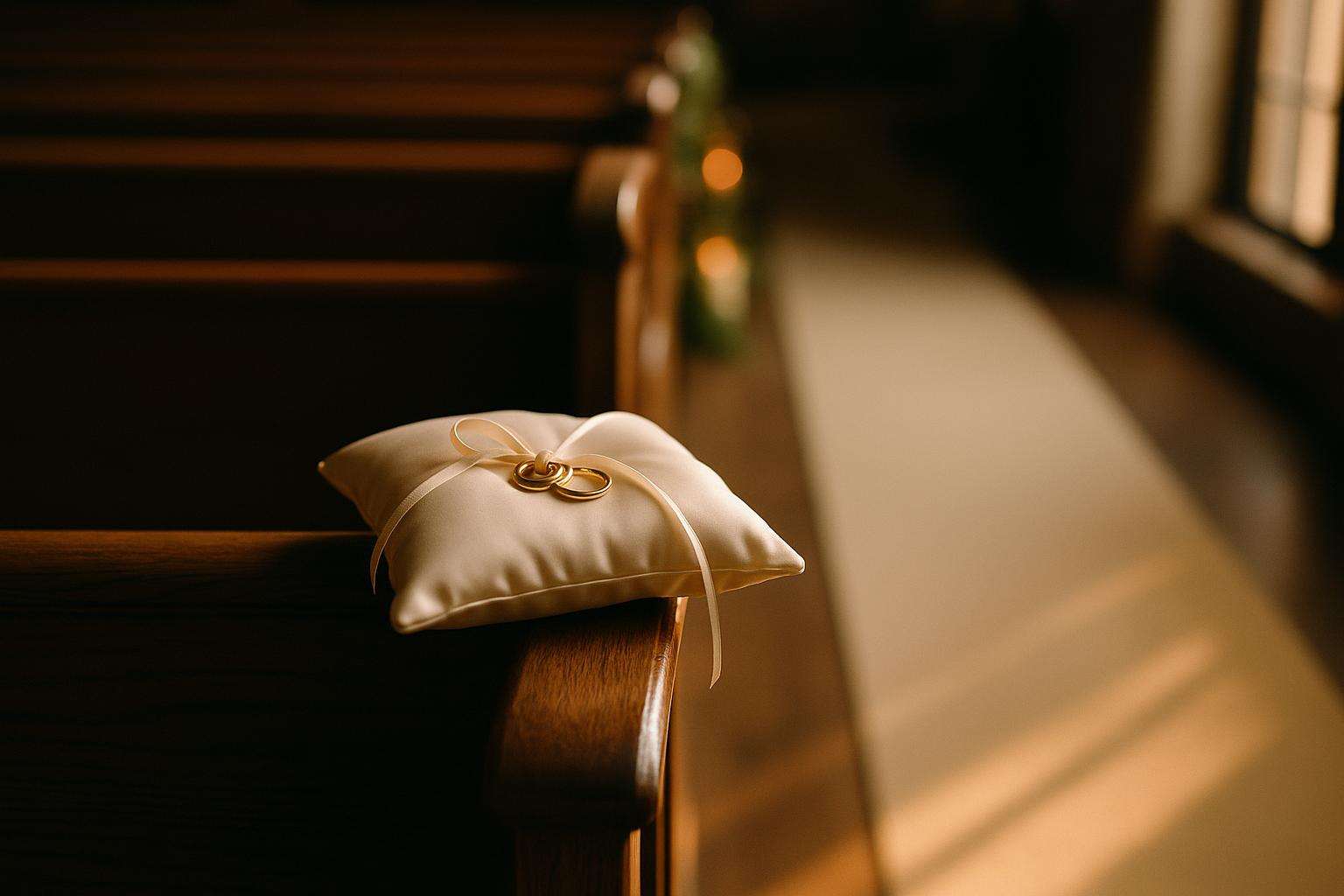
A ring bearer is traditionally a child of three to eight who carries the bands down the aisle on a pillow or in a box, then hands off to the best man. The one rule the experts insist on: tie decoy rings to the pillow and keep the real bands in the best man's pocket. Dogs and grown-ups make fine ring bearers too — and you are free to skip the role entirely.
Of all the small parts in his wedding party, the ring bearer is the one most likely to steal the room — and the one most likely to go sideways if you do not plan it. The good news is that the role is simpler, and safer, than it looks once you understand what the job actually is, who suits it, and the single precaution every seasoned planner takes. Here is how to choose well for his side of the aisle.
What does a ring bearer actually do?
The ring bearer's job is symbolic rather than logistical. He walks the wedding bands down the aisle near the end of the processional — usually just before the bride and often paired with a flower girl — carries them on a small decorative pillow or in a ring box, reaches the front, and hands off to the best man or officiant. After that, he either sits with his parents or stands with the party if he is old enough, according to The Knot.
Before the day, his only real duties are to attend the rehearsal and any gathering of the wedding party, and to practice the walk with the actual pillow — ideally in or near the real outfit. That short rehearsal does two things: it settles his nerves, and it tells you honestly whether the role suits him at all. After the ceremony he joins the recessional, usually paired again with the flower girl, sits for the wedding-party photos, and is then released to enjoy the reception as a guest.
What is the right age for a ring bearer?
The traditional window is three to eight years old, but the better question is temperament, not birthday. A confident, outgoing child relishes the attention; a shy one can freeze halfway down a long aisle with two hundred faces turned toward him. There is no firm age limit — only the judgment of whether the child will rise to the moment or be overwhelmed by it.
A useful guide many planners follow: the younger the child, the shorter the aisle should feel, and the more an adult should shadow the walk. Below three, expect to walk him, carry him, or pair him with an older attendant who keeps a hand nearby. And if a child is invited but plainly does not want the spotlight, give him a graceful exit — handing out ceremony programs is the classic lower-pressure job that keeps him included without the long, public walk.
| Option | Best for | Watch out for |
|---|---|---|
| Child, 3–5 | Maximum charm; family children he knows | May stall or need an adult to walk him; keep the aisle short |
| Child, 6–8 | The classic, reliable ring bearer | Confirm he wants the spotlight, not just his parents |
| Dog | Couples whose pet is part of the family | Decoys only; needs a dedicated handler and rehearsal |
| Adult (brother, friend, grandfather) | Honoring someone meaningful without making him a groomsman | Keep it dignified, not a gag |
| No ring bearer | Small or formal ceremonies | Best man simply holds the rings — perfectly traditional |
Why do experts insist on a decoy ring?
This is the one piece of advice nearly every planner gives, and it is worth taking seriously. Tie inexpensive decoy bands to the pillow or pouch, and keep the real wedding rings in the best man's jacket pocket until the moment of the exchange. A small, shiny band is precisely the kind of object a nervous child — or an excited dog — will drop, fumble, or send rolling under a pew, and there is no graceful way to recover from that mid-ceremony.
The decoy keeps the photograph and the tradition intact while removing the only genuine risk. If you cannot bear the idea of fake rings on the pillow, the professional refinement is to keep decoys in throughout the build-up and the practice run, then swap the real rings in only at the very last second, so the real bands are exposed for the brief aisle walk and nothing more. It is the best man's quiet job to manage that hand-off — one more reason the rings belong in his pocket.
Can a dog be the ring bearer, and how do you keep the rings safe?
The dog ring bearer has gone fully mainstream, frequently dressed in a small "Ring Security" vest or a custom bandana, and it can be one of the most genuinely delightful moments of the day. The rules, though, are stricter than for a child. As celebrity planner Mindy Weiss puts it plainly, the real bands never touch the dog.
- Decoys only on the dog — the real rings stay with the best man, every time.
- Secure the pouch to a collar D-ring with a small carabiner or ribbon loop so it cannot slip free if the bandana shifts.
- Assign a dedicated handler — a groomsman or friend whose only job that day is walking and minding the dog, with no other ceremony role.
- Train and rehearse the aisle walk for weeks with treats, and do a full dress run at home in the bandana and pouch to catch anything that pulls or annoys the dog.
- Know the limits — weddings bring strange smells, sounds, and crowds, so keep a Plan B in which the dog appears only for post-ceremony photos if the day proves too much.
What are the grown-up and no-ring-bearer alternatives?
If there is no child in the picture, do not force one. An adult ring bearer is entirely acceptable and increasingly common — a younger brother, a close friend, or a grandfather can carry the rings with real dignity, and it is a quiet way to honor someone who matters to the groom without making him a full groomsman. Keep it sincere rather than a gag, and it reads beautifully.
The other honest option is to skip the role: in plenty of ceremonies the best man simply holds the rings, which is as traditional as anything else here. You can also have two children share the walk, or hand the job to a slightly older junior groomsman who is past the pillow-and-box stage. There is no rule that a wedding must have a ring bearer at all — choose the version that fits the people he loves and the tone of the day, and let the best man's pocket do the rest.
Frequently asked
What are the main ring bearer duties?
The ring bearer carries the wedding bands — usually decoys — down the aisle on a small pillow or in a ring box, walking near the end of the processional, often just before or after the flower girl. When he reaches the front, he hands off to the best man or officiant and then sits with his parents or stands with the party if he is old enough.
Before the day, his only real duties are attending the rehearsal and practicing the walk. After the ceremony he joins the recessional and the wedding-party photos, and is then free to enjoy the reception as a guest, per The Knot.
What is the best age for a ring bearer?
The traditional range is three to eight years old, though there is no firm rule — it comes down to temperament more than birthday. A confident child enjoys the attention; a shy one may stall partway down a long aisle. Below three, plan for an older attendant to walk or carry him.
A useful guide: the younger the child, the shorter the walk should feel and the more an adult should shadow him. If a child does not want the spotlight, offer him a quieter job, such as handing out ceremony programs, so he stays included without the long aisle moment.
Should the ring bearer carry the real wedding rings?
No — and this is the one rule nearly every planner agrees on. Tie inexpensive decoy bands to the pillow or pouch and keep the real rings in the best man's jacket pocket until the exchange. A small, shiny band is exactly the kind of object a child or dog can drop or send rolling under a pew.
If you insist on real bands, the professional refinement is to keep decoys in through the build-up and rehearsal, then swap the real rings in only at the last moment, so they are exposed for the brief aisle walk and nothing more.
How do you make a dog the ring bearer safely?
Dogs make charming ring bearers, often in a small "Ring Security" vest or bandana — but the rules are stricter. Put decoys only on the dog; the real bands stay with the best man. Clip the ring pouch to a collar D-ring with a small carabiner or ribbon loop so it cannot slip free.
Assign a dedicated handler whose only job that day is the dog, rehearse the aisle walk for weeks with treats, and keep a Plan B — bringing the dog out only for photos — in case the crowd proves too much, as planner Mindy Weiss advises.
Can an adult be a ring bearer?
Absolutely. An adult ring bearer is entirely acceptable and increasingly common — a younger brother, a close friend, a grandfather, or anyone meaningful to the groom can carry the rings with dignity. It is a graceful way to honor someone who matters to him without making them a full groomsman.
You can also simply have the best man hold the rings and skip the role, have two children share the walk, or hand it to a slightly older junior groomsman. There is no requirement to have a ring bearer at all.
Does the ring bearer walk before or after the flower girl?
Conventionally the ring bearer and flower girl process near the very end, just before the bride, and the two are often paired. In the most traditional order the ring bearer walks ahead of the flower girl, but plenty of couples reverse it or send them down together hand in hand — whatever steadies the children.
The order is flexible; coordinate it at the rehearsal so the children know exactly when to go and who is waiting at the front to receive them and the pillow.