Wedding Bands
Men's Black Wedding Bands: Materials, Styles & Care
A material-first guide to the groom's black wedding band — what each black metal really is, how durable it is, whether the black wears off, and how to care for it.
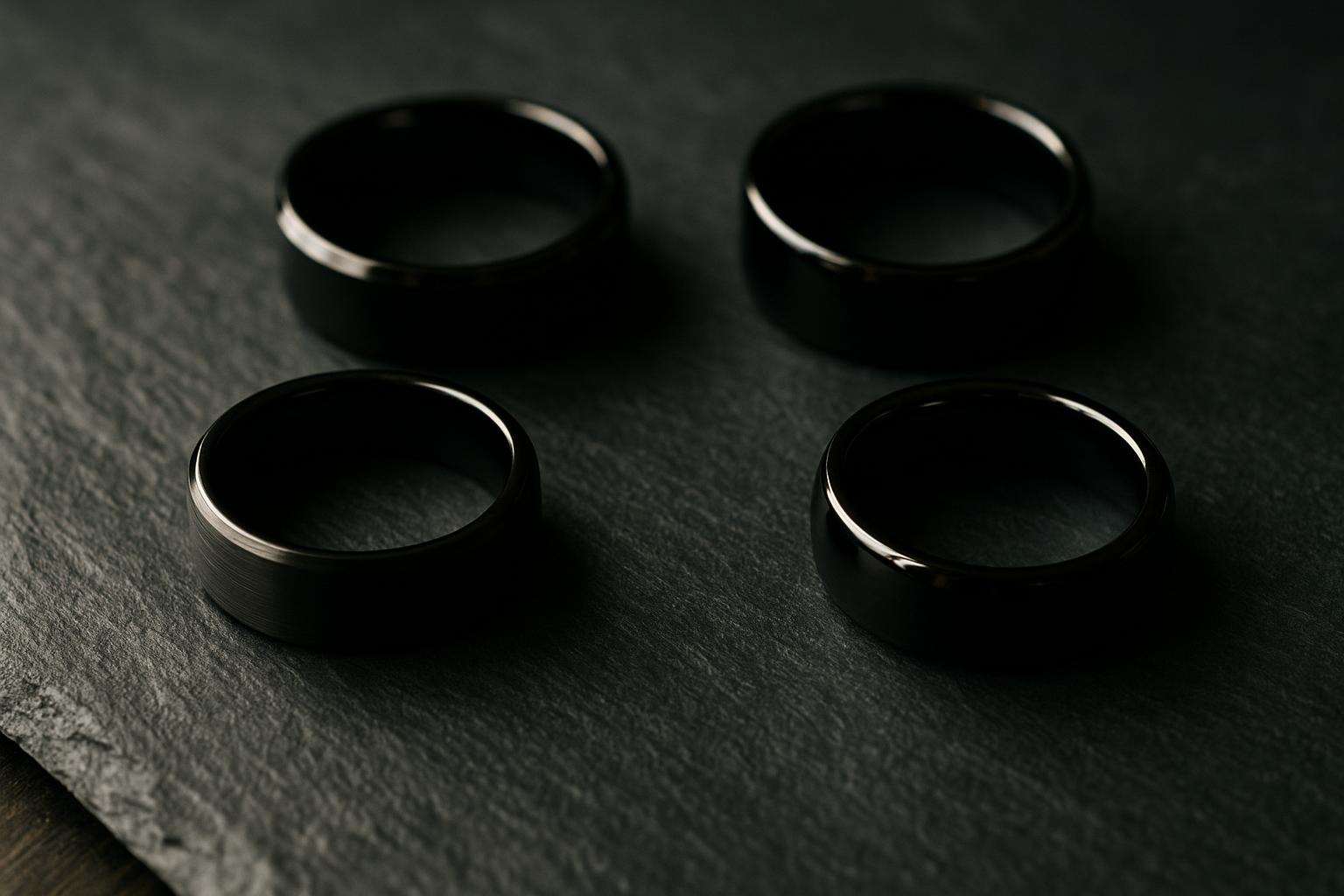
"Black" is a finish strategy, not a single metal. The decision that matters most for a groom is solid-black materials (black ceramic, black zirconium) versus surface-coated ones (black tungsten, black gold). Solid-black never wears through to a different color; coated-black is durable but its finish is finite. Everything else — weight, scratch resistance, price — follows from that single distinction.
A black wedding band has quietly become one of the most requested looks for the modern groom: it is confident without being loud, it photographs beautifully against a dark suit, and it sidesteps the obvious in favor of something that still looks right in the photographs decades on. But "black" hides a surprising amount of engineering, and the grooms who are happiest with their ring a few years later are the ones who understood, going in, exactly how their band got its color. This guide walks through the materials, the durability, the care, and the styling — written for the partner coordinating the look as much as for the groom himself.
What is a men's black wedding band actually made of?
Black is achieved one of two ways, and the difference governs everything that follows. The first is a surface coating: a thin black layer is bonded onto a lighter base metal through ion plating or physical vapor deposition (PVD). This is how most black tungsten and black gold rings get their color — the gray tungsten or the yellow-to-white gold remains underneath. The second is solid or through-color: the dark runs through the material itself. Black ceramic is pigmented through its body, and black zirconium turns black when its surface is oxidized in a high-heat process that grows a hard, dark, integral layer of zirconium oxide.
The five materials a groom will actually be choosing among are tungsten carbide, black zirconium, black ceramic, titanium, and black gold. Tungsten carbide is one of the hardest jewelry metals, ranking just below diamond on the Mohs scale, so the metal resists scratching superbly — but the black is plating, and the ring is heavy, hypoallergenic, non-resizable and brittle enough to crack under a sharp blow. Black zirconium is naturally light, hypoallergenic and temperature-stable, with an oxidized black surface rating about 9 on Mohs that retailers call practically scratch-proof. Black ceramic is a high-tech, through-pigmented material — sleek, very hard, light and hypoallergenic, with the same brittleness caveat as tungsten. Titanium is the lightest mainstream option, extremely strong and corrosion-resistant, though black titanium is coated. Black gold is white or yellow gold finished black by rhodium, ruthenium or PVD plating — the only precious-metal option here, and the only one that can be resized, but its coating wears and needs periodic refreshing.
| Material | How the black is made | Durability | Weight | Resizable | Typical price |
|---|---|---|---|---|---|
| Tungsten carbide | Coated (IP/PVD) | Hardest; scratch-resistant but brittle | Heavy | No | ~$250–$300 |
| Black zirconium | Solid (oxidized surface) | ~Mohs 9; near scratch-proof | Light | No | ~$200–$400+ |
| Black ceramic | Solid (through-pigment) | Very hard; can chip on impact | Light | No | ~$200–$400+ |
| Titanium | Coated (IP) | Strong, tough, lighter scratch resistance | Very light | Hard | ~$300–$500 |
| Black gold | Coated (rhodium/PVD) | Soft metal; coating wears, needs re-plating | Light | Yes | Highest |
How durable is a black wedding band, and will the black wear off?
For the metal, tungsten, zirconium and ceramic are all dramatically harder than gold or platinum and shrug off the everyday scratches that dull a softer ring. The honest question is about the color. With solid-black materials — ceramic and zirconium — the black is part of the ring, so normal wear can never expose a different shade beneath it. With coated-black materials — tungsten, black titanium and black gold — the coating is durable but finite; at high-contact spots it can eventually thin or mark, and black gold specifically needs periodic re-plating to stay dark.
There is a second trade-off worth naming plainly: hardness and toughness are not the same thing. Tungsten and ceramic resist scratches best but are brittle and can crack under a hard, direct blow — which is why specialist retailers advise against wearing a tungsten band at the gym or during heavy impact work. Titanium and zirconium are more forgiving of impact and far lighter on the hand, with zirconium delivering near-tungsten scratch resistance without the weight. For a groom who works with his hands, that combination often makes brushed black zirconium the most sensible solid-black choice.
Solid black or coated black: which should a groom choose?
The decision comes down to priorities. Choose solid black — ceramic or zirconium — if the highest priority is a color that never needs maintenance and a ring that is light and hypoallergenic; the cost is that it can chip under a sharp impact and cannot be resized. Choose coated black tungsten if the priority is a substantial, weighty feel and maximum scratch resistance at a friendly price, accepting that the finish can mark over many years and the ring is brittle. Choose black gold only if a precious metal and the ability to resize matter more than a maintenance-free finish. A useful rule: the harder a groom is on his hands, the more a brushed or matte finish earns its keep, because it disguises micro-wear that a high polish would advertise.
How do you care for a black wedding band?
Care is minimal and consistent across the alternative metals. Clean the ring with mild dish soap and warm water, then dry it with a soft cloth; these metals do not tarnish or rust and are safe for hand-washing, showering and swimming. Avoid abrasive cleaners and grinding contact that can mar a coated finish, and store the ring away from harder jewelry that might knock it. Because tungsten, ceramic and zirconium cannot be resized, getting the size right at purchase is essential — most reputable brands offer a sizing exchange or a generous return window instead, and many, including Manly Bands, back their rings with a lifetime manufacturing warranty.
Where can you buy a men's black wedding band, and how much should it cost?
Three retailers cover the field well. Larson Jewelers specializes in tungsten with a deep black selection and a price-match guarantee, listing tungsten commonly around $250–$300 and titanium around $300–$500. Manly Bands offers an unusually broad black range across tungsten, black ceramic and black zirconium — many in the $200–$400 band — with build-your-own options and a lifetime warranty. Blue Nile carries a curated set including a 6mm brushed-and-polished comfort-fit black tungsten band, backed by a lifetime warranty against manufacturing defects. Across all three, the price tracks width, finish and inlays rather than precious-metal weight — a simple 6–8mm comfort-fit band costs least, while wood, carbon-fiber or metal accents add up. For a formal wedding, a slim-to-medium solid black band in brushed or matte sits beautifully alongside a dark suit or tuxedo and stays unmistakably his.
Frequently asked
Do men's black wedding bands wear off over time?
It depends entirely on how the black is made. Solid-black materials — black ceramic and black zirconium — carry their color through the body of the ring or in an oxidized surface layer that is part of the metal, so ordinary wear never exposes a different color underneath. Coated-black materials — black tungsten, black titanium and black gold — get their color from a thin layer applied by ion plating, PVD or rhodium plating, and that layer is durable but finite. At high-contact spots it can eventually thin or mark, and black gold in particular needs periodic re-plating. If you want a black band that never needs maintenance, choose a solid-black material.
Which black wedding band material is the most durable?
For pure scratch resistance, tungsten carbide leads — it ranks just below diamond on the Mohs scale and keeps its shine far longer than gold or platinum. Black zirconium is close behind, rating about 9 on Mohs while weighing far less, and retailers describe it as practically scratch-proof. The honest caveat is impact: tungsten and ceramic are hard but brittle and can crack under a sharp blow, while titanium and zirconium are tougher against impact. For a groom hard on his hands, brushed black zirconium is often the best balance of scratch resistance, low weight and impact tolerance.
Can a black wedding band be resized?
Most cannot. Tungsten, ceramic and black zirconium are far too hard to cut and re-form, so they cannot be resized — getting the size right at purchase is essential. Titanium is technically possible but very difficult, so most jewelers will not attempt it. The one exception is black gold, which is a precious metal underneath and can be resized like ordinary gold, though resizing may disturb the black plating and call for a touch-up. Because the alternative metals can't be adjusted, reputable brands such as Manly Bands offer a sizing exchange instead of resizing.
How do you clean and care for a black wedding band?
Care is refreshingly simple. Clean the ring with mild dish soap and warm water, then dry it with a soft, lint-free cloth. Tungsten, ceramic, titanium and zirconium do not tarnish or rust and are safe to wear while washing hands, showering and swimming. Avoid abrasive cleaners and harsh scrubbing pads, which can mar a coated-black finish. If the wearer is rough on his hands, a brushed or matte finish hides micro-wear far better than a high polish. Black gold benefits from gentler handling and occasional professional re-plating to refresh the dark surface.
How much does a men's black wedding band cost?
Black bands span a wide range because the price tracks material, width and inlays rather than a precious-metal weight. Black tungsten and titanium are the most affordable mainstream choices: Larson Jewelers lists tungsten commonly around $250–$300 and titanium around $300–$500. Black ceramic and black zirconium from a specialist like Manly Bands typically run $200–$400 or more depending on width and detailing. Black gold sits highest because it is a true precious metal. Simple comfort-fit bands cost least; wood, carbon-fiber or metal inlays add to the price.
Is a black wedding band appropriate for a formal wedding?
Yes — and that surprises many couples. A clean black band in a brushed or matte finish reads as quietly modern rather than flashy, and it pairs cleanly with both a dark formal suit and a tuxedo. For a traditional wedding, choose a slim-to-medium width — roughly 6 to 7mm — in a single solid color with no novelty inlay, and the ring sits comfortably alongside black studs and a watch. A high-polish black band leans more contemporary; a matte black band leans more understated. Either way, black photographs beautifully against formalwear and stays unmistakably his.