Fit & Tailoring
The Alterations Every Groom Needs (and What a Tailor Can't Fix)
A clear, calm guide to the four-to-six alterations that finish a groom's suit, what they cost in 2026, and the structural limits no tailor can rescue.
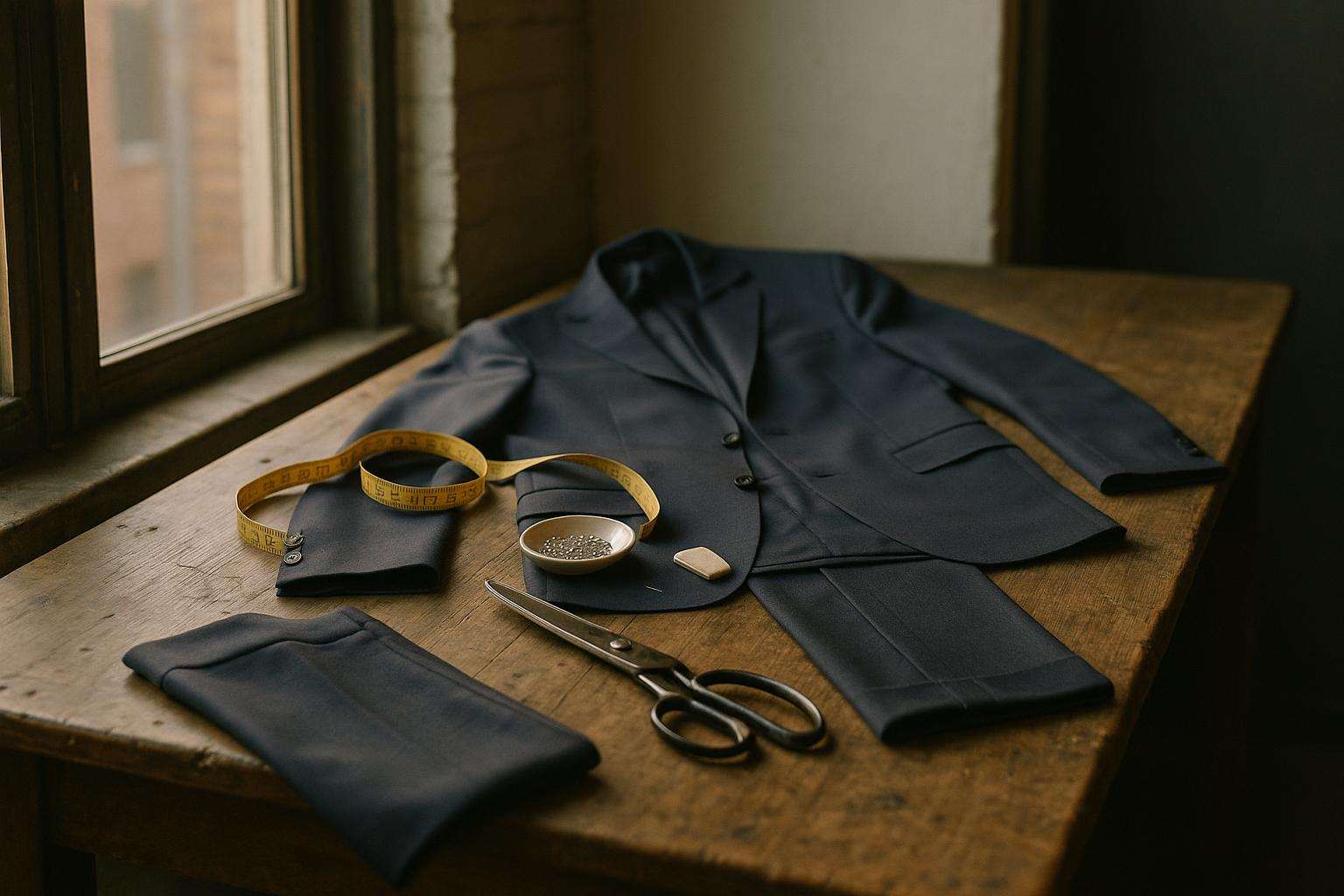
A wedding suit is bought close and finished on the tailor's bench. The alterations he genuinely needs are few and predictable — trouser hem, waist, and taper; jacket sleeve length and waist suppression — and together they cost most grooms about $100 to $200. The one thing to get right at the rack is the part a tailor cannot fix: the shoulders and chest. Buy for those, and let the tailor dial in everything below the collar.
If you are the one quietly steering his suit decision — and many partners are — here is the reassuring truth: the alterations that finish a groom's suit are a short, knowable list, not a mystery. Almost no suit fits perfectly off the rack, and almost every suit can be made to look tailored with a handful of small changes. The art is knowing which changes matter, what they should cost, and where alteration quietly stops being possible.
What alterations does almost every groom need?
Think of it in two halves. The trousers nearly always need a hem — they ship deliberately long so the tailor can set the break to his height and shoe. They often need a small waist adjustment, which the waistband is engineered to allow within an inch or two each way, and frequently a leg taper so the line stays clean rather than baggy at the opening.
The jacket asks for two finishing touches. Sleeve length is set so roughly a quarter to half inch of his shirt cuff shows below the jacket — a small detail that reads as polish in every photograph. And waist suppression, the most transformative single change, takes in the side seams so the jacket curves to his torso instead of hanging like a box. As The Modern Groom notes, tapering, waist suppression, sleeve refinement, and hemming are the changes that most dramatically lift how a suit reads. That is the whole list for the great majority of grooms.
What can a tailor not fix on a wedding suit?
This is the part worth memorizing, because it governs the one decision made at the rack. The hard limits live where the jacket's structure is built.
The shoulders are the biggest limitation by far. Reworking shoulder width or height means detaching and relocating the sleeve and disturbing the internal canvas — it is costly, risky, and many tailors will simply decline it. Suitsupply puts it bluntly: the left and right sleeves can be adjusted individually, but the shoulder height cannot be altered. The chest and armholes are the same story: if the chest pulls or caves, that is a sizing problem to return, not a seam to take in.
There are gentler limits, too. A jacket can sometimes be shortened, but lengthening is usually impossible because there is little hem to spare, and shortening shifts the balance between pockets and hem. Sleeves and seams can only be let out by the inch or two of fabric hidden inside; past that, the cloth isn't there. As Men's Wearhouse explains, once you are correcting shoulders, chest, balance, and length all at once, you are battling the suit's basic size — and that is a battle not worth paying for.
So the golden rule, the one sentence to hold onto: buy the suit that already fits the shoulders and chest, and let the tailor finish everything below.
How much do groom suit alterations cost in 2026?
Less than most people fear. A full off-the-rack suit with the common changes typically totals about $100 to $200. The basics are cheap; the structural work is where the cost sits. Major-metro ateliers in New York, Los Angeles, and San Francisco add roughly 15 to 30 percent, so a suburban tailor often saves real money.
| Alteration | Range | Notes |
|---|---|---|
| Trouser hem | $20–$50 | Most universal; often same-day |
| Sleeve shortening | $20–$50 | Costlier with working buttonholes |
| Jacket waist suppression | $60–$180 | The most impactful single change |
| Trouser waist / taper | $10–$50 | Easy within about an inch or two |
| Shoulder adjustment | $150+ | Often declined — best avoided |
One practical habit, drawn from tailor pricing surveys: ask for a written quote before any work begins. A clear estimate by alteration type means the final bill never surprises either of you.
Should he use Men's Wearhouse, Suitsupply, or an independent tailor?
Each has its place. Men's Wearhouse charges for alterations rather than including them — roughly $10 to $60 for hems and sleeves, $50 to $150 for waist, shoulder, or relining work — but it sweetens the deal with same-day hemming, a Perfect Fit Guarantee, free re-alteration of any seam it has already altered, and free pressing for the lifetime of a suit bought there. For a groom buying his suit in-store, that bundle is genuinely valuable.
Suitsupply runs its own in-store tailors with flat, published prices and quick turnaround — a waist take-in around $15 in half an hour, sleeves about $29 over a couple of days — with trousers cut extra-long by design so there is always hem to work with. An independent tailor is the right choice for unusual proportions, vintage cloth, or anything past standard finishing; the trade-off is variable pricing, so gather written estimates from about three shops.
Whichever route he takes, give it time. For the groom on his own, two to three weeks is comfortable; if the groomsmen are being fitted too, book eight to twelve weeks out, because spring and summer are peak tailor season. And gently steer him away from crash dieting in the final stretch — a suit fitted to a number he cannot hold is a suit that needs altering twice. Get the shoulders right at the rack, hand the rest to a good tailor with enough runway, and he will look unmistakably like himself, at his best, on the day.
Frequently asked
What alterations does almost every groom need on his wedding suit?
Four to six small, predictable changes finish nearly every suit. On the trousers: a hem to set the break (they always ship long), a waist adjustment, and often a leg taper. On the jacket: sleeve length set so a quarter to half inch of shirt cuff shows, and waist suppression — nipping the side seams so the jacket follows his torso instead of hanging like a box. That short list does the vast majority of the work; you should not need anything beyond it if the suit was chosen in the right size.
What can a tailor not fix on a wedding suit?
The structure. Shoulders are the biggest limit — reworking shoulder width or height means detaching the sleeve and disturbing the canvas, and many tailors decline it. Suitsupply states plainly that shoulder height cannot be altered. Major chest reshaping and raised armholes are reconstruction, not alteration, and seams can only be let out by the inch or two of fabric hidden inside. The rule that follows: choose the suit that already fits his shoulders and chest, because those cannot be meaningfully changed.
How much do groom suit alterations cost in 2026?
A full off-the-rack suit with the common changes usually totals about $100 to $200. Basics are inexpensive — a trouser hem or sleeve shortening runs roughly $20 to $50 — while structural jacket work such as waist suppression or relining runs $75 to $150 or more. Big-city ateliers in New York, Los Angeles, and San Francisco add roughly 15 to 30 percent. Always ask for a written quote before the work begins so the final bill holds no surprises.
Should he use Men's Wearhouse, Suitsupply, or an independent tailor?
It depends on the suit and his body. Men's Wearhouse charges for alterations but adds a Perfect Fit Guarantee, free re-alteration of an already-altered seam, and free lifetime pressing on suits bought there. Suitsupply offers flat in-store pricing and quick turnaround. An independent tailor is the right call for unusual proportions or anything beyond standard finishing — get written estimates from about three shops before committing.
How far ahead should he book his wedding suit alterations?
Give it room. For the groom alone, two to three weeks before the wedding is comfortable, but if his groomsmen are being altered too, plan eight to twelve weeks ahead — spring and summer are peak tailor season and benches fill quickly. One quiet warning worth passing along: ask him to avoid crash weight loss in the final weeks. A waist taken in to a number he cannot hold means a second round of alterations, and sometimes a fit that never quite settles before the day.
Is waist suppression the same as tapering?
No, though they are cousins. Waist suppression refers to taking in the jacket's side seams so it curves in at the waist and follows the torso — it is the change that most transforms a boxy jacket into a tailored one. Tapering usually refers to slimming the trouser leg, narrowing the opening so the line stays clean over his shoe instead of pooling. A groom often wants both: a suppressed jacket up top and a gently tapered trouser below, working together for one continuous, intentional silhouette.