Fit & Tailoring
How Should a Suit Fit? The Groom's Fit Guide
The complete fit standard for a groom's suit — shoulders, chest, length, sleeve, collar, and trouser break — with at-home checks and real buy, made-to-measure, and rental references.
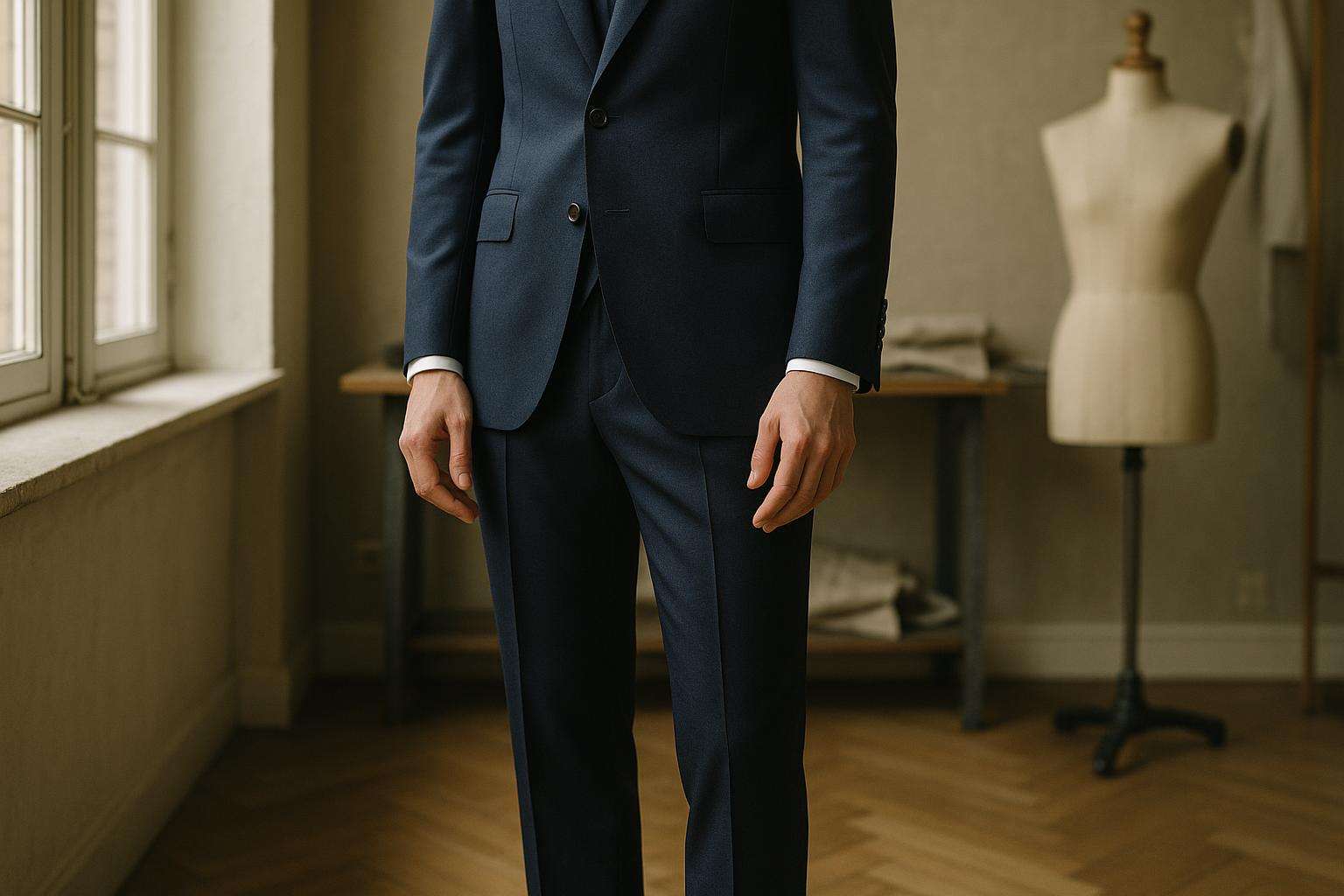
A wedding suit fits when the shoulder seam sits exactly where his shoulder bone ends, the buttoned jacket feels like a hug rather than a squeeze, the hem covers his seat, about half an inch of shirt cuff shows, and the trouser breaks once, softly, on the shoe. Get the shoulders right first — everything else can be tailored.
You are the one looking at him in the mirror and, later, in every photograph from the day. That makes you the best fit editor he has — if you know what to look for. The good news is that a suit's fit is not a matter of taste; it is a short list of fixed reference points that tailors have agreed on for a century. Once you can name them, you can stand at the fitting and say, calmly, what is right and what needs another visit. This is the head-to-toe standard, drawn from the fitting guides published by houses such as Suitsupply, and the rules that hold whether he buys, has it made, or rents.
Where does a wedding suit have to fit perfectly, and where can a tailor save it?
Begin with the one thing that cannot be undone. The shoulder is the foundation of the whole jacket, and it is the single point a tailor cannot economically rebuild. The shoulder seam must land precisely where his natural shoulder bone ends and his arm begins. Have him stand relaxed, arms at his sides, and look from the front: if you see dimpling, divots, or a little ledge of fabric standing proud of the arm, the jacket is too big. If wrinkles pull across the upper back or he feels gripped when he reaches forward, it is too small. A clean shoulder lies flat and follows the line of the body with no ripple.
Almost everything else is adjustable, and knowing the price of each fix changes how you shop. Sleeve length, the trouser hem, and taking the waist in or out are all routine, inexpensive alterations. Shoulder width, overall jacket length, and a too-low armhole are not — reshaping any of them means remaking a large part of the garment. So the buying rule is simple: choose the suit by the fit of the shoulders and the chest, then let the tailor handle the rest. When he is genuinely between two sizes, size up and have it taken in; you can always remove cloth, but you cannot conjure it back.
| Fit point | Adjustable? | Typical cost |
|---|---|---|
| Sleeve length | Easy | ~$20–$40 |
| Trouser hem & break | Easy | ~$15–$25 |
| Waist (jacket or trouser) | Moderate | ~$30–$60 |
| Minor chest take-in | Moderate | ~$40–$80 |
| Shoulder width | Impractical | Re-make the jacket |
| Overall jacket length / armhole | Impractical | Re-make the jacket |
How should the jacket sit through the chest, length, sleeves, and collar?
With the jacket buttoned, the chest should feel like a hug, not a squeeze. There should be no X-shaped pull straining at the button, and you should be able to slide a flat hand between the lapel and his shirt with light resistance — if a whole fist fits, it is too loose. The fabric should lie smooth, without the button straining or the lapels bowing away from the body.
For jacket length, use the two classic checks: the hem should cover his seat and reach roughly the second knuckle of his thumb when his arm hangs naturally. A jacket cut too short looks boyish; one cut too long swallows the leg and shrinks him in photographs. Because length is one of the hard-to-alter points, judge it carefully before committing.
The sleeve should end just shy of the wrist bone so that roughly a quarter to half an inch of his shirt cuff shows beneath it. That sliver of linen is the quiet signal of a considered outfit; sleeves that swallow the cuff or ride too high read as borrowed. Happily, sleeve shortening is among the cheapest, fastest jobs a tailor does. Finally, the jacket collar should hug the back of his shirt collar with no gap rolling open across the upper back — a gap there usually traces back to the shoulders or posture and is worth flagging.
How should the trousers fit, and which break works for a wedding?
The trousers should sit at a mid-rise — at or just below his natural waist — and stay there without a belt cinching them up. They should drape cleanly over the seat with no pulling or sagging, the front pockets lying flat rather than gaping open. Through the thigh, aim for a clean line with no ripples of excess and no strain when he sits or kneels at the ceremony.
The break is where the hem meets the shoe, and it is the last decision before the final fitting, so settle it together in advance. A slight break — one small, soft fold where the hem just rests on the shoe — is the most versatile and the safest for a wedding; it photographs well and flatters most heights. A no break (the hem ending right at the shoe) reads modern and a touch sharper, suited to a trimmer cut and a shorter or slimmer groom. A half break sits between the two and is a reliable middle ground. Whatever he chooses, the trouser must always cover the ankle — too short looks like a mistake, too long looks careless. Generation Tux publishes a useful break reference if the party is renting and you want one standard to hold across several different builds.
Does buying, made-to-measure, or renting change the fit standard?
The standard never changes — only how you reach it does. With ready-to-wear plus alterations, you buy the best off-the-rack shoulder and chest you can find and let a tailor refine the rest; Suitsupply works this way, with in-house tailoring and half-canvas construction (full canvas on its higher lines) that lets a jacket mold to him over years. RTW suits there generally start around $650 and climb into the $800–$1,200 range with finer cloth. Made-to-measure, the route offered by Indochino from around $399, builds from a base pattern adjusted to his measurements — ideal for an unusual build or for matching a full wedding party on the same cloth, though it asks for four to six weeks and often a second fitting. Renting trades a perfect personal fit for convenience and consistency across many groomsmen. Whichever path you take, judge the result against the same checklist: shoulders, chest, length, sleeve, collar, seat, break. If those land, the suit is right — and he will look it for the next forty years of looking back.
Frequently asked
What is the single most important part of a wedding suit's fit?
The shoulders, without question. The shoulder seam must land exactly where his shoulder bone ends and his arm begins, lying flat with no dimpling, divots, or pulling. It matters most because it is the one part a tailor cannot economically fix — reshaping a shoulder means rebuilding the jacket. Sleeve length, the waist, and the hem are all routine, affordable alterations, but a poor shoulder follows him through every photograph. So choose the suit by its shoulders and chest first, and treat everything else as adjustable. When he is between two sizes, size up for the shoulders and have the rest taken in.
How much shirt cuff should show beneath the jacket sleeve?
About a quarter to half an inch of shirt cuff should peek out beyond the end of the jacket sleeve, with the jacket sleeve ending just before the wrist bone. That small sliver of linen frames the hand and signals a considered, tailored outfit, as fit guides from houses like Oliver Wicks note. If the jacket sleeve swallows the cuff entirely or rides too high up the wrist, the proportion is off — but this is the good news of suit fitting, because sleeve shortening is one of the cheapest and quickest alterations a tailor performs, typically in the twenty-to-forty-dollar range.
What does the right trouser break look like for a wedding?
For most grooms a slight break is the safest, most flattering choice: the hem just rests on the shoe and forms one small, soft fold at the front. It photographs cleanly and suits nearly every height. A no break, where the hem ends right at the shoe, reads more modern and sharp and pairs well with a trimmer cut or a shorter groom; a half break is a dependable middle ground. The one firm rule is that the trouser must always cover the ankle — too short looks like an error, too long looks careless. Agree on the break together before the final fitting, since it is the last hem decision made.
How can I tell at the fitting whether the jacket is too tight or too loose?
Have him button the jacket and stand naturally. Look at the button: an X-shaped pull radiating from it means the chest is too tight. Then slide a flat hand between the lapel and his shirt — you should meet light resistance. If your hand slips in with room to spare, or a whole fist fits, it is too loose. Across the back, pulling wrinkles or a gap where the collar lifts off the shirt point to a jacket that is too small or sitting poorly on the shoulders. A correct jacket lies smooth through the chest and back with no straining and no billowing excess fabric.
Is buying, made-to-measure, or renting best for a groom's fit?
It depends on his build and your timeline; the fit standard stays the same either way. Ready-to-wear plus alterations — Suitsupply's model, with half-canvas construction — is fast and refined for a near-standard build, with suits commonly from around $650. Made-to-measure, such as Indochino from roughly $399, is the better call for an unusual build or for matching a whole wedding party, but plan four to six weeks and likely a second fitting. Renting trades a perfect personal fit for convenience across many groomsmen. Judge any of them against the same checklist of shoulders, chest, length, sleeve, and break.
How early should the groom start the suit so the fit is right by the wedding?
Earlier than most couples expect. For made-to-measure such as Indochino, allow four to six weeks for production plus margin for a likely second fitting, so start two to three months out. For ready-to-wear with alterations, a few weeks is usually enough, but book the final fitting close to the day — not months before — because weight can shift in the run-up to a wedding. Rentals should be reserved early but tried on and adjusted in the final week. The break and sleeve length are the last refinements, so schedule a final fitting late enough to confirm them but with a buffer to fix anything that is off.