Fit & Tailoring
Sleeve Length and the Cuff Reveal: A Groom's Detail That Photographs
The quarter-to-half-inch of shirt cuff showing beyond his jacket sleeve is a small thing — until the ring shot, when it is everything.
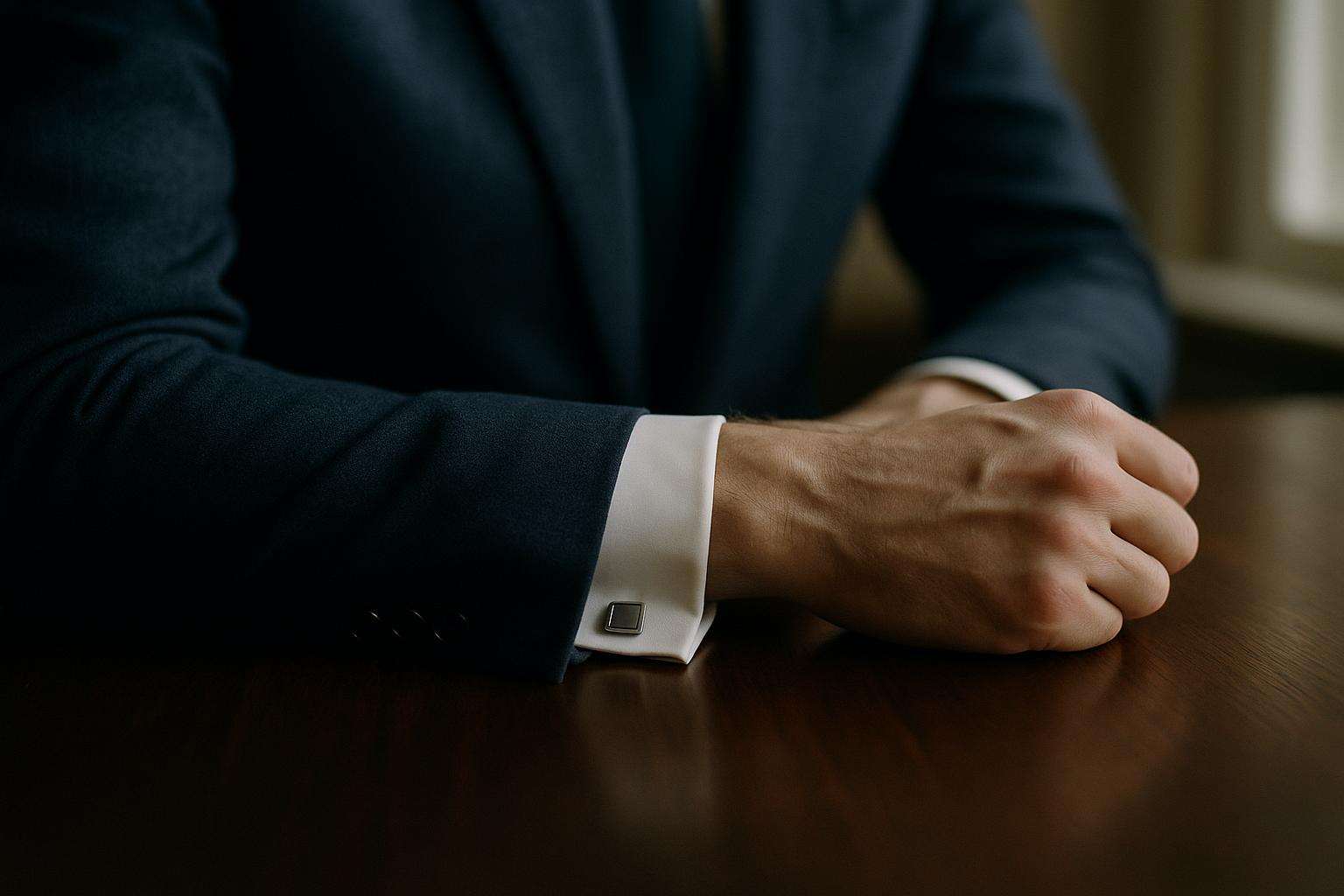
A correctly fitted jacket sleeve ends at the wrist bone and reveals a clean quarter to half inch of shirt cuff. On the wedding day that small band frames every close-up of his hands — the ring exchange, the vow profile, the styled flat-lay — so the two things to get right are the amount of cuff showing and making sure both sleeves match.
There is a detail on his suit that almost no one notices in the room and almost everyone notices in the photographs: the sliver of white shirt cuff that shows beyond his jacket sleeve. Hold the camera close — and on a wedding day the camera gets very close — and that quarter inch of linen becomes the frame around his hand, his ring, and the moment you have been planning toward. Getting it right is not fussy; it is one measurement, done well, on both arms.
How much shirt cuff should actually show beyond the jacket sleeve?
The classic rule, repeated by every menswear authority worth trusting, is a quarter to a half inch — roughly 1 to 1.5 cm — of shirt cuff visible beyond the jacket sleeve when his arms hang naturally at his sides. Gentleman's Gazette leans toward a half inch, "a hint more," and makes the smart point that it is really about proportion: the cuff he shows should loosely match the band of shirt collar visible above the jacket at the back of his neck. This is the old "half-inch of linen" guideline, and it has lasted because it works.
The authorities differ by a hair. The menswear author Alan Flusser recommends half an inch; Bernhard Roetzel, in The Gentleman, cites about a centimeter; a much-quoted Brooks Brothers rule of thumb runs "Continental, half an inch; American, a quarter inch." The honest acceptable range is about a quarter to three-quarters of an inch — more than an inch protruding means something does not fit, usually a shirt sleeve that is simply too long for the jacket.
| Context / cuff type | Ideal reveal |
|---|---|
| Barrel / button cuff (standard) | ¼ – ½ inch |
| French (double) cuff with links | ½ – 1 inch |
| Business-formal day suit | About ½ inch |
| Black-tie / tuxedo | ¼ – ⅜ inch |
| Seated (vs. standing) | Slightly more — about ½ inch |
If he is wearing French cuffs and cufflinks for the wedding, that extra reveal is intentional — the fold and the link are meant to be seen. A barrel cuff should stay tidier, closer to a quarter inch.
Why does the cuff reveal matter more on a wedding day than any other day?
Because the day is built around his hands. The ring exchange is the single most photographed close-up of the whole event, and good photographers shoot it tight — a fast prime for the moment itself and often a 100mm macro for the ring detail, as SLR Lounge lays out in its detail-shot guide. At that magnification, a jacket sleeve riding down to the knuckle reads as sloppy, and a band sliding onto a finger with no cuff framing it looks unfinished. The reveal is the difference between a hand that looks dressed and one that looks like it grabbed a jacket off a rack.
It is not only the ring. Photographers stage a groom flat-lay — watch, cufflinks, boutonnière, tie — and a vow profile with his arms at his sides, which is exactly the pose where the half-inch of cuff is supposed to show. The reveal earns its keep functionally too: the shirt cuff is a barrier that keeps the oils and grime of the wrist off the jacket sleeve, which is one reason the shirt is meant to sit slightly proud of the coat in the first place.
How does sitting versus standing change the reveal, and what is the handshake test?
The visible cuff is not a fixed number. Standing, the jacket covers more of the arm and less cuff shows; sitting pulls the jacket up the forearm and reveals more. A practical target is about a quarter inch standing and a half inch seated. This matters at a wedding because the reception is mostly seated — the toasts, the dinner, signing the license — so a sleeve dialed in for standing alone will suddenly look long the moment he sits down for the speeches.
The field test is the handshake. Have him extend his arm as if to shake hands; some shirt cuff should still be visible past the jacket sleeve. If the jacket completely covers the cuff on a handshake, the sleeves are too long. Two more tells: the seam where the shirt cuff joins the shirt sleeve should never become visible, and the jacket should never hide the shirt cuff entirely. At least a small, even band should always show.
What if one sleeve shows more cuff than the other?
Unequal reveal is the dead giveaway of an off-the-rack jacket that was never altered, or tailoring done in a rush. Most men have one arm slightly longer than the other — often the dominant one — and a good tailor finishes each sleeve independently so that both reveal the same amount. In photographs his two hands frequently appear together: the ring exchange, hands clasped in front of him, the recessional. A mismatch there is impossible to miss.
The good news is that this is the most routine fix in tailoring. Shortening jacket sleeves is the single most-requested alteration worldwide, typically $20 to $40, and a competent tailor keeps the working-button placement and the vent alignment correct while doing it. Mind the order of operations: set the shirt sleeve length first — the shirt cuff should end at the base of the thumb, right at the wrist bone — then set the jacket sleeve to reveal the band above it.
When should a groom finalize his sleeve length before the wedding?
Treat sleeves like every other alteration and book the final fitting roughly two to four weeks out, after any body changes from a fitness push or a grooming routine have settled. Have him bring the exact dress shirt he will wear and, importantly, the actual watch — a chunky watch sits on the wrist and eats into the reveal on that arm, so it has to be on for the fitting. For a purchased suit (off-the-rack from a house like Suitsupply, or made-to-measure from Indochino), the in-store or a trusted local tailor sets it. For a rental, Generation Tux and The Black Tux size sleeves by measurement and allow reorders, but a rented jacket is generally not altered — so the measurements and the home try-on are everything.
None of this is about being fussy. It is one clean line on each arm, set once, that quietly carries through every photograph of his hands. Get the quarter-to-half-inch right and matched, and the ring shot takes care of itself.
Frequently asked
How much shirt cuff should show beyond a suit jacket sleeve?
The widely agreed standard is a quarter to a half inch (about 1 to 1.5 cm) of shirt cuff showing beyond the jacket sleeve when his arms hang naturally at his sides. Gentleman's Gazette favors roughly a half inch and frames it as proportion: the cuff he shows should loosely match the band of shirt collar visible at the back of his neck. Anything past about an inch of cuff signals a fit problem somewhere — usually a shirt sleeve that is too long for the jacket.
What is the difference for French cuffs versus barrel cuffs?
A standard barrel (button) cuff sits best at the classic quarter to half inch. A French (double) cuff fastened with cufflinks can comfortably show a half inch up to a full inch, because the folded cuff and the link are meant to be seen and read as more formal. For black-tie specifically, follow the strictest reading — about a quarter to three-eighths inch. If he is wearing French cuffs in the photos, that extra reveal is intentional and elegant, not a fit error.
Why does sleeve length matter so much in wedding photos?
Because the wedding day is built around his hands. The ring exchange is the most photographed close-up of the day, and photographers shoot it tight — often with a macro lens for the ring itself, per SLR Lounge. At that magnification a sleeve riding to the knuckle looks sloppy and a band with no cuff framing it looks unfinished. The styled groom flat-lay and the vow profile both put the wrist on display, so the half-inch reveal does outsized work.
How can I tell if his jacket sleeves are too long?
Use the handshake test: have him extend his arm as if to shake hands. Some shirt cuff should still be visible past the jacket sleeve. If the jacket swallows the cuff entirely, the sleeves are too long and need shortening. Two other tells: the shirt's cuff-to-sleeve seam should never become visible, and the jacket should never hide the shirt cuff completely. Remember the reveal shifts a little — slightly less cuff shows standing, slightly more when he sits, which matters through the whole seated reception.
What if one sleeve shows more cuff than the other?
That is the classic giveaway of an un-altered off-the-rack jacket. Most men have one arm slightly longer than the other, and a good tailor finishes each sleeve independently so both reveal the same amount. It matters in photos because his two hands often appear together — the ring exchange, hands clasped — where any mismatch is obvious. Shortening sleeves is the most common jacket alteration there is, usually $20 to $40, and a tailor keeps the button and vent alignment correct.
When should he finalize sleeve length before the wedding?
Book the final fitting about two to four weeks out, after any changes from a fitness or grooming routine have settled, and have him bring the exact dress shirt and the actual watch he will wear — a chunky watch eats into the reveal on that wrist. Set the shirt-sleeve length first (the cuff should end at the wrist bone), then the jacket sleeve to frame it. Rental houses like Generation Tux and The Black Tux size by measurement but typically do not alter, so measure carefully and use the home try-on.