Black-Tie Optional for the Groom: What He Can Actually Wear
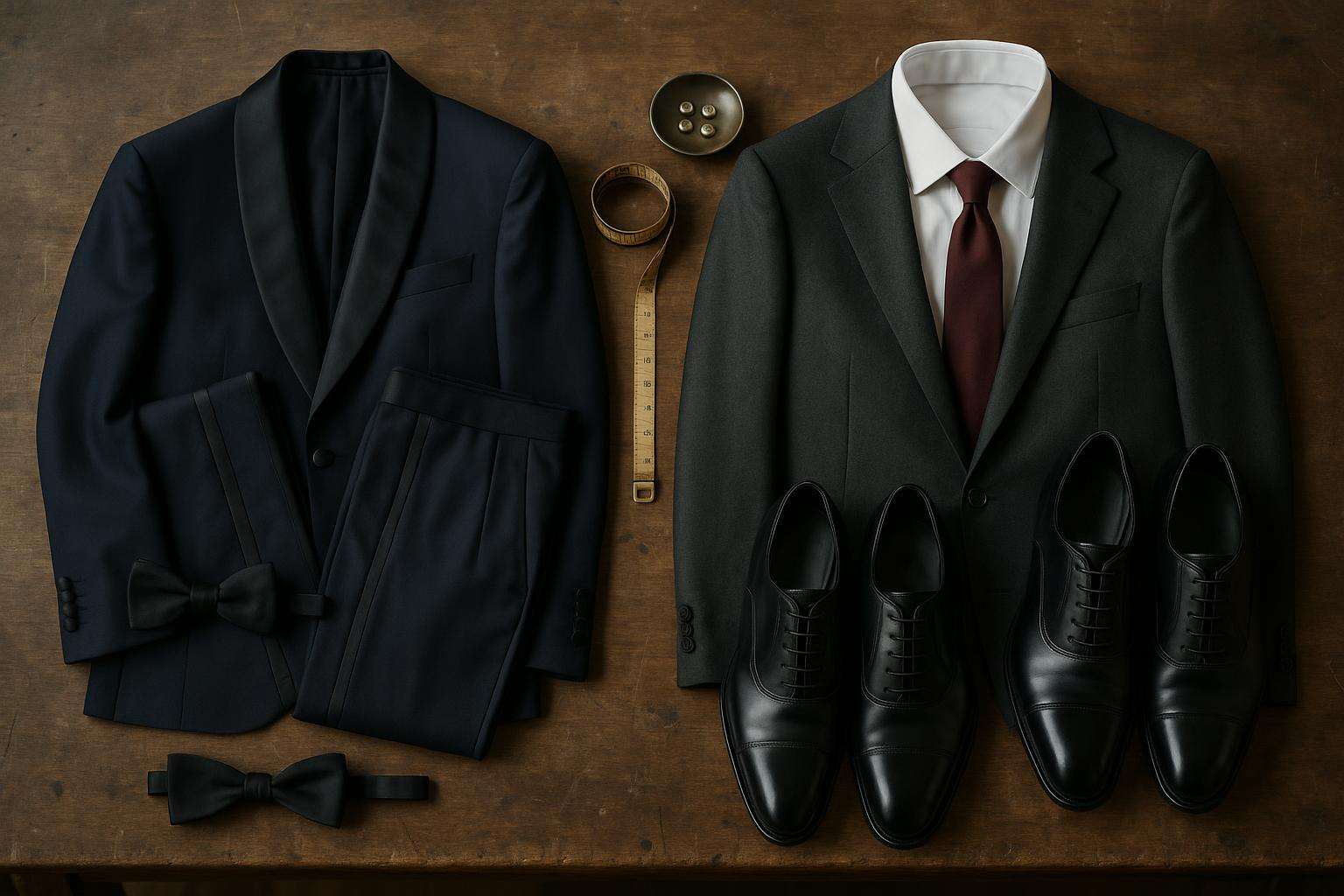
The most misread line on a wedding invitation, decoded: a tuxedo is welcome, a dark formal suit is equally correct — and the groom should sit at the top of the range.
Suits, tuxedos and the looks for every wedding style — done right.
What the groom wears is the first decision that anchors every other on his side of the wedding — and the one the camera returns to all day. This is where we begin: suit or tuxedo and how to read the invitation's dress code, the colors that flatter (navy, charcoal, the modern earth tones), the fabrics that suit the season and the venue, and the difference a three-piece or a dinner jacket makes. We favor the timeless over the trendy — the suit he could wear again — and we explain the why behind every choice, so you can guide him with confidence even when the gown is a surprise.
The most misread line on a wedding invitation, decoded: a tuxedo is welcome, a dark formal suit is equally correct — and the groom should sit at the top of the range.
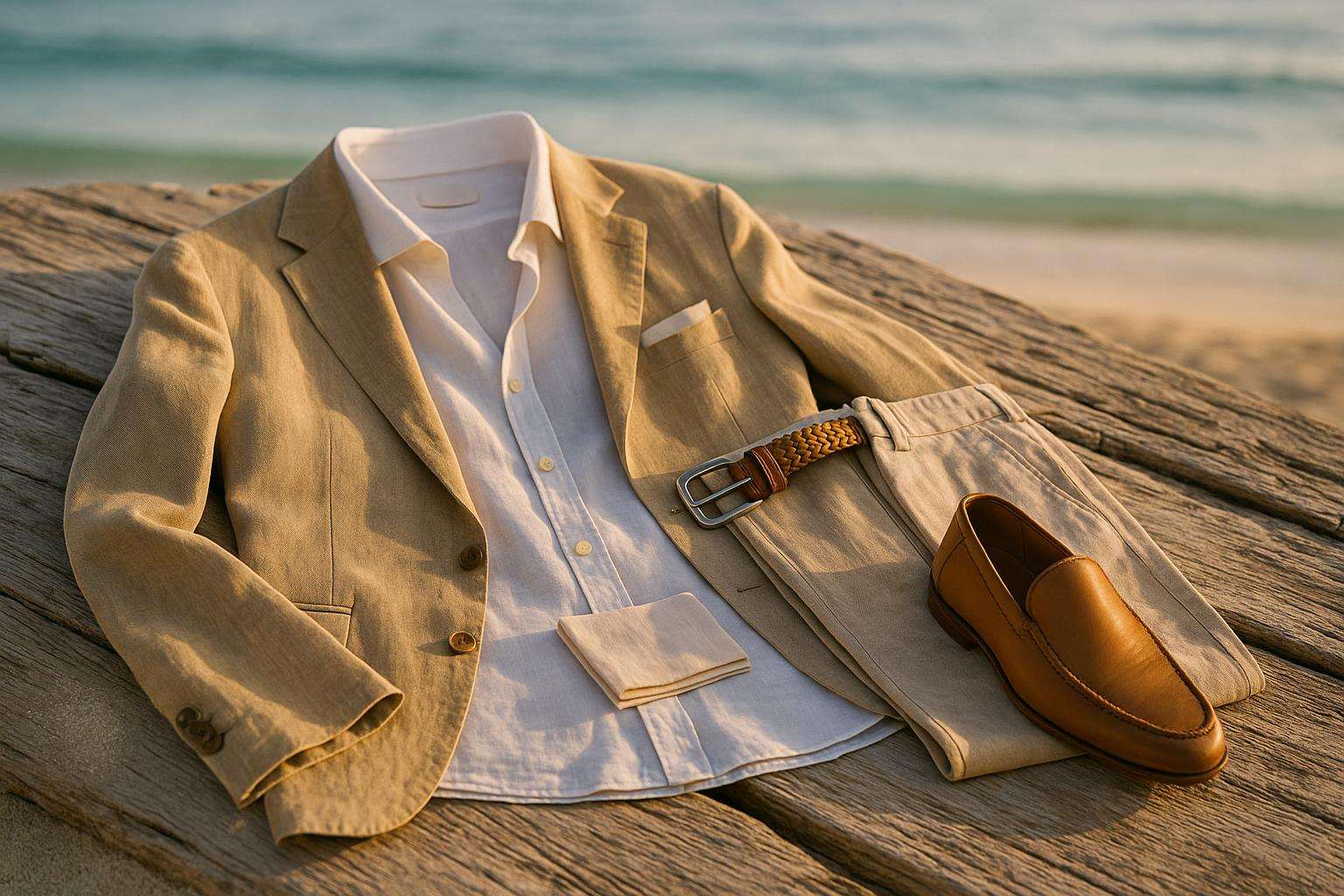
How to dress him for sand and heat — tan and light-grey linen, a soft-shouldered jacket, an open collar, and the optional no-jacket look that still reads polished.
Let the invitation decide. A true black-tie wedding calls for a tuxedo; black-tie optional allows a tux or a dark formal suit; semi-formal and most daytime or outdoor weddings are a suit's natural home. The simplest rule: match the groom to the formality of the day rather than to a personal preference for one or the other.
Navy is the most versatile — it flatters nearly every complexion, photographs beautifully and works across formality and season. Charcoal reads more formal for evening; lighter greys and earth tones (tan, sage, olive) suit daytime and outdoor weddings. Choose the color the day asks for, then let the season and venue narrow it.
Agree on the formality and the wedding palette rather than the dress itself. Match the level of formality, keep his metals consistent with the rings, and echo the colors through small accents — a tie, a pocket square, a boutonniere — instead of trying to match the gown exactly. He can look entirely in step without ever seeing it.